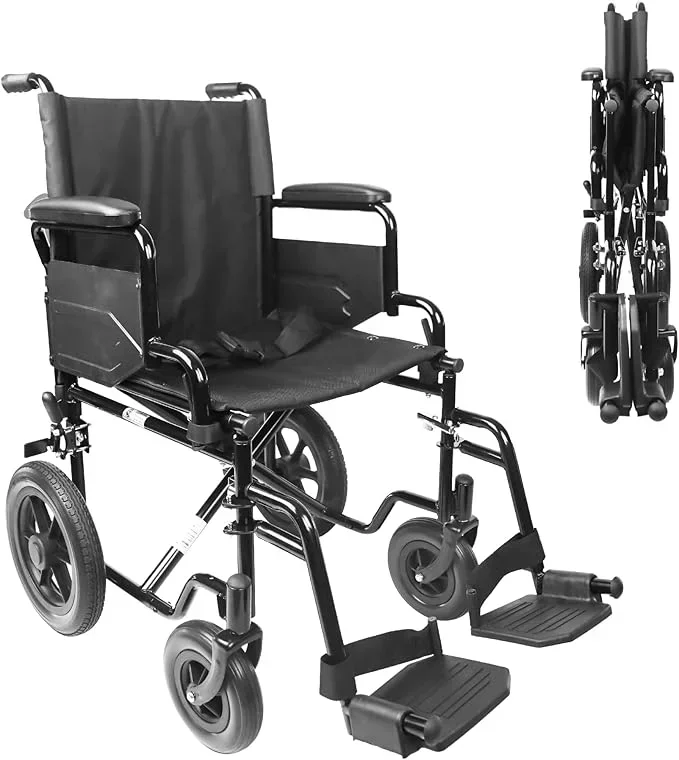

Caregiver mobility equipment budget planning is the process of forecasting, evaluating, and managing all financial aspects involved in acquiring and maintaining mobility aids for patient care at home. Mobility and transfer aids represent the largest single out-of-pocket expense for 29% of Canadian caregivers. That figure signals how quickly costs can spiral without a clear plan. Federal programmes like the Canada Caregiver Credit, provincial supports like the Assistive Devices Program, and loan programmes like the Health Equipment Loan Program (HELP) all exist to reduce that burden. Knowing how to use them is the first step toward a budget that actually holds.
What costs go into caregiver mobility equipment budget planning?
The full cost of mobility aids budgeting goes well beyond the sticker price of a wheelchair or scooter. Caregivers spend between $7,000 and $13,000 annually out of pocket on care, and equipment is a major driver of that figure. A realistic budget accounts for every layer of spending, not just the purchase or rental fee.
Direct equipment costs
Direct costs include the purchase price or weekly rental rate for the primary device. A manual wheelchair rental typically runs less per week than a power chair or mobility scooter rental. Hospital bed rentals add a separate line item. Each device category carries its own price range, so listing every piece of equipment you need before comparing quotes is the fastest way to build an accurate baseline.

Ancillary and setup costs
Home modifications, expert setup, and training are common and often overlooked costs that belong in every caregiver expenses plan. Widening a doorway to accommodate a power wheelchair can cost several hundred dollars. Installing a ramp adds more. Professional fitting and training on safe transfer techniques protect the patient and reduce the risk of injury to you as the caregiver. Skipping these costs in the budget does not make them disappear.
Ongoing and hidden costs
Maintenance, repairs, and unplanned replacements add up steadily over a care period. Batteries wear out on power chairs and mobility scooters. Tyres on manual wheelchairs need periodic replacement. Delivery and installation fees are sometimes charged separately by suppliers. Safe home layout adaptations like grab bars and threshold ramps are safety necessities, not optional extras.
| Cost category | Examples | Notes |
|---|---|---|
| Equipment rental or purchase | Wheelchair, scooter, hospital bed | Compare weekly rental vs. full purchase price |
| Home modifications | Ramps, widened doorways, grab bars | Often eligible for BC RAHA or similar grants |
| Setup and training | Professional fitting, transfer technique coaching | Reduces injury risk for patient and caregiver |
| Maintenance and repairs | Battery replacement, tyre wear, servicing | Budget a contingency of 10–15% of device cost |
| Delivery and installation | Same-day or scheduled delivery fees | Confirm whether included in rental agreement |
Pro Tip: Get itemised quotes from at least two suppliers before committing. A quote that bundles delivery, setup, and a trial period often saves more than a lower headline price alone.
How do you choose the right mobility aid within a budget?
Selecting the right device starts with an honest assessment of the patient’s condition and the expected duration of care. A person recovering from hip surgery for six weeks has different needs than someone managing a progressive neurological condition long term. Getting that assessment right prevents you from overspending on equipment that will not be used, or underspending on a device that cannot safely do the job.
The main categories of mobility aids each serve a different purpose:
- Manual wheelchairs suit patients who have upper body strength or a caregiver available to push. They are the most affordable option and easiest to transport.
- Power wheelchairs give independent mobility to patients with limited strength. They cost more to rent and require more space at home.
- Mobility scooters work well for patients who can sit upright and need to cover longer distances outdoors. Scooter vs. wheelchair comparisons often come down to indoor vs. outdoor use patterns.
- Walkers and rollators are cost-effective for patients who need partial support rather than full seating.
- Hospital beds are a separate but equally important line item for patients who spend significant time resting or require repositioning.
A practical caregiver mobility solution checklist should cover: patient weight and dimensions, home layout measurements, primary use environment (indoor, outdoor, or both), expected care duration, and caregiver physical capacity. Use this checklist before requesting any quote.
Pro Tip: Rent before you buy. A short-term rental lets you confirm that a specific device fits the patient’s needs and your home layout before committing to a purchase price.
What financial support is available for caregivers in Canada?
Canada offers several programmes that directly reduce the cost of affordable mobility equipment for caregivers and patients. The Canada Caregiver Credit reduces federal income tax owed. The Disability Tax Credit and related deductions, including mileage for mobility-impaired individuals, lower net annual costs. These credits do not pay suppliers directly, but they reduce what you owe at tax time, which frees up cash for equipment.
Provincial programmes go further. The Assistive Devices Program in Ontario may cover up to 75% of eligible mobility device costs. Eligibility requires a medical assessment and a registered vendor. Wheelchairs funded through the programme are replaced on a five-year cycle, so timing your application matters. BC RAHA assists low-income residents with home adaptation costs including handrails and ramps, which directly supports caregiver setup for mobility equipment at home.
Loan programmes fill the gap when purchase is premature. HELP and HELP Plus provide short-term loans of wheelchairs, walkers, and other devices at no cost to home health clients who have no other options. This is particularly valuable during early recovery phases when needs are still changing.
| Support type | Programme | Best for |
|---|---|---|
| Federal tax credit | Canada Caregiver Credit | Reducing annual tax bill |
| Provincial device subsidy | Assistive Devices Program (Ontario) | Covering up to 75% of device cost |
| Home adaptation grant | BC RAHA | Ramps, handrails, doorway widening |
| Equipment loan | HELP / HELP Plus | Short-term needs, no upfront cost |
| Rental service | Seventhchakra and similar providers | Flexible terms, no deposit required |
Pro Tip: Use a short-term rental while your provincial subsidy application is being processed. This avoids a large upfront purchase that may later be partially reimbursed, and it confirms the right device before you commit.
How do you build and manage a caregiver mobility equipment budget?
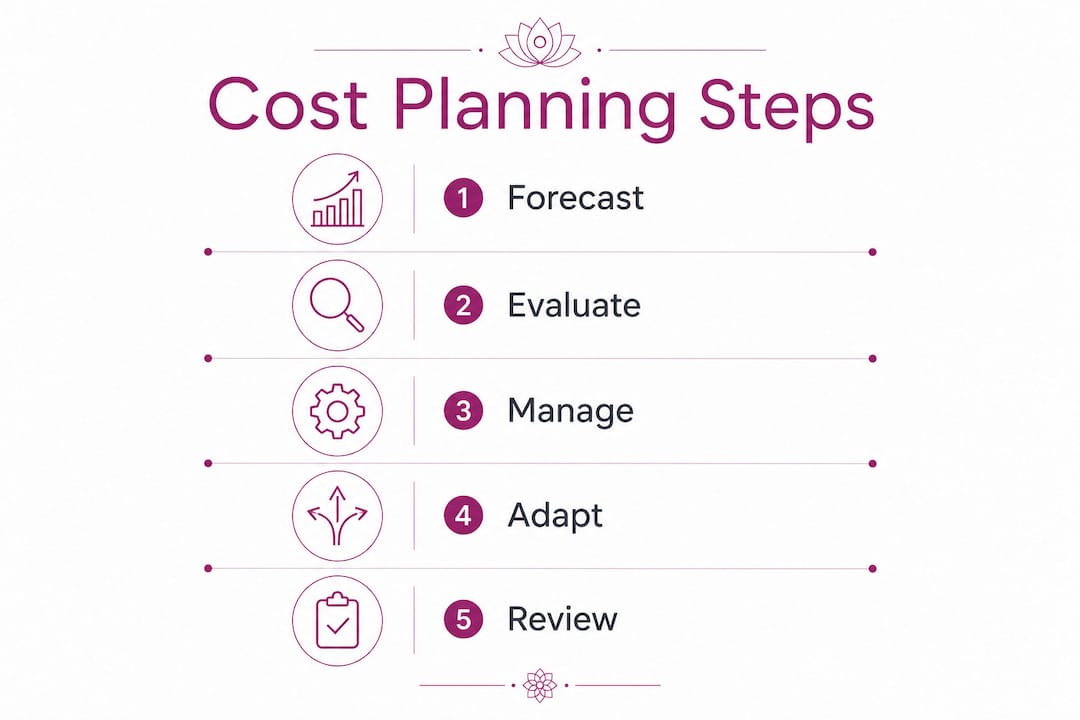
A structured approach to financial planning for caregivers prevents the most common mistake: underestimating total cost by focusing only on the device itself. Follow these steps to build a budget that holds up over time.
- List every piece of equipment needed. Include the primary mobility device, any hospital bed, commodes, transfer benches, and overbed tables. Matching each aid to the patient’s condition at the outset prevents costly mid-care changes.
- Gather itemised quotes. Contact at least two suppliers and request quotes that separate the device cost, delivery, setup, and any training fees.
- Apply for all eligible financial supports. Submit applications for the Canada Caregiver Credit, provincial programmes, and HELP loans simultaneously. Processing times vary, so start early.
- Add a contingency line. Budget an additional 10–15% of total equipment cost for unplanned repairs, replacement parts, or home modifications you did not anticipate.
- Track expenses monthly. A simple spreadsheet with columns for planned cost, actual cost, and variance is enough. Free tools like Google Sheets work well for this.
- Review and adjust quarterly. Patient needs change. A device that worked in month one may need upgrading or replacing by month four. Build a review date into your calendar.
The renting vs. buying decision deserves its own line in this process. Renting reduces upfront cost and shifts maintenance responsibility to the supplier. Buying makes sense when the care duration is long and the device is well matched to the patient’s stable needs.
Pro Tip: Use a dedicated account or envelope for caregiver equipment expenses. Mixing these costs with general household spending makes it nearly impossible to track what you have actually spent.
What are the most common budgeting challenges for caregivers?
Unexpected cost spikes are the most disruptive challenge in caregiver expenses planning. A patient’s condition can change overnight, requiring a different device or urgent home modification. 83% of caregivers say affordable paid care services and equipment would meaningfully improve their financial situation. That figure reflects how often caregivers are caught underprepared.
Common challenges include:
- Eligibility complexity. Provincial programmes have specific income, diagnosis, and vendor requirements. Missing one criterion can delay or deny funding.
- Paperwork delays. Applications for the Assistive Devices Program or BC RAHA can take weeks. Starting the process before equipment is urgently needed is the only reliable solution.
- Changing care needs. A patient who needed a manual wheelchair after surgery may require a power chair six months later. Budgets built around a single device often do not account for this.
- Underestimating home modification costs. Ramps and doorway widening are frequently left out of initial budgets, then become urgent and expensive.
Occupational therapists are an underused resource in caregiver budget planning. They assess the patient’s home environment, recommend specific equipment, and can write the clinical documentation required for provincial funding applications. Their fee is often recoverable through medical expense tax credits.
Pro Tip: Keep a single contact at your provincial funding agency and check in every four to six weeks during an active application. Proactive communication catches missing documents before they cause delays.
Key takeaways
Effective caregiver mobility equipment budget planning requires accounting for all cost layers, from device rental to home modifications, and actively pursuing every available financial support before expenses accumulate.
| Point | Details |
|---|---|
| Budget beyond the device | Include home modifications, setup, training, and maintenance in every cost estimate. |
| Use rental first | Short-term rentals confirm equipment fit and delay large purchases until needs stabilise. |
| Apply for all supports | Canada Caregiver Credit, Assistive Devices Program, and HELP loans each reduce out-of-pocket costs. |
| Build in a contingency | Add 10–15% of total equipment cost for unplanned repairs and replacements. |
| Review the budget quarterly | Patient needs change; a static budget quickly becomes inaccurate and financially risky. |
What I have learned from working with caregivers on mobility budgets
What I have learned from working with caregivers on mobility budgets
The single biggest surprise caregivers encounter is not the price of the wheelchair. It is the total bill after delivery, home modifications, and the second device they needed three months later that nobody mentioned at the start.
I have seen caregivers spend weeks researching the best power chair, then get blindsided by a $600 doorway widening they had not budgeted for. The equipment was right. The plan was incomplete. That gap between “device cost” and “total cost of care setup” is where most budgets fail.
Starting with a rental almost always pays off. Not because rentals are always cheaper in the long run, but because they buy you time. Time to confirm the device works in your specific home. Time to get a provincial subsidy application processed. Time to see whether the patient’s needs stabilise or shift. Seventhchakra’s no-deposit rental model is exactly the kind of flexibility that makes this approach practical rather than theoretical.
The other thing I would tell every caregiver: do not treat the budget as a one-time document. Revisit it every quarter. A patient recovering from a stroke in january may have very different mobility needs by april. The budget needs to move with the care plan, not sit in a drawer.
— Chandan
How Seventhchakra supports caregivers with flexible mobility equipment options
Caregivers in Vancouver and the surrounding areas need equipment that arrives quickly, fits the patient’s needs, and does not require a large upfront commitment. Seventhchakra provides exactly that.
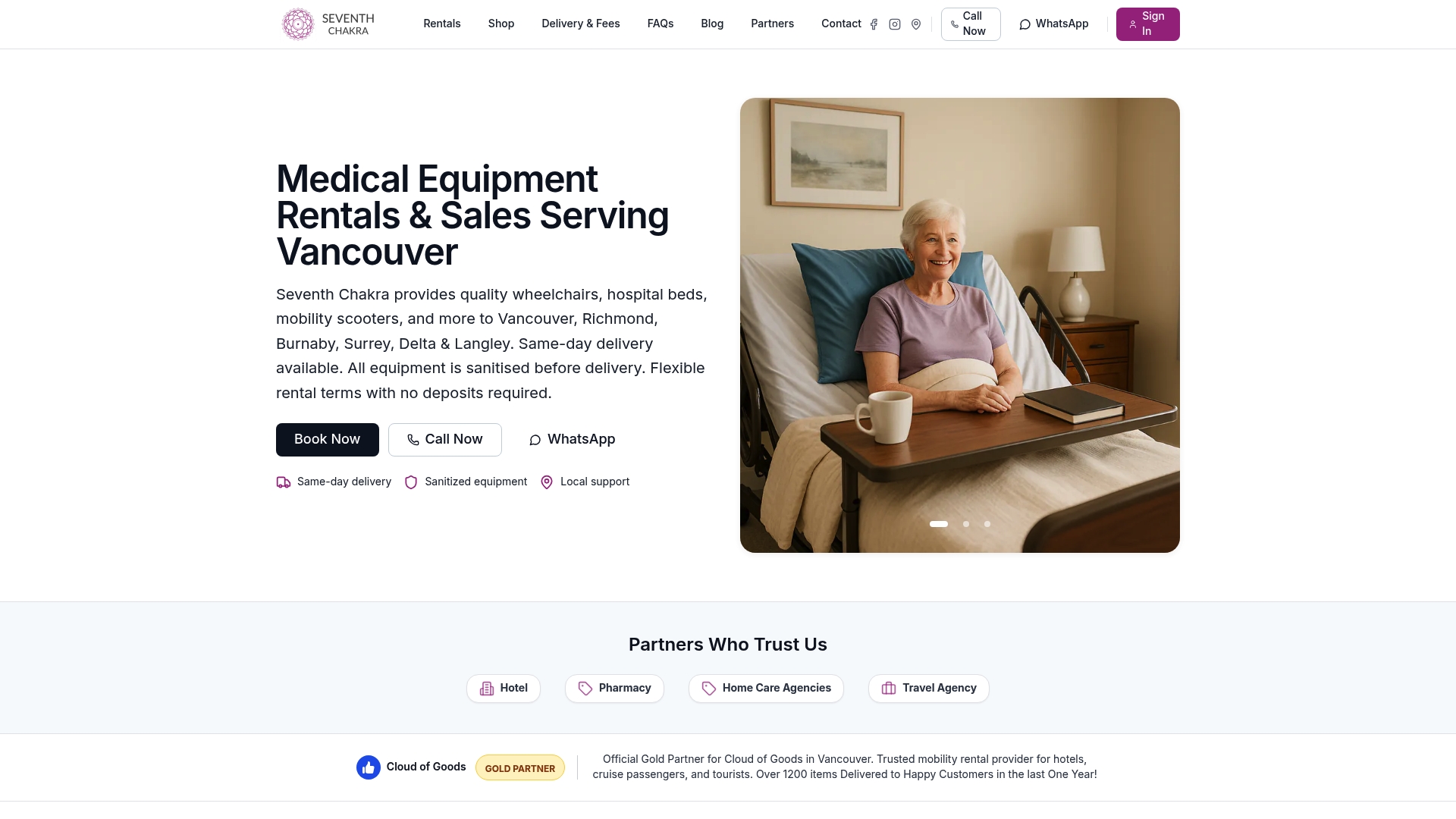
Seventhchakra’s rental inventory covers electric wheelchairs, mobility scooters, hospital beds, commodes, and more. All equipment is sanitised before delivery, and flexible rental terms mean you pay for what you need without locking into a long-term contract. There are no upfront deposits, and same-day delivery is available across Richmond, Surrey, and Vancouver. Caregivers managing tight budgets can start with a short-term rental, confirm the right fit, and adjust from there. Visit Seventhchakra Richmond BC to see current rental options and pricing.
FAQ
What does caregiver mobility equipment budget planning include?
Caregiver mobility equipment budget planning covers the cost of the device itself, home modifications, delivery, setup, training, and ongoing maintenance. A complete budget also accounts for available financial supports like the Canada Caregiver Credit and provincial subsidy programmes.
Is renting mobility equipment more cost-effective than buying?
Renting is more cost-effective for short-term or uncertain care needs because it avoids large upfront costs and shifts maintenance to the supplier. Buying becomes the better option when the care duration is long and the patient’s needs are stable.
What government programmes help cover mobility equipment costs in Canada?
The Canada Caregiver Credit reduces federal tax owed, while the Assistive Devices Program in Ontario may cover up to 75% of eligible device costs. BC RAHA assists low-income residents with home adaptation expenses like ramps and handrails.
How much do Canadian caregivers typically spend on mobility equipment?
Canadian caregivers spend between $7,000 and $13,000 annually out of pocket on care, with mobility and transfer aids representing the largest single expense category for 29% of caregivers.
What is the Health Equipment Loan Program (HELP)?
HELP is a Canadian programme that provides short-term loans of wheelchairs, walkers, and other mobility devices at no cost to home health clients who have no other access to equipment. It is particularly useful during early recovery when needs are still changing.
Recommended
- Where to Buy the Best Mobility Equipment in Vancouver: Complete 2026 Buyer’s Guide | Seventh Chakra Medical Blog
- Matching mobility aids to patient condition: a practical guide | Seventh Chakra Medical Blog
- Mobility aids for post-operative patients: a recovery guide | Seventh Chakra Medical Blog
- What is a transport wheelchair: a caregiver’s guide | Seventh Chakra Medical Blog