
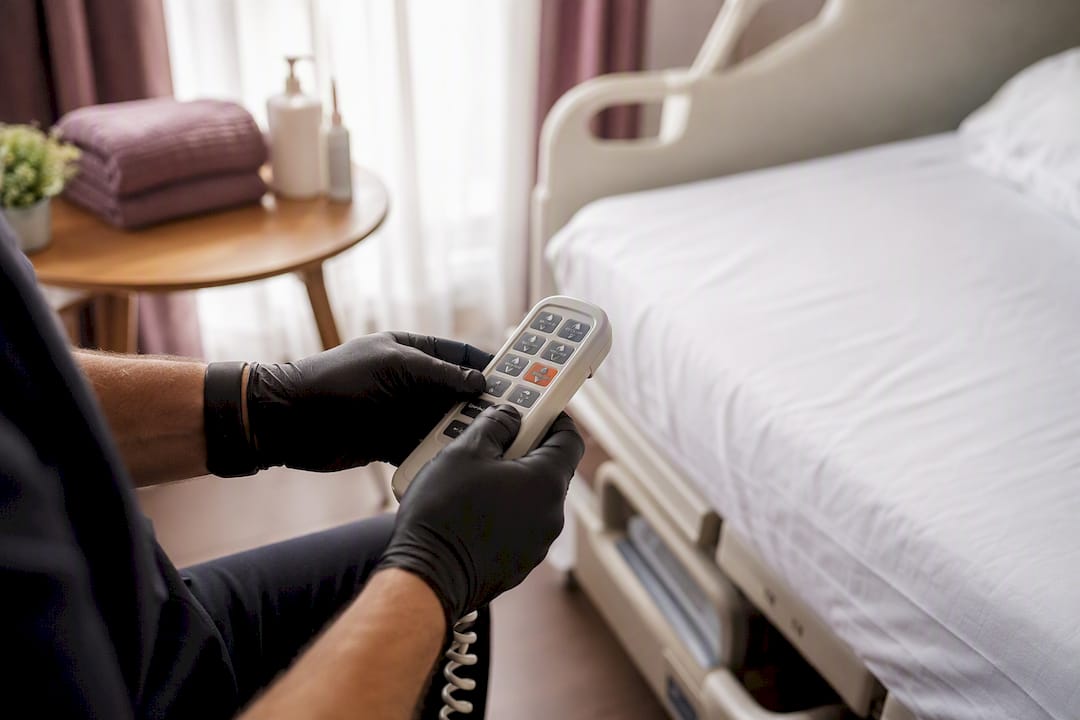
Yes. A local medical equipment supplier can deliver, sanitize and professionally set up a hospital bed in your home, often the same day you call, provided routes and inventory allow it. This isn’t a DIY assembly job you tackle with an instruction sheet and a screwdriver. It’s a service: a technician brings the bed, checks it against the manufacturer’s specifications, hooks up the electrics, and walks you through the controls before leaving.
Before you book, confirm three things with any provider:
- A written sanitization record or certificate should arrive with the bed, not be promised verbally.
- The supplier should state, plainly, that reprocessing follows the manufacturer’s instructions for use (MIFU).
- A trained technician, not a delivery driver, should complete the setup and demonstration.
Your next move is simple: measure your doorway and bedroom space, confirm you have a grounded power outlet nearby, and call to book a delivery window.
Key Takeaways
Reliable hospital bed setup at home depends on a documented sanitization process, manufacturer-instruction compliance, and a technician-led installation, not just fast delivery.
| Point | Details |
|---|---|
| Same-day delivery is real | Local suppliers can deliver, sanitize and set up a hospital bed the same day, depending on inventory and routes. |
| Documentation on arrival | Expect a written cleaning record, MIFU compliance statement, and a tracked serial number for loaned beds. |
| Prep your space first | Measure doorways and bedroom clearance, and confirm a grounded outlet before the delivery window. |
| Match rental or purchase to your timeline | Short recoveries favour renting; indefinite or custom needs favour buying outright. |
| Seventh Chakra Medical offers documented service | Same-day delivery, sanitized equipment, technician demo, and no-deposit rental terms in the Greater Vancouver area. |
Table of Contents
- What happens during professional delivery and setup
- How to prepare your home before delivery
- Rental vs. purchase: which makes sense right now?
- What to ask a supplier before you book
- Sanitization and reprocessing: which standards actually matter
- Aftercare: maintenance, problems and pickup
- Why a documented local partner matters more than people think
- Get a sanitized hospital bed set up at home today
- Standards and guidance worth reading next
- Sources
- FAQ
What happens during professional delivery and setup
A hospital bed delivery isn’t just a drop-off. It’s a sequence, and knowing the steps helps you spot a supplier that’s cutting corners.
- Order confirmation. You give your address, room dimensions if you have them, and preferred delivery window. Same-day slots depend on what’s already sanitized and sitting in inventory versus what needs turnaround time.
- Pre-delivery checks. The supplier confirms the bed model fits your space and reviews any access issues you’ve flagged, like a narrow stairwell or an apartment elevator.
- Arrival and inspection. The technician inspects the frame, mattress platform and rails for damage before bringing anything past your front door.
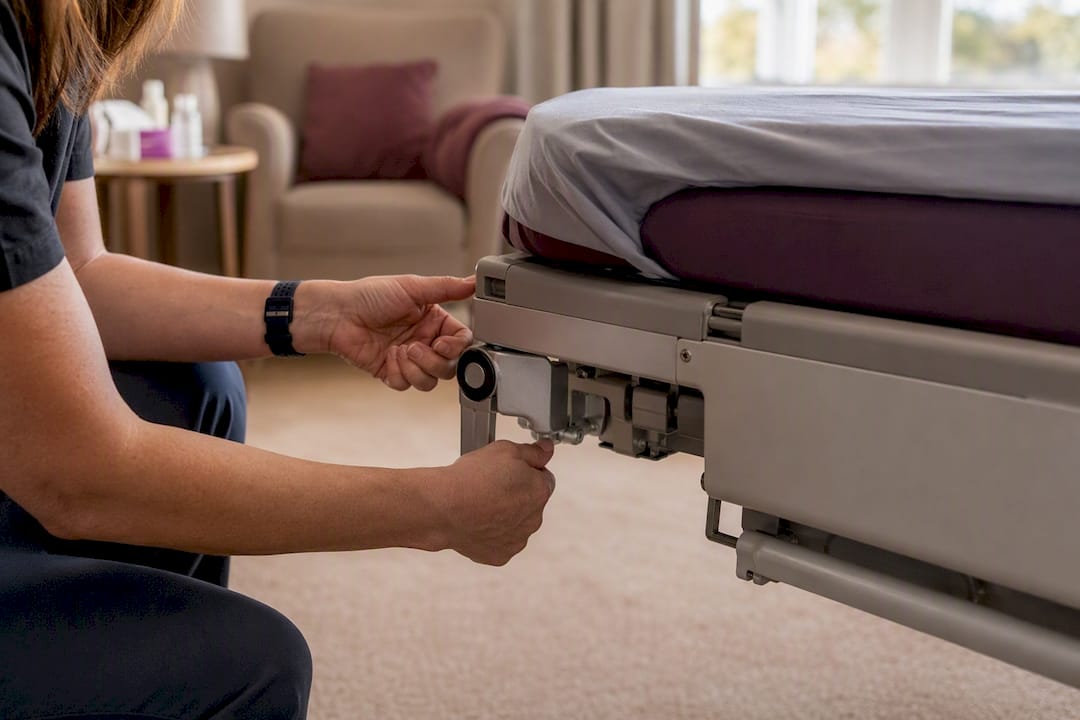
- Assembly and electrical hookup. The bed is assembled on-site, plugged into a grounded outlet, and the motor and control functions are tested.
- Safety checks and demo. This is the step people skip when they buy secondhand and regret it. The technician checks bed height adjustment, side rail locking, and the emergency manual lowering function, then shows you and any other caregivers how to operate everything.
- Paperwork and handover. You should receive a cleaning record, an MIFU or reprocessing statement, and (for rentals) a tracking or serial number tied to the unit.
Technicians typically flag mattress compatibility, outlet placement, and trip hazards like loose cords or area rugs near the bed’s transfer side. Timelines vary. Seventh Chakra Medical’s Vancouver rental service offers same-day and next-day delivery depending on route scheduling and stock on hand that day.
Pro Tip: Ask the supplier to demonstrate the emergency lowering function twice, once on arrival and once for a second household member. It’s the feature people forget under stress, and it matters most in an actual emergency.
How to prepare your home before delivery
A few minutes of prep prevents a delivery team from showing up and hitting a wall, literally.
- Measure doorways, hallway width, and any stair or elevator clearances the bed and mattress will need to pass through.
- Confirm a grounded power outlet is within reach of where the bed will sit, and plan how the cord will route without crossing a walkway.
- Clear the path from the entry to the bedroom. Remove area rugs, side tables, or anything that narrows the passage.
- Decide bed placement in advance: which side will caregivers use for transfers, and how close is the bed to a bathroom or commode.
- Have bedding, waterproof pads, and any pressure-relief cushions ready so the technician can help you fit them during setup.
- Flag narrow stairwells or tight corners when you book, so the supplier sends the right equipment or team size.
Rental vs. purchase: which makes sense right now?
The decision usually comes down to how long you’ll need the bed, not just the price tag.
- Cost shape. Renting keeps upfront cost low and folds maintenance into the price. Buying means a larger one-time cost, roughly $2,600 for an electric adjustable home hospital bed through Seventh Chakra’s product page, but you own the equipment outright.
- Flexibility. Rentals suit short recoveries, post-surgical stays, or a family visit where a relative needs support for a few weeks. Purchases make more sense for indefinite or long-term care.
- Reprocessing responsibility. A rental provider documents cleaning and reprocessing every time the bed changes hands. If you own the bed and later pass it to another user, that reprocessing responsibility shifts to you, and Alberta Health’s guidance on reusable devices recommends organisations weigh their reprocessing capacity before buying reusable equipment at all.
- Quick rule. Temporary need (post-op, short recovery window) points to rental. Indefinite need or a request for custom features points to purchase.
What to ask a supplier before you book
Have this list ready when you call or fill out an online booking form. A supplier confident in its service will answer every one of these without hesitation.
- Is same-day delivery available today, and what’s the cutoff time for that window?
- Does the quoted price include delivery, setup and eventual pickup, or are those billed separately?
- Is there a deposit, and are there any fees not shown in the initial quote?
- Will you provide a written sanitization or cleaning record at the time of delivery?
- Do you follow the manufacturer’s instructions for use, and CSA reprocessing guidance where it applies?
- Will a technician demonstrate the bed controls and the emergency lowering function on-site?
- What’s your response time if something malfunctions after setup?
- What are your accepted dimensions for doorways, stairwells or elevators, and what’s your policy on tight access?
- How is pickup scheduled at the end of a rental, and is there a fee for late returns?
Sanitization and reprocessing: which standards actually matter
Reusable medical equipment in Canada should be cleaned, disinfected or sterilized according to the manufacturer’s instructions for use (MIFU), and reprocessing should align with the CSA Z314 series of standards. That’s not a suggestion suppliers can shrug off. It’s the baseline for equipment that moves from one household to another.
Community reprocessing guidance from IPAC Canada outlines three acceptable paths: client-owned single-user devices, reprocessing through a hospital or private medical device reprocessing department (MDRD), or on-site reprocessing when a facility has the capacity and trained staff to meet the standard. Loaned equipment should arrive with written reprocessing instructions, ideally with enough lead time, often cited as 24 to 72 hours, for proper inspection before use.
Ask your supplier for these documents when the bed arrives:
- A cleaning or reprocessing certificate specific to that unit.
- A serial or asset number so the device can be tracked through its rental history.
- Proof that staff handling reprocessing have received training on the applicable standard.
- A transportation log showing how the equipment moved from storage to your door.
Public Health Ontario’s best-practice guidance also points to operational habits worth asking about: does the supplier run a centralized decontamination area, and do they keep dirty and clean equipment flows physically separate? A supplier that answers those questions comfortably is usually one that treats reprocessing as routine, not an afterthought.
Aftercare: maintenance, problems and pickup
Setup day isn’t the end of the relationship. A few habits keep the bed safe for as long as it’s in your home.
- Do a quick daily visual check: rails locked, controls responsive, no fraying cords.
- Keep the bed and mattress dry. Fluid exposure compromises both the surface and the reprocessing that happens later.
- Call your supplier immediately if you notice a malfunctioning control, a loose rail, a failing mattress surface, or any unusual noise from the motor.
- Confirm the pickup window and any condition expectations before your rental ends, including whether an end-of-rental cleaning fee applies.
- A reliable supplier keeps a log linking each bed’s serial number to your household, which matters if a manufacturer ever issues a recall notice.
Why a documented local partner matters more than people think
Same-day delivery only works when a supplier has both local inventory and a route that reaches you before end of day. That’s a logistics problem as much as a medical one, and it’s why a supplier operating in your immediate area tends to outperform one shipping equipment across the province.
Look for the trust signals that actually mean something: a written sanitization record handed to you at the door, a plain statement that MIFU is being followed, a technician who demonstrates the bed rather than just plugging it in, and pricing that doesn’t hide a deposit in the fine print. For deeper buying guidance, Seventh Chakra’s guide to choosing a home hospital bed walks through bed types and features worth comparing.
Get a sanitized hospital bed set up at home today
If you’re comparing options right now, Seventh Chakra Medical’s advantage over waiting on a general medical supply catalogue or hunting through classified listings is straightforward: same-day delivery where routes allow, fully sanitized equipment, and a technician who sets up and demonstrates the bed on-site, all without a deposit locking up your cash.
When your bed arrives, you get the frame, mattress, side rails, a sanitization certificate, and a walkthrough of every control, including the emergency lowering function. Pricing is upfront: delivery and setup are typically included in the rental quote, though pickup at a longer distance or add-on accessories like a commode or bedside table may carry a small extra charge. Renting an electric adjustable bed is one route; buying outright through Seventh Chakra’s hospital bed product page is the other, and either way you’re getting equipment that’s been reprocessed to standard rather than passed along untracked.
Before you call, have your room measurements, preferred delivery date, and power outlet location ready. Then book directly through the hospital bed rental page or phone in your request to lock in a same-day or next-day slot.
Standards and guidance worth reading next
- CSA Group’s reprocessing standards and the IPAC Canada community reprocessing position document.
- Public Health Ontario’s cleaning and disinfection best practices for health care settings.
- For service details, see Seventh Chakra’s Vancouver rental page.
This article is general information, not a substitute for advice from a qualified doctor. Consult a qualified healthcare professional about your own circumstances before acting on anything here.
Sources
- CSA Group — Medical device reprocessing standards and training (article)
- IPAC Canada — Reprocessing of critical and semi-critical devices in the community (position document)
- Public Health Ontario — Cleaning, disinfection and sterilization: Best practices for health care settings
- Alberta Health — Reusable and single-use medical devices: standards and considerations
FAQ
Can a hospital bed really be set up at home the same day?
Yes, when a local supplier has sanitized inventory ready and your address falls within that day’s delivery route. Confirm the cutoff time when you call.
What documents should come with a rented hospital bed?
Expect a written sanitization or cleaning record, a statement of MIFU compliance, and a tracked serial number, especially for loaned or rental equipment.
Is renting or buying a hospital bed better for home care?
Renting suits short-term or post-surgical recovery because it includes maintenance and reprocessing; buying makes more sense for indefinite, long-term needs.
Does Seventh Chakra Medical require a deposit for hospital bed rentals?
No. Seventh Chakra offers no-deposit rental terms alongside same-day delivery and sanitized equipment across the Greater Vancouver area.
What should I check before the delivery technician leaves?
Confirm the bed height adjustment, side rail locking, and emergency manual lowering function all work, and that you’ve received the sanitization paperwork.


