
There are three primary hospital bed power types: manual, semi-electric, and full-electric, plus several specialty categories for bariatric, low-profile, ICU, pediatric, and stand-assist care. The deciding factor isn’t price or features on a spec sheet. It’s how often the bed’s height will need adjusting and how much transfer help the person in it requires day to day. Get that one variable right and the rest of the decision falls into place.
Here’s a quick read on who each primary type usually suits:
- Manual beds fit short recovery stretches where a caregiver is present and mobility is otherwise stable.
- Semi-electric beds suit most home recovery and long-term care situations. Head and foot move at the press of a button.
- Full-electric beds work best when height changes happen multiple times a day, or when the caregiver has back or joint issues of their own.
- Specialty beds (bariatric, low-profile, ICU, pediatric, stand-assist) apply when body size, fall risk, medical monitoring, or transfer mechanics rule out a standard frame.
Key takeaways
Choosing among hospital bed types comes down to matching motorised functions to transfer frequency and caregiver strain, then confirming the mattress and frame are compatible before anything gets delivered.
| Point | Details |
|---|---|
| Match power type to transfer needs | Full-electric height adjustment matters most when transfers happen multiple times daily. |
| Confirm mattress compatibility | Mattress thickness and articulation must match the frame to avoid entrapment risk. |
| Check exact dimensions first | Standard beds run 36 by 80 inches; bariatric frames need 42 to 54 inches and higher weight ratings. |
| Rent for short-term, buy for long-term | Rent under roughly three months; buying pays off past a year or for hard-to-rent specialty models. |
| Seventhchakra covers urgent needs | Same-day delivery, no deposit, and full sanitization support fast home setup across Greater Vancouver. |
Table of Contents
- What are the main hospital bed types by power configuration?
- Which specialty bed types solve problems a standard bed can’t?
- Why does mattress choice matter as much as the bed frame?
- What dimensions and weight limits should you confirm before ordering?
- Should you rent or buy a hospital bed?
- How do you choose the right bed and avoid supplier red flags?
- What does Seventhchakra offer for hospital bed needs?
- What maintenance and cleaning does a hospital bed actually need?
- What safety features and compliance standards should a hospital bed meet?
- What adjustability features go beyond basic head and foot movement?
- What matters most when you’re actually the one choosing the bed
- How Seventhchakra makes getting the right bed simple
- Sources
- FAQ
What are the main hospital bed types by power configuration?
A hospital bed’s power configuration determines which movements are motorised and which require physical effort from a caregiver. That single distinction shapes cost, maintenance, and how much strain falls on whoever’s providing daily care.
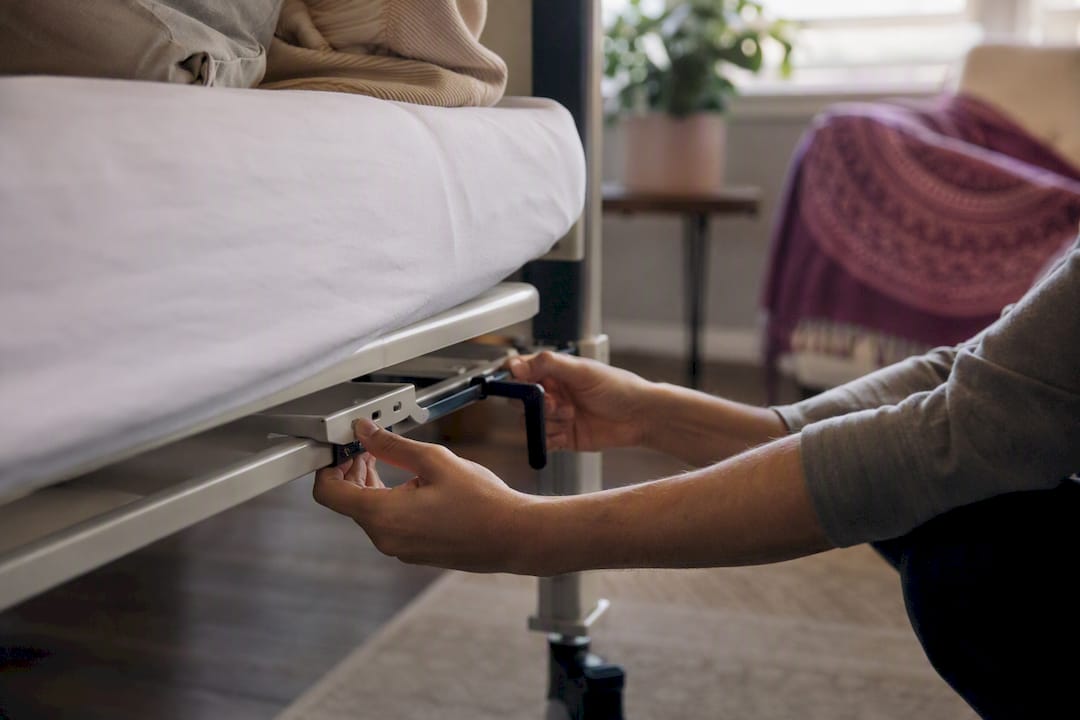
Manual beds run on hand cranks for every adjustment: head elevation, foot elevation, and overall bed height. There’s no motor, no cord, and nothing to charge. They’re the least expensive option and the simplest to maintain, since there’s no electronics to fail. The trade-off is obvious the first time a caregiver has to crank the height up and down multiple times in a day. It’s slow, it’s physical, and it adds up.
Semi-electric beds motorise the head and foot sections but keep a manual crank for overall height. This is the most common configuration in home care because it covers the movements used most often (repositioning for comfort, meals, or reading) while keeping the price below full-electric models. The person in the bed can often adjust their own head and foot position with a handheld control, which supports independence.
Full-electric beds motorise everything, including height. That hi-low function is what most reduces repetitive strain for a caregiver doing frequent transfers, since the bed can be raised to a safe transfer height rather than forcing someone to bend and crank. It’s worth knowing that insurers sometimes treat the height-adjustment feature as a convenience rather than a covered medical necessity, so check coverage before assuming it’s included.
| Bed type | What’s motorised | Best suited for | Typical price range (purchase) |
|---|---|---|---|
| Manual | Nothing (hand crank for all functions) | Short recovery, budget-conscious buyers | Typically the least expensive option |
| Semi-electric | Head and foot | Regular repositioning, home and long-term care | Moderate price range |
| Full-electric | Head, foot, and height | Frequent transfers, caregiver ergonomics, longer-term use | Higher price range |
Rental pricing follows the same hierarchy, usually running from roughly $150 to $400+ per month depending on configuration and region. A short-recovery patient after knee surgery, expected to be mobile again within six weeks, rarely needs more than a semi-electric rental. A person with advancing ALS or a spinal cord injury, needing multiple daily repositions and transfers, is a much stronger candidate for full-electric. Seventhchakra’s hospital bed for home use product page breaks down the full-electric option in more detail if that’s the direction your situation points.
Which specialty bed types solve problems a standard bed can’t?
Standard manual, semi-electric, and full-electric beds cover most home care situations, but some medical realities call for a different frame entirely.
- Bariatric beds are built wider and with reinforced frames, commonly 42 to 54 inches wide against the standard 36 inches, with weight ratings that can run from roughly 450 to 1,000 pounds depending on the model. Mattress compatibility matters here more than almost anywhere else. A standard mattress on a bariatric frame won’t distribute weight properly and can compromise the safety rails.
- Low-profile and ultra-low beds drop close to the floor, sometimes to around 7 inches, which matters enormously for fall risk and dementia care. If someone rolls out, the fall distance is short enough to prevent serious injury.
- ICU and critical-care beds differ from home models in accessory compatibility. They’re built to work with IV poles, monitoring equipment, and specialized rail systems, and they often include features like CPR quick-release and cardiac chair positioning that a home-care bed simply doesn’t need.
- Pediatric beds scale dimensions and rail spacing to prevent entrapment for smaller bodies, with safety specs that are tighter than adult-bed standards because a child can slip through gaps an adult never would.
- Stand-assist and pivot beds, including sleep-to-stand rotating designs, change the mechanics of a transfer entirely. Instead of a caregiver lifting or pivoting the patient manually, the bed itself rotates or raises to a near-standing position. These solve transfer problems that standard beds simply can’t, and they carry a noticeably higher price tag as a result.
Availability is the practical wrinkle with specialty beds. Bariatric and ICU-style models aren’t always stocked in the same volume as standard frames, so it’s worth confirming lead time before you’re counting on same-day delivery.
Why does mattress choice matter as much as the bed frame?
A hospital bed frame is only half the equation. The mattress determines whether that bed actually prevents pressure injuries or creates new problems, and the two have to be matched carefully.
Foam mattresses work for patients with normal mobility who reposition themselves regularly. They’re the most affordable option and require no power source. Innerspring mattresses offer more traditional support but less pressure redistribution than foam or specialty options. Alternating-pressure mattresses cycle air through internal chambers to shift pressure points automatically, and low-air-loss mattresses combine pressure redistribution with airflow that helps manage moisture and skin temperature. Clinical guidance treats alternating-pressure and low-air-loss mattresses as standard therapy for patients at high risk of pressure injuries, meaning limited mobility, prolonged bed rest, or existing skin breakdown.
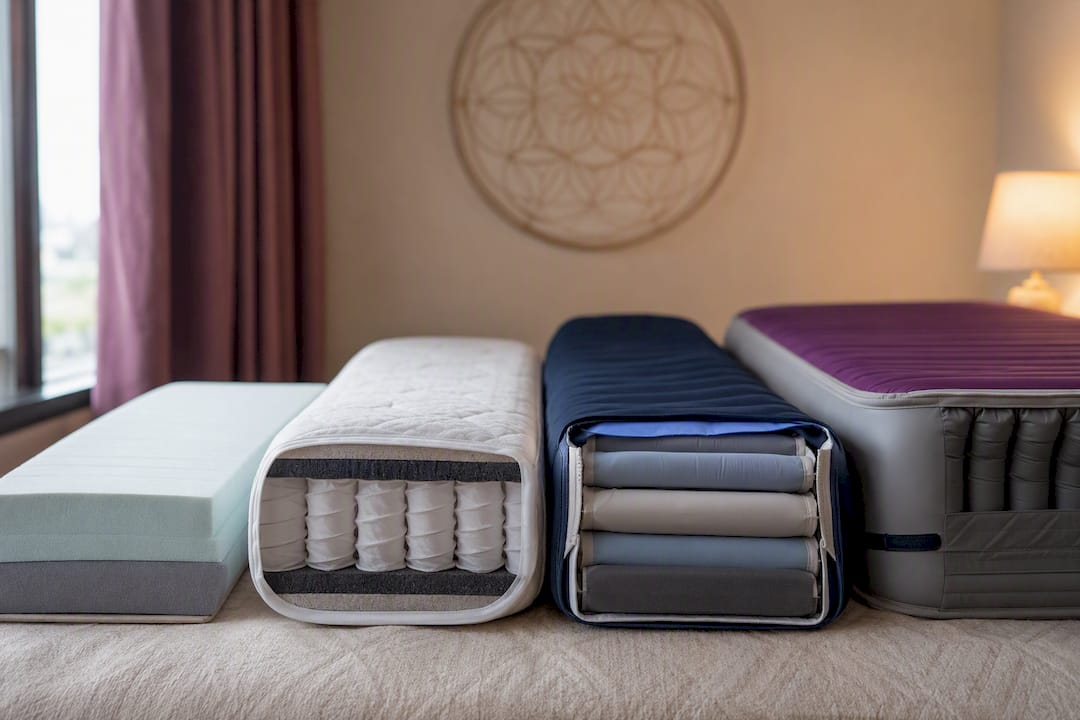
Mattress thickness matters more than most people expect. A mattress that’s too thick relative to the bed’s rail height can create a dangerous gap or reduce the effective protection of the side rails. One that doesn’t articulate properly with the bed’s head and foot sections can bunch or shift as the bed moves, straining the motor and, in worse cases, creating an entrapment risk at the joints.
A short list of accessories that reduce risk without adding much cost:
- Half-length rails give a secure grab point for repositioning while leaving more room to exit the bed, which cuts entrapment risk compared to full-length rails.
- Trapeze bars let a patient assist with their own repositioning, easing strain on the caregiver.
- Bed alarms alert caregivers when a fall-risk patient attempts to get up unassisted.
- Battery backup keeps a full-electric or semi-electric bed functional during a power outage, which matters more than most buyers realize until it happens.
- Waterproof mattress covers protect against incontinence and spills without trapping heat the way older vinyl covers did.
Pro Tip: Bring the exact mattress dimensions with you (or to the supplier) before ordering rails or a trapeze bar. A half-inch mismatch between mattress and rail spec is enough to void the safety margin these accessories are supposed to provide.
What dimensions and weight limits should you confirm before ordering?
Standard home hospital beds run about 36 inches wide by 80 inches long, roughly the footprint of a Twin XL mattress. Bariatric frames extend that range considerably, often to 42 to 54 inches wide, with some extended-length models built for taller patients. Weight capacity on standard frames typically tops out around 350 to 450 pounds, while bariatric-rated frames can support anywhere from roughly 450 to 1,000 pounds depending on the specific model.
Before you order, walk through this checklist:
- Measure the doorway width the bed needs to pass through, including any turns in the hallway leading to the room.
- Check hallway and room clearance for the bed’s full footprint, not just the mattress dimensions. Side rails and control panels add width.
- Confirm the turning radius needed to get the bed around corners, especially in older homes with narrower hallways.
- Locate a nearby outlet if you’re getting a semi-electric or full-electric model. Extension cords aren’t a long-term solution for medical equipment.
- Account for the moving footprint, including castors and articulated sections when the bed is raised or the head/foot panels are extended. This is one of the most common oversights in room planning, and it’s the reason beds sometimes arrive and simply don’t fit the way the room measurements suggested they would.
Should you rent or buy a hospital bed?
The timeline of the need is the clearest signal. Renting tends to make more sense for anything under about three months, while buying starts to pay off once you’re looking at a year or longer, or when a specific specialty model isn’t something local rental suppliers keep in stock.
Renting has practical advantages beyond the sticker price. Seventhchakra’s hospital bed rental service in the Greater Vancouver area includes same-day delivery, ongoing maintenance, and no long-term commitment, which matters a lot when a discharge date moves up unexpectedly. You’re not stuck owning equipment once recovery is complete, and you’re not the one troubleshooting a motor issue at 11 p.m.
Buying makes more sense when:
- The need is clearly long-term (a year or more, or permanent).
- You’ve found a specific model, mattress pairing, or specialty configuration that fits precisely and isn’t guaranteed to be available for rent when you need it again.
- The math works out cheaper over time than repeated rental costs.
On price: purchasing a semi-electric or full-electric bed for home use commonly falls in the $1,200 to $3,000 range, while rentals typically run $150 to $400+ per month. Rental pricing usually bundles delivery, setup, and full sanitization before the equipment arrives, so the cost per month covers more than just the bed itself. For a deeper cost breakdown, Seventhchakra’s guide to renting versus buying medical equipment walks through the math for different care timelines.
How do you choose the right bed and avoid supplier red flags?
Whether you’re on the phone with a supplier or sitting across from a clinician, use this checklist to keep the conversation focused on what actually matters.
- Confirm the room measurements first: doorway width, hallway clearance, turning radius, and outlet location for powered beds.
- Match the bed to transfer frequency: daily multiple transfers point toward full-electric or stand-assist; occasional repositioning is fine on semi-electric.
- Ask about mattress compatibility specifically, not just what mattress comes bundled with the bed.
- Confirm battery backup is included on any full-electric or semi-electric model, particularly for patients who can’t be without bed function during a power outage.
- Ask about sanitization procedures before delivery, especially for rentals where the bed has had a previous user.
- Clarify the warranty and return policy in writing, not just verbally.
- Ask about delivery and installation, including whether setup and a walkthrough of the controls are included.
Watch for these red flags: a supplier who can’t clearly explain their return policy, one who recommends a mattress without asking about the bed’s rail height or articulation points, or any full-electric or semi-electric model offered without battery backup. Clinical guidance consistently points to involving a clinician or occupational therapist in a proper needs assessment before choosing a bed, particularly for complex cases involving significant mobility loss, cognitive decline, or bariatric needs. That assessment catches issues a supplier conversation alone often misses.
Pro Tip: Ask the supplier directly what happens if the bed doesn’t fit through your doorway on delivery day. A supplier with a clear, specific answer has done this before. One who seems surprised by the question probably hasn’t.
What does Seventhchakra offer for hospital bed needs?
Seventhchakra provides hospital bed rentals and sales across the Greater Vancouver area, built around getting equipment to families fast when a discharge date or a sudden care need doesn’t leave much lead time.
- Same-day delivery for rentals, which matters when a hospital discharge happens faster than expected.
- No deposit required, removing a common barrier for families arranging care under time pressure.
- Full sanitization of every unit before it arrives, so a rented bed isn’t a second worry on top of the care itself.
- Transparent pricing with no hidden fees buried in the fine print.
- Flexible rental terms that adjust as a recovery timeline changes, rather than locking you into a fixed period that may not match reality.
For anyone weighing a purchase instead, the hospital bed for sale in Vancouver page outlines the full-electric model available for long-term home use.
What maintenance and cleaning does a hospital bed actually need?
A hospital bed sees more daily wear than most furniture in the house, and skipping basic maintenance shortens its working life fast.
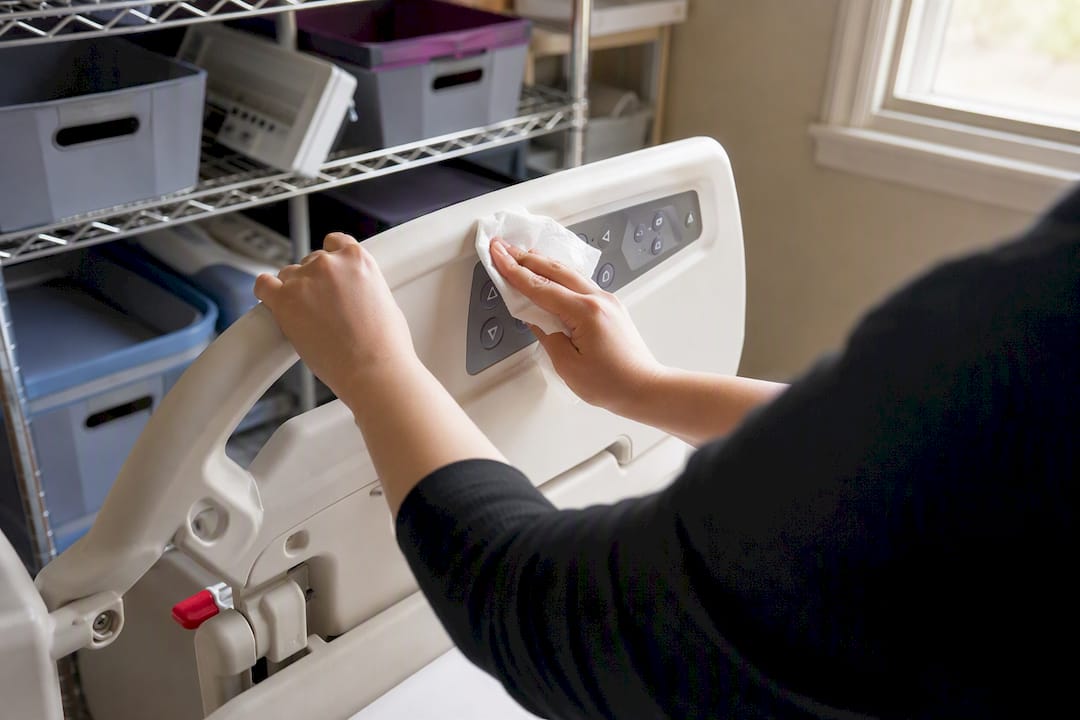
Wipe down rails, control panels, and frame surfaces with a hospital-grade disinfectant on a regular basis, paying particular attention to handheld controls and rail grips since those get touched constantly. Mattress covers need cleaning per the manufacturer’s instructions. Most vinyl and specialty covers can handle disinfectant wipes without degrading, but check before using anything abrasive.
Motorised beds need periodic checks on moving parts: hinges, castors, and the motor housing itself. A castor that’s picking up hair or debris will eventually stick or squeak, and it’s a five-minute fix if caught early. Battery backup systems, where included, should be tested occasionally rather than assumed to work when needed most.
Between different patients or after any bodily fluid exposure, a full sanitization cycle matters more than routine wiping. This is one area where rental services have a built-in advantage: sanitization happens before delivery as standard practice, rather than being an extra step a family has to research and manage themselves.
Check for loose bolts, frayed cords on electric models, and any unusual noise from the motor during head, foot, or height adjustment. Catching a small mechanical issue early avoids the bed failing at a moment when someone actually needs it to work.
What safety features and compliance standards should a hospital bed meet?
Hospital beds sold or rented for home use in the United States and Canada fall under medical device regulations, which means legitimate suppliers should be able to point to compliance with recognized standards for electrical safety, structural integrity, and rail entrapment prevention.
Key safety features to look for include locking castors that prevent the bed from shifting during a transfer, side rails that meet spacing standards designed to prevent limb or head entrapment, and a CPR quick-release function on beds intended for higher-acuity care. Electric beds should have a clearly labelled emergency stop or a straightforward way to disconnect power if the motor malfunctions mid-adjustment.
Ask any supplier directly whether their beds meet applicable medical device safety standards for the jurisdiction you’re in, and don’t accept a vague answer. A legitimate supplier will have this information readily available, not buried in fine print or requiring a follow-up email to track down.
Rail entrapment remains one of the more serious risks with older or poorly matched bed and mattress combinations. This is exactly why mattress thickness and rail height need to be checked together, not treated as two separate purchasing decisions. A bed that passes safety certification with its intended mattress can still create risk if paired with an incompatible replacement mattress later on.
What adjustability features go beyond basic head and foot movement?
Beyond the head and foot articulation most people picture when they think of a hospital bed, several adjustability features shape how well a bed actually serves daily care.
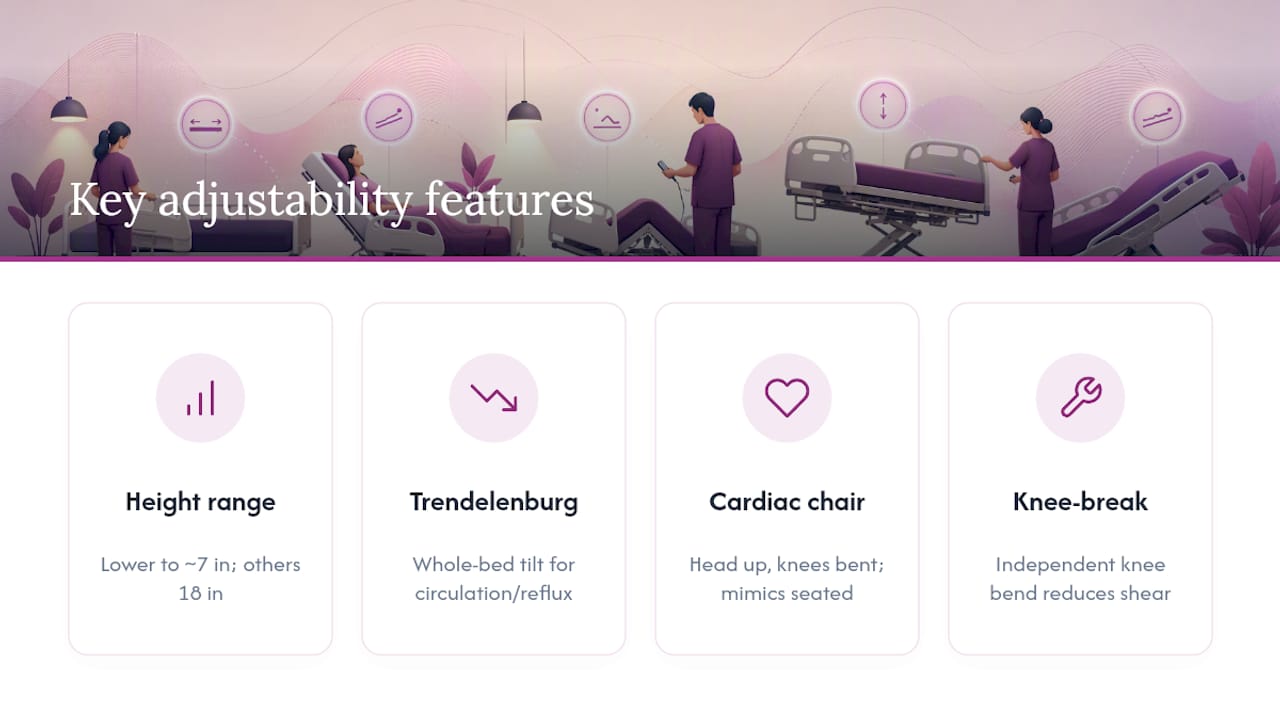
Height adjustment limits vary between models, and this matters more than it sounds. A full-electric bed that only lowers to 18 inches isn’t much help for a caregiver trying to match wheelchair height for a safe transfer, while one that goes down to around 7 inches is workable for a much wider range of transfer heights and doubles as a fall-risk feature.
Trendelenburg and reverse Trendelenburg positioning, which tilts the entire bed rather than just the head or foot section, supports specific medical needs like circulation management or reducing acid reflux discomfort, though it’s a feature found mainly on higher-end and clinical-grade models rather than standard home units.
Cardiac chair positioning raises the head section and bends the knee section simultaneously to approximate a seated position, useful for patients who need to sit upright for meals or breathing support but can’t safely transfer to a chair.
Independent knee-break articulation, separate from the foot section, reduces shear force on the skin when the head of the bed is raised, which matters directly for pressure injury prevention in patients who spend extended time in a semi-upright position.
What matters most when you’re actually the one choosing the bed
Most guides on this topic lead with features. Motor types, weight capacities, control panel layouts. All of that matters, but it’s not what determines whether the arrangement actually works six weeks in. What determines that is whether the caregiver can do the physical parts of the job without wrecking their own back, and whether the mattress and frame were chosen together instead of as two separate afterthoughts.
I’d argue the industry undersells how often mattress incompatibility, not the bed itself, causes the safety complaints that show up later. A frame can meet every spec on paper and still create a rail gap or a pressure problem because nobody checked the mattress against it.
For anything beyond a straightforward short recovery, loop in a clinician before you commit. And if the need arrived faster than you expected, a rental buys you time to get that assessment right instead of guessing under pressure.
How Seventhchakra makes getting the right bed simple
Seventhchakra is the alternative to guessing your way through a supplier’s catalogue: you get a hospital bed delivered the same day, with zero deposit, and full sanitization already done before it reaches your door.
If you’ve read through the categories above and landed on full-electric for the caregiver ergonomics, or semi-electric because the need is shorter-term, the next step is straightforward. Browse the hospital bed rental in Vancouver page to check same-day availability, or look at the hospital bed for home use if you’ve confirmed this is a long-term need worth purchasing outright. Pricing is upfront, rental terms flex if the recovery timeline changes, and there’s no deposit standing between you and a bed that shows up today, not next week.
Sources
- Hospital Beds for Home Use: Features, Sizing, and Insurance Coverage | MobilityLane
- Hospital Beds for Home Use 2026 | Complete Buying Guide
- The Family Caregiver’s Complete Guide to Hospital Beds at Home | SlumberSource
- Cochrane/clinical review on pressure injury prevention
FAQ
What are the different types of hospital beds?
The main types are manual, semi-electric, and full-electric, categorized by which functions are motorised. Specialty categories include bariatric, low-profile, ICU/critical-care, pediatric, and stand-assist beds.
What is a 5 function hospital bed?
A 5-function bed typically offers motorised head elevation, foot elevation, height adjustment, and often Trendelenburg and reverse Trendelenburg tilt, combining the core adjustments of a full-electric bed with added positioning options.
How do I know which mattress works with my hospital bed?
Match mattress thickness and articulation to the bed’s rail height and joint sections; alternating-pressure and low-air-loss mattresses are standard for patients at high risk of pressure injuries.
Should I rent or buy a hospital bed?
Rent for needs under about three months, and buy when the need will last a year or longer or requires a specialty model. Seventhchakra’s rental service offers same-day delivery with no deposit for shorter-term needs.
What are the 7 types of beds used in nursing care?
Common nursing bed categories include manual, semi-electric, full-electric, low/ultra-low, bariatric, ICU/critical-care, and pediatric beds, each addressing a distinct clinical or mobility need.


