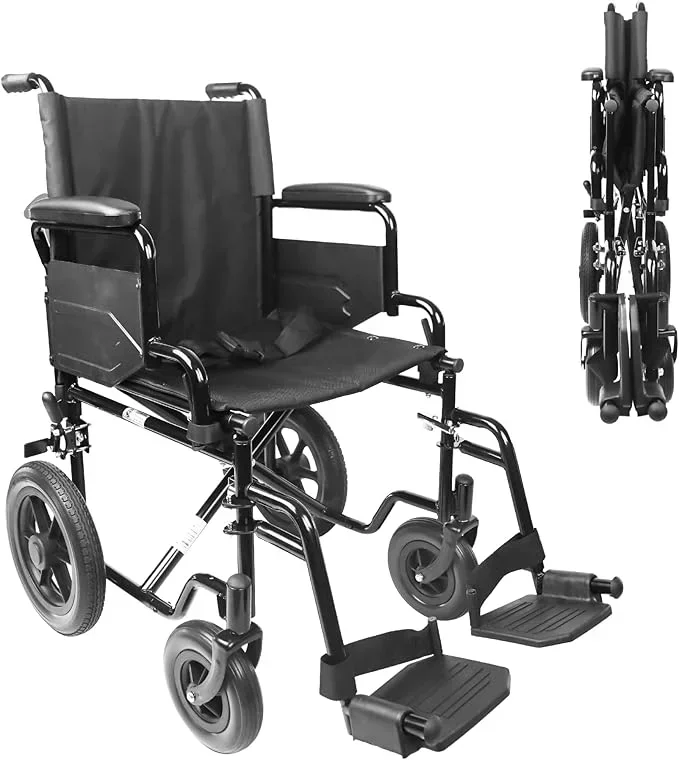
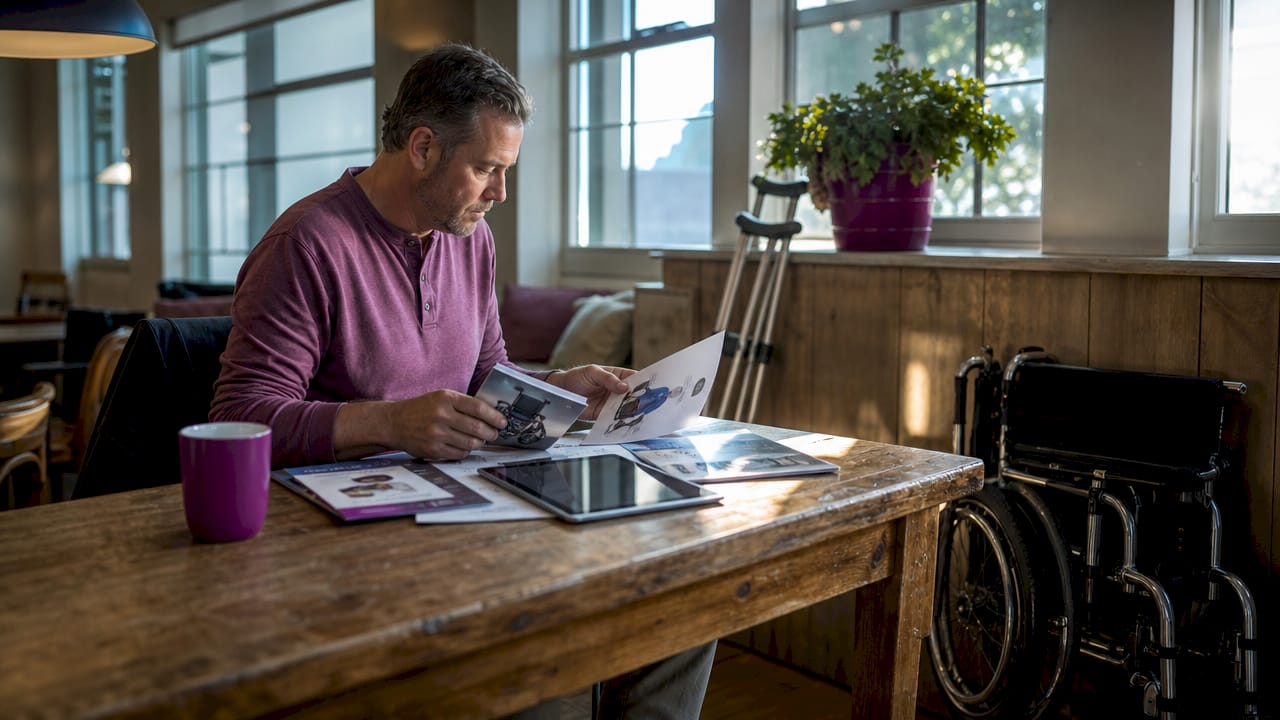
Mobility equipment for injured travellers refers to devices designed to assist people with limited mobility during travel, including wheelchairs, mobility scooters, crutches, and walkers. The right device restores independence, reduces physical strain, and keeps you moving through airports, hotels, and city streets without depending on others at every turn. Canadian travellers benefit from clear federal guidance: CATSA permits mobility aids beyond carry-on limits, which means your wheelchair or walker does not count against your baggage allowance. Choosing the correct accessible travel gear before you leave home is the single most effective way to protect your recovery and your trip.
1. What is the best mobility equipment for injured travellers?
The best mobility devices for travel fall into five categories, each suited to a different injury level and travel context. Knowing which category fits your situation saves you money, frustration, and physical setbacks on the road.
Manual wheelchairs are the most portable option. They fold flat, fit in most car boots and overhead storage areas, and require no charging. They work best for travellers who have upper body strength or a travel companion to assist with pushing.
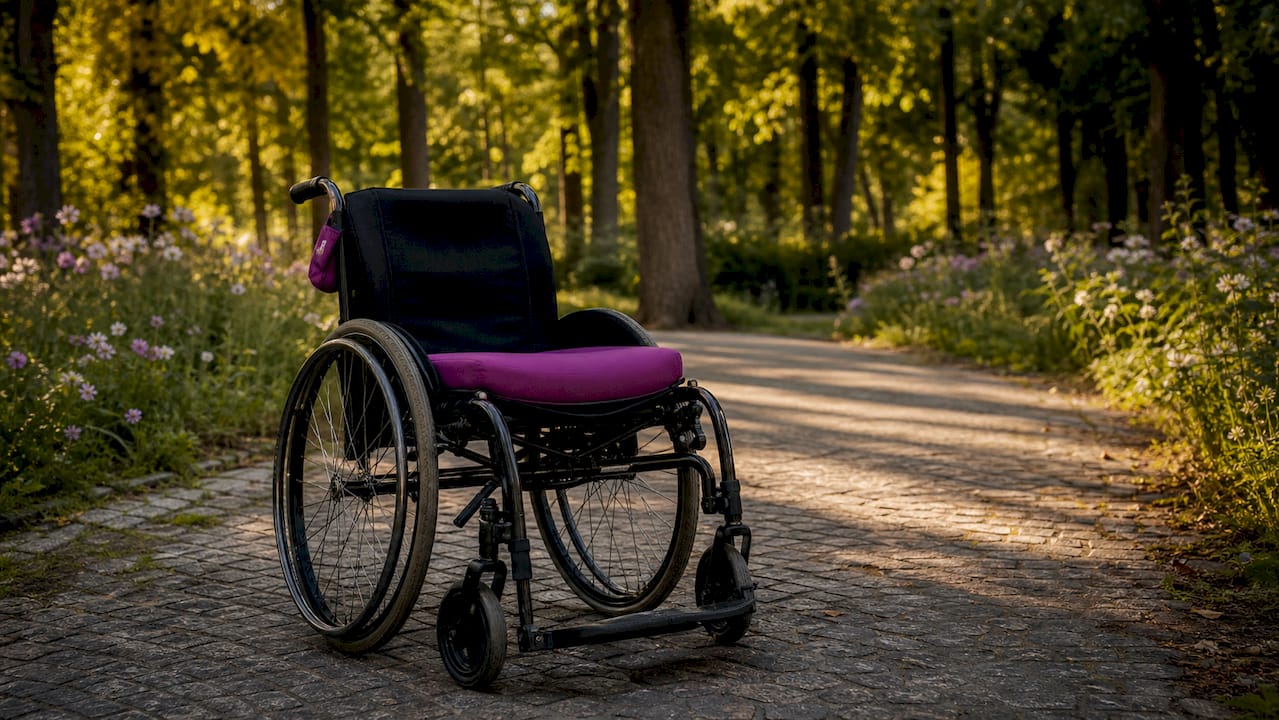
Electric wheelchairs cover longer distances without physical effort. Battery life is the main planning variable: most models run 15–25 km per charge, which covers a full day of sightseeing. The trade-off is weight and size, which affects airline transport and rental van space.
Mobility scooters are the most popular rental choice for injured visitors to Canadian cities. They come in three-wheel and four-wheel configurations, with mid-size scooter rentals suited to flat urban terrain and heavy-duty models built for rougher surfaces. Rental pricing in major Canadian cities ranges from $25/hr to $650/mo, with delivery fees between $50 and $120 depending on service level.
Canes, crutches, and walkers suit travellers with partial weight-bearing injuries. Their compact size is a genuine advantage: smaller mobility aids are permitted in the aircraft cabin and can be stored in overhead bins or under the seat. They require no charging and clear security in seconds.
Braces, orthotics, and prosthetics round out the category. These devices do not replace a primary mobility aid but reduce fatigue and protect healing tissue during long walking days.
Pro Tip: If you are unsure whether to rent a scooter or a wheelchair, read the scooter vs wheelchair comparison before booking. The terrain at your destination is usually the deciding factor.
2. How to navigate airport security with your mobility equipment
Airport security is the step that worries most injured travellers, but the process is well-defined and accommodating. CATSA screening officers are trained to work with passengers who use mobility devices.
Wheelchairs and mobility scooters go through explosive trace detection screening. The officer swabs the device and, in most cases, allows you to remain seated throughout. Private screening areas are available for devices that cannot pass through the standard checkpoint configuration.
For powered devices, battery type determines the process. Lithium-ion batteries below 300 Wh are generally permitted in carry-on baggage. Batteries above that threshold require airline pre-approval. Airline policies on power for medical devices vary widely, so confirm the rules with your carrier at least 48 hours before departure.
Major Canadian airlines require advance notice to arrange safe transport of battery-operated wheelchairs and scooters. Call the airline’s accessibility desk, not the general booking line. Confirm the request in writing and keep the confirmation number with your travel documents.
Pro Tip: Arrive at the airport 30 minutes earlier than you normally would. The extra time removes pressure from the screening process and gives staff room to assist you properly.
- Notify your airline at least 48 hours before departure about your powered mobility device.
- Carry documentation from your physician confirming medical necessity.
- Label your device with your name, flight number, and contact information.
- Request a gate check tag so your wheelchair or scooter is returned at the aircraft door, not the baggage carousel.
- Carry backup batteries capable of powering your device for at least 150% of your flight duration, since aircraft power outlets are unreliable.
3. Where to rent mobility equipment during your trip in Canada
Renting locally is the most practical solution for most injured travellers. You avoid the cost and risk of checking a device on a flight, and you get equipment that is already sized and adjusted for your needs.
Rental services in major Canadian cities cover a wide range of devices. Mobility scooter rentals range from $25/hr to $650/mo, with delivery fees between $50 and $120. Rental services with delivery and sanitisation reduce travel barriers significantly for injured visitors, since the device arrives clean and ready at your hotel or accommodation.
Seventhchakra serves Vancouver, Richmond, and Surrey with same-day delivery on wheelchairs, mobility scooters, and hospital beds. There are no upfront deposits, and rental terms flex to fit short stays or extended recovery periods. That model suits travellers who need a device for three days as much as those recovering over three months.
| Device type | Best for | Rental range |
|---|---|---|
| Manual wheelchair | Short trips, companions present | From $200/week |
| Mid-size mobility scooter | Urban sightseeing, flat terrain | From $200/week |
| Heavy-duty mobility scooter | Outdoor terrain, heavier users | From $200/week |
| Electric wheelchair | Long distances, no companion | Contact for pricing |
When you book a rental, ask for an orientation session. Rental services with orientation protocols let you practise operating the device before you head out, which reduces the risk of falls or equipment damage on day one.
- Book your rental before you arrive, not after. Availability in peak tourist season is limited.
- Confirm the delivery address and time window in writing.
- Test the device in a hallway or car park before using it on a busy street.
- Ask about the return process so you are not scrambling on checkout day.
4. How to choose the right device for your injury and travel plans
The right injury-friendly travel equipment depends on four variables: your injury type, the terrain at your destination, the duration of your trip, and how much you will be travelling alone.
Injury type sets the baseline. A lower-limb fracture with no weight-bearing restriction calls for a different device than a spinal injury requiring full postural support. For post-operative recovery, the mobility aids recovery guide outlines which devices suit each recovery stage.
Terrain is the variable most travellers underestimate. A three-wheel scooter handles smoothly on flat indoor surfaces but struggles on cobblestones or gravel paths. A four-wheel model or a heavy-duty scooter handles outdoor terrain far better. If your destination includes both indoor venues and outdoor parks, choose a device rated for mixed terrain.
Trip duration affects the rent-versus-buy calculation. For trips under four weeks, renting is almost always cheaper and more practical. For longer stays or recurring travel, purchasing a lightweight folding wheelchair or travel scooter pays off over time.
Solo travel raises the bar for device independence. A powered scooter or electric wheelchair removes the need for a companion to push, which matters enormously for travellers managing their recovery alone. Pair that with a Vancouver hotel delivery service so the device is waiting when you check in.
5. Tips and pitfalls for travelling with mobility aids
The most common mistake injured travellers make is assuming accessibility is universal. It is not. Proactive route research is the single strongest predictor of independent travel success for people using mobility devices.
- Map your route before you leave. Identify which transit stations have elevators and which bus routes have boarding ramps. In Canadian cities, most major transit authorities publish accessibility maps online.
- Carry a backup battery for any powered device. Aircraft power is unreliable, and city charging points are not always accessible.
- Pack a basic tool kit: a small wrench, tyre repair kit for scooters, and the manufacturer’s contact number. Minor mechanical issues are far easier to fix on the road than to explain to a rental agency after the fact.
- Review your travel insurance policy before departure. Many standard policies exclude pre-existing conditions and medical equipment damage. A medical travel insurance add-on covers device loss, damage, and emergency rental replacement.
- Plan for delays. If your device is lost or damaged in transit, you need a local rental contact ready to deliver a replacement. Seventhchakra’s same-day delivery in Vancouver and Richmond makes it a reliable backup option for travellers in the Lower Mainland.
Pro Tip: Take photos of your device before checking it at the gate. Date-stamped photos are the fastest way to file a damage claim with an airline.
Key takeaways
The most effective approach to travelling with mobility challenges is to match your device to your injury type, confirm airline and CATSA requirements in advance, and book a local rental service that delivers to your accommodation.
| Point | Details |
|---|---|
| CATSA exempts mobility aids | Your wheelchair or walker does not count toward your carry-on baggage limit. |
| Advance airline notice is mandatory | Contact the airline accessibility desk at least 48 hours before departure for powered devices. |
| Renting locally beats checking devices | Local rentals with delivery eliminate airline damage risk and reduce upfront cost. |
| Terrain drives device choice | Match your scooter or wheelchair model to the surfaces you will actually travel on. |
| Backup batteries are non-negotiable | Carry enough battery power for at least 150% of your flight duration for any powered device. |
What I have learned about travelling with mobility devices
The planning gap no one talks about
Most articles on accessible travel focus on what equipment exists. Far fewer address the gap between knowing your options and actually executing a smooth trip. That gap is where most injured travellers run into trouble.
I have seen travellers arrive at a destination with the right device and no plan for how to use it. They did not check whether their hotel entrance had a step. They did not confirm the transit route had working elevators. They assumed “accessible” meant the same thing everywhere. It does not.
The travellers who manage best are the ones who treat the accessibility audit as part of their trip planning, not an afterthought. They call the hotel. They check the transit authority’s accessibility map. They book their rental before they book their flights.
Technology is improving the picture. Rental services now offer sanitised equipment, orientation sessions, and same-day delivery. That removes a real barrier. But technology does not replace the phone call you need to make to confirm the hotel lift is wide enough for a four-wheel scooter.
My honest advice: give yourself one extra planning day specifically for accessibility logistics. That single day will save you more stress than any piece of equipment you rent.
— Chandan
Mobility equipment rentals in Vancouver and Richmond
Seventhchakra delivers wheelchair rentals in Vancouver and mobility scooter rentals across Vancouver, Richmond, and Surrey, with same-day delivery and no upfront deposit. Every device is sanitised before it reaches you.
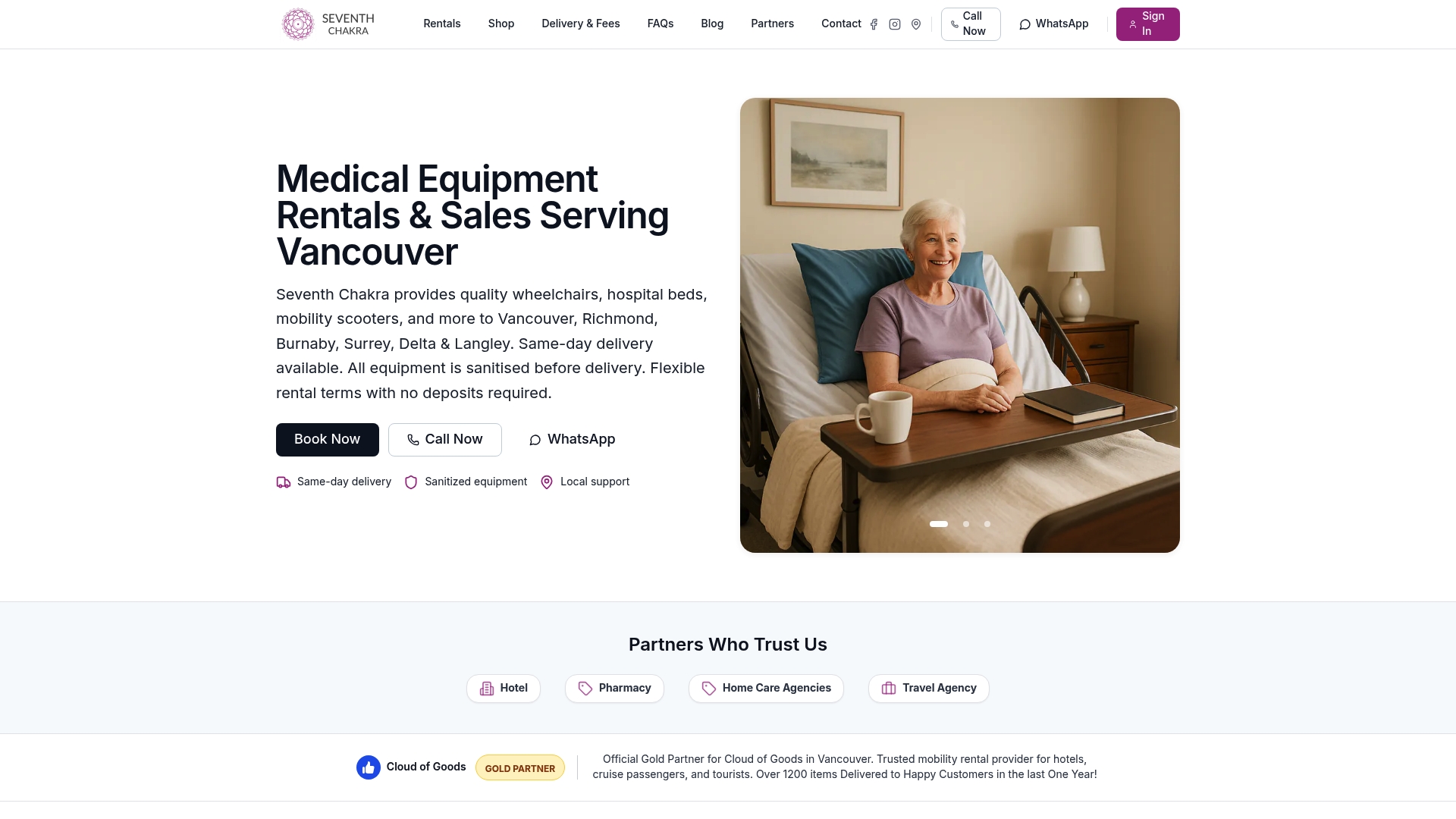
Whether you need a mid-size scooter for a week of city sightseeing or a wheelchair for a longer recovery stay, Seventhchakra’s flexible rental terms fit short and extended needs equally well. The team also covers medical equipment rentals in Richmond BC for travellers staying outside the city centre. Visit the website to check availability and book your device before you arrive.
FAQ
Are mobility aids counted as carry-on baggage in Canada?
No. CATSA permits mobility aids in addition to your standard carry-on baggage allowance. Your wheelchair, scooter, or walker does not use up one of your carry-on slots.
How far in advance should I notify my airline about a powered wheelchair?
Notify your airline at least 48 hours before departure. Major Canadian airlines require advance notice to arrange safe transport and gate-check procedures for battery-operated devices.
Is it cheaper to rent a mobility scooter locally or bring my own?
For trips under four weeks, renting locally is almost always cheaper. Local rental pricing in Canadian cities starts from $200/week, and delivery to your hotel removes the risk of airline damage to your own device.
Can I keep my cane or walker with me on the plane?
Yes. Smaller mobility aids such as canes, crutches, and walkers are permitted in the aircraft cabin. They can be stored in the overhead bin or under the seat in front of you.
What happens if my mobility device is damaged by the airline?
File a damage report at the airport before leaving the terminal. Date-stamped photos taken before check-in are the strongest evidence for a claim. Travel insurance with medical equipment coverage provides an additional layer of protection and can fund a replacement rental while your claim is processed.
Recommended
- Mobility aids for post-operative patients: a recovery guide | Seventh Chakra Medical Blog
- How tourists rent wheelchairs locally: a 2026 guide | Seventh Chakra Medical Blog
- Matching mobility aids to patient condition: a practical guide | Seventh Chakra Medical Blog
- Where to Buy the Best Mobility Equipment in Vancouver: Complete 2026 Buyer’s Guide | Seventh Chakra Medical Blog