
Renting a mobility scooter in Burnaby and using it on TransLink
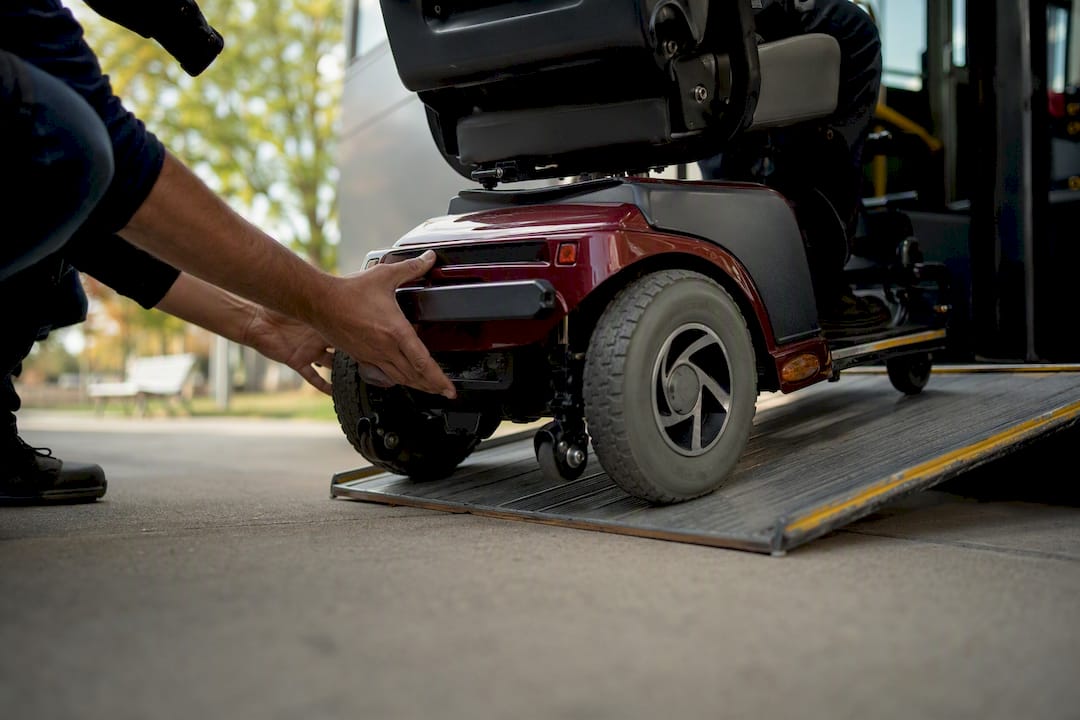
Seventh Chakra delivers mobility scooters same day across Burnaby, with no deposit required and every unit sanitized before it reaches your door. As for transit, most riders can bring a rented scooter onto TransLink services, but the answer depends on your device’s size and weight against TransLink’s rules for accessible transit. Conventional buses and SkyTrain enforce tighter dimension limits, while HandyDART accepts larger scooters and offers door-to-door pickup for riders who qualify.
Before you book anything, here’s what actually determines whether transit will work for you:
- Measure your scooter’s width, length, and total weight with you seated on it.
- Call Seventh Chakra to confirm same-day delivery and check the rental fits your trip.
- Call TransLink or check HandyDART eligibility if your scooter is wider than a standard wheelchair.
- Keep your scooter’s spec sheet handy in case a driver asks for dimensions at boarding.
Key Takeaways
Successful mobility scooter transit in Burnaby depends on matching your device’s measured dimensions to the correct TransLink service before you travel, not after.
| Point | Details |
|---|---|
| Measure before booking | Record width, length, and total weight with the rider seated, including baskets and mirrors. |
| Match device to service | Scooters near 61 cm wide should default to HandyDART instead of conventional buses. |
| Book HandyDART early | Reserve HandyDART trips in advance through TransLink’s booking line for door-to-door service. |
| Confirm securement points | Rented scooters need working brakes and proper tie-down anchors before any trip. |
| Rent locally with no deposit | Seventh Chakra offers same-day, no-deposit scooter rentals in Burnaby with full sanitization. |
Table of Contents
- Mobility scooter transit Vancouver rules: conventional service vs HandyDART
- How do you decide between conventional transit and HandyDART?
- What does it cost to rent a mobility scooter in Burnaby?
- Can you take a mobility scooter on SkyTrain and SeaBus?
- How do you secure a mobility scooter on TransLink vehicles?
- Are TransLink stations accessible for scooter users?
- Planning a trip across bus, SkyTrain, and SeaBus
- What this guide gets right that most advice misses
- Booking your scooter: what happens on delivery day
- Sources
- FAQ
Mobility scooter transit Vancouver rules: conventional service vs HandyDART
TransLink doesn’t apply one rulebook to every vehicle. Conventional buses, SkyTrain, SeaBus, and community shuttles follow one set of size and weight thresholds, while HandyDART, the door-to-door paratransit service, allows considerably more room.
On conventional transit, the TransLink tariff and bylaw sets maximum width around 61 centimetres and length around 122 centimetres, with combined weight limits (rider plus device) that can run as low as 205 kilograms depending on the vehicle. A driver who judges a scooter unsafe, unstable, or too wide for the ramp can refuse boarding, and that decision is final in the moment; for more safety advice relevant to mobility device users, see wheelchair, walker and cane safety.
Pro Tip: Measure width including any mirrors, baskets, or bumpers. A scooter that’s 58 centimetres at the seat but 65 centimetres across the basket will get turned away at the door.
HandyDART works differently. Its rider’s guide allows devices up to 94 centimetres wide and 122 centimetres long, with weight limits reaching 364 kilograms for riders who can board independently, or closer to 250 kilograms when lift assistance is needed. That’s a meaningfully larger window than any fixed-route bus offers.
A few things stay consistent no matter which service you’re using:
- Brakes must work, and the device can’t have loose or sharp projections.
- Every scooter needs proper securement points for tie-downs.
- Drivers and attendants have discretion to ask you to dismount if stability looks questionable.
If your scooter sits anywhere near the conventional-transit ceiling, plan around HandyDART instead of hoping a driver waves you through.
How do you decide between conventional transit and HandyDART?
Start with your scooter’s footprint, not your travel preference. A compact three-wheel scooter under 55 centimetres wide will usually clear conventional buses and SkyTrain without issue. Anything approaching 61 centimetres in width, or heavier four-wheel models, pushes you toward HandyDART territory, where the size ceiling is considerably higher.
Trip length matters too. Conventional transit is faster for short hops between well-served stations, since you’re not waiting on a booking window. HandyDART, by contrast, requires advance reservation and works on a shared-ride model, so your pickup and drop-off times shift around other passengers.
If you’re only using the scooter briefly (a single outing, a hotel-to-restaurant trip), folding or storing it and using accessible taxi or rideshare options sometimes beats either transit option, especially for tourists unfamiliar with TransLink’s system. Frequent daily commuters, meanwhile, benefit more from learning the conventional bus and SkyTrain routes near their home, since HandyDART’s booking requirements don’t suit last-minute trips well.
When in doubt, treat HandyDART as the safer default for anything close to size limits. It reduces the risk of a refused boarding partway through your day, which matters more if you’re travelling alone.
What does it cost to rent a mobility scooter in Burnaby?
Pricing for a rented scooter in Burnaby typically breaks into daily, weekly, and monthly terms, with the per-day rate dropping as rental length increases. Seventh Chakra structures rentals this way specifically because needs vary so widely between a tourist visiting for four days and a caregiver managing a parent’s six-month recovery.
What separates Seventh Chakra from a lot of local competitors is the absence of a deposit. Many rental outfits hold a security deposit against damage or loss, which ties up cash you may need for other recovery costs. Seventh Chakra skips that step entirely, and every scooter arrives already sanitized, so you’re not paying extra for a cleaning fee or waiting on a disinfection appointment.
Same-day delivery is included rather than treated as a rush surcharge, which matters if you’ve just been discharged from hospital or a family member’s flight lands tomorrow and they’ll need mobility support immediately. Rental terms flex around your actual situation: short-term for a visit, longer-term for ongoing home recovery, with adjustments available if your needs change partway through.
Get a firm quote based on your dates and mobility needs directly through Seventh Chakra’s mobility scooter rental page rather than estimating from a generic price list, since duration and scooter type both shift the final number.
Can you take a mobility scooter on SkyTrain and SeaBus?
Yes, and it’s generally the smoothest part of a multi-leg trip once you’re aboard. SkyTrain platforms are level with train floors, so there’s no ramp deployment or driver judgment call involved the way there is on a bus. The main etiquette point: position your scooter in the designated priority seating area, facing the direction that lets you brake against the direction of travel, and set your brake fully once stopped.
SeaBus terminals load similarly, with wide gangways designed for wheeled devices, though the vessel does rock slightly at the dock during boarding. Give yourself a few extra seconds before rolling on rather than rushing with the crowd.
Etiquette that keeps things moving for everyone:
- Yield the priority area to wheelchair users if the train is crowded and only one spot fits a larger scooter.
- Avoid blocking doorways, even briefly, since SkyTrain doors won’t wait.
- Turn off (not just idle) your scooter’s motor while parked in the priority zone if it has an idle creep.
Neither SkyTrain nor SeaBus enforces the strict width caps that conventional buses do, since there’s more open floor space, but the same basic safety standard applies: working brakes, no dangerous projections, and a stable, controllable device.
How do you secure a mobility scooter on TransLink vehicles?
Securement expectations shift depending on the vehicle, and knowing them ahead of time saves you an awkward exchange with a driver mid route.
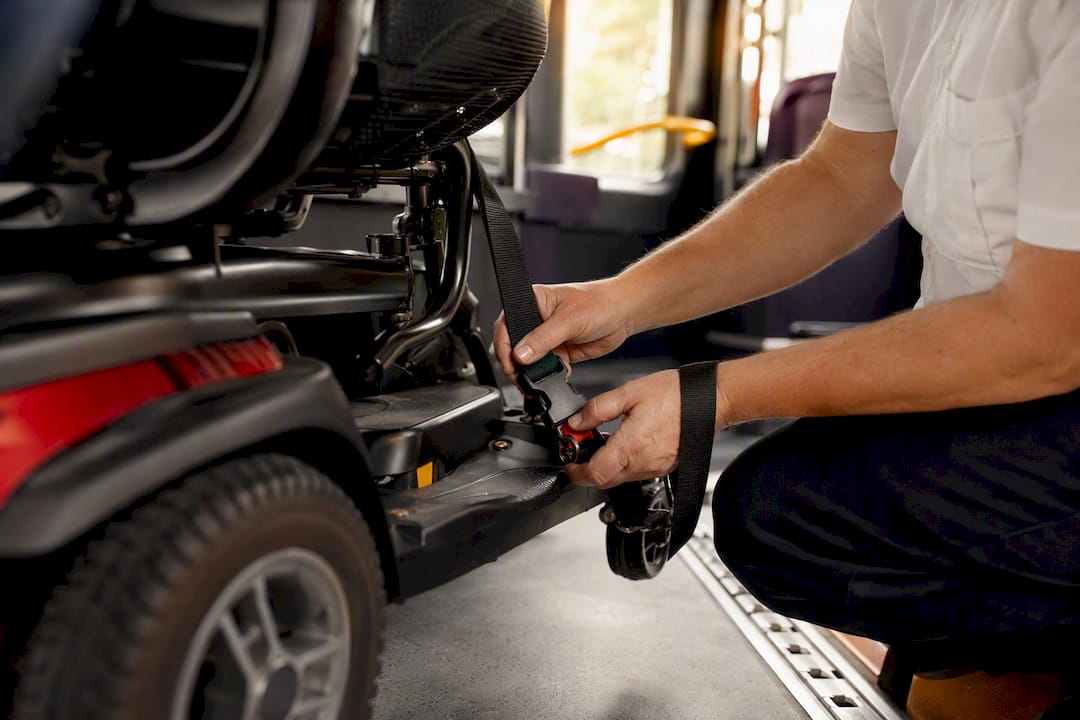
On conventional buses, drivers use the built-in ramp and ask you to position your scooter facing either forward or backward in the designated securement area, then engage your parking brake. Buses don’t use tie-down straps the way HandyDART vehicles do; the driver relies on your brake plus the vehicle’s low speed and gradual stops.
HandyDART vehicles use actual tie-down straps at four points on the scooter frame, which is why securement points matter so much for eligibility. A device without proper anchor points can be refused outright, since there’s nothing for the crew to strap to. This is also why HandyDART staff sometimes recommend that riders on three-wheeled scooters dismount and sit in a regular vehicle seat while the scooter itself gets strapped down separately. Three-wheel designs tip more easily under braking than four-wheel models, and separating rider from device removes that risk entirely.
SkyTrain and SeaBus don’t use mechanical securement at all. You’re expected to set your brake and hold a stable position using the grab rails available in the priority area.
Before any trip, confirm your rented scooter has intact securement points. Pro Tip: Ask Seventh Chakra to point out the securement points during delivery setup so you’re not hunting for them in front of a HandyDART crew.
Are TransLink stations accessible for scooter users?
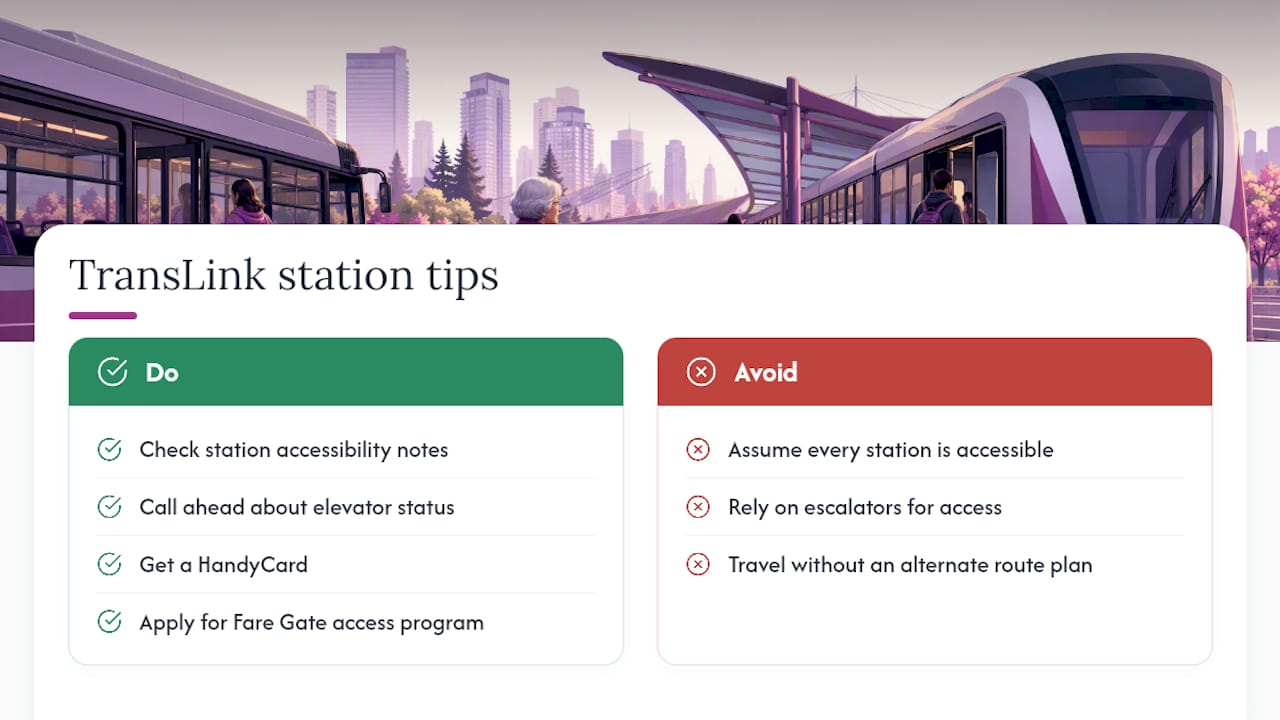
Most SkyTrain stations across the network use elevators rather than escalators as the primary accessible route, and platforms sit level with train floors, so there’s no ramp gap to navigate once you’re up top. Bus exchanges built or renovated in recent years generally include curb cuts, tactile paving, and level boarding zones designed around wheeled mobility devices.
That said, accessibility isn’t uniform everywhere. Older stations or smaller bus loops sometimes have narrower approach paths or steeper curb transitions than newer infrastructure. If you’re planning a first trip through an unfamiliar station, it’s worth checking TransLink’s station-specific accessibility notes before you go, particularly if an elevator outage would strand you without an alternate route.
TransLink’s broader accessibility plan also references programs like HandyCard, which streamlines identification for riders needing accessibility accommodations, and the Universal Fare Gate Access Program, which addresses fare gate width for larger mobility devices at SkyTrain stations. Both are worth looking into if you expect to be using Vancouver-area transit regularly rather than for a single trip.
For a one-off outing, calling ahead about elevator status at your specific stations takes two minutes and prevents a frustrating detour if a lift happens to be down for maintenance that day.
Planning a trip across bus, SkyTrain, and SeaBus
Multi-leg trips are where scooter users run into the most friction, mostly because each mode has its own boarding rhythm. The fix is building extra time into transfers rather than assuming connections will line up the way they might for an able-bodied rider walking between platforms.
A few practical habits make transfers smoother:
- Build in 10 to 15 extra minutes per transfer, since ramp deployment and elevator waits add up.
- Check real-time elevator status for SkyTrain stations along your route before leaving.
- If one leg of your trip involves a conventional bus near size limits, consider swapping that leg for HandyDART rather than risking a refusal partway through your day.
- Keep your scooter’s charge topped up before longer trips combining multiple modes, since delays extend total travel time.
Tourists staying in Burnaby hotels planning day trips into downtown Vancouver benefit especially from mapping the full route ahead of time, including which stations have elevators versus escalators only. If your itinerary includes a SeaBus crossing to North Vancouver, factor in the terminal’s own boarding sequence, which runs on a fixed schedule rather than the more frequent SkyTrain cadence.
For anyone renting short term, matching your scooter’s size to your planned route matters more than picking the cheapest rental. A slightly smaller model that clears conventional bus limits can save you from restructuring your whole day around HandyDART’s booking window.
What this guide gets right that most advice misses
Most transit accessibility content treats mobility scooters as a single category with one set of rules, and that’s the mistake. A 55 centimetre wide scooter and a 70 centimetre wide one face completely different realities on Vancouver-area transit, and conflating them leaves readers unprepared at the boarding door.
The conventional advice, “just bring your mobility aid on transit,” undersells how much operator discretion factors into conventional bus boarding specifically. HandyDART’s dimension and weight allowances are considerably more generous, and readers who default to fixed-route buses because it feels simpler often set themselves up for a refused boarding they didn’t see coming.
What actually matters first is measurement, done properly, with the rider seated and any protruding baskets or mirrors included. Second is matching the transit mode to the device rather than the trip. A rental scooter chosen with TransLink’s limits in mind from the start avoids nearly every problem this guide addresses. That’s a decision made before you ever reach a bus stop, not something to figure out at the ramp.
— Chandan
Booking your scooter: what happens on delivery day
Booking with Seventh Chakra takes a few minutes once you have your details ready: your name, contact number, preferred delivery and pickup dates, delivery address in Burnaby or the wider Greater Vancouver area, and a rough sense of your mobility needs. If you already know your scooter’s ideal width and weight capacity from checking TransLink’s limits, mention that too, since it helps match you to a model that clears your planned routes.
Same-day delivery is available for most Burnaby bookings, which matters when a hospital discharge or a family member’s unexpected arrival doesn’t leave time for a multi-day wait. On delivery, your scooter arrives fully sanitized, already set up, and the delivery team walks you through the basics: brake engagement, battery charging, and how to fold or adjust the model you’ve received. You’ll also get contact details for ongoing support if anything comes up mid-rental, whether that’s a technical question or a need to extend your dates.
No deposit is required at any point in the process, which frees up cash that’s often better spent elsewhere during a recovery period or a short visit. Before you head out on transit, double check your scooter’s dimensions against whichever TransLink service you’re planning to use. Start your booking through Seventh Chakra’s mobility scooter rental page, or browse wheelchair rental options if a scooter isn’t the right fit for your situation.
FAQ
Can I bring a rented mobility scooter on any TransLink bus?
Only if it meets conventional-transit limits, roughly 61 centimetres wide and 122 centimetres long, and the driver judges it stable and safe to board.
How much bigger is HandyDART’s size allowance than a regular bus?
HandyDART accepts scooters up to 94 centimetres wide and 122 centimetres long, notably wider than the conventional-transit limit.
Do I need to book HandyDART in advance?
Yes, HandyDART requires advance reservation through its telephone booking line, and requests are generally accepted up to seven days ahead.
Does Seventh Chakra require a deposit for scooter rentals?
No, Seventh Chakra rents mobility scooters in Burnaby with no deposit required, and delivery is available same day in most cases.
Should I dismount from my scooter on HandyDART?
For some three-wheeled scooters, yes. HandyDART crews often recommend the rider sit in a vehicle seat while the scooter is strapped down separately to reduce tipping risk.
What happens if my scooter doesn’t have securement points?
Transit operators can refuse to carry it, since HandyDART crews and some conventional vehicles need proper anchor points to strap the device down safely.


