
Monthly wheelchair rental: costs, options, and how to book fast
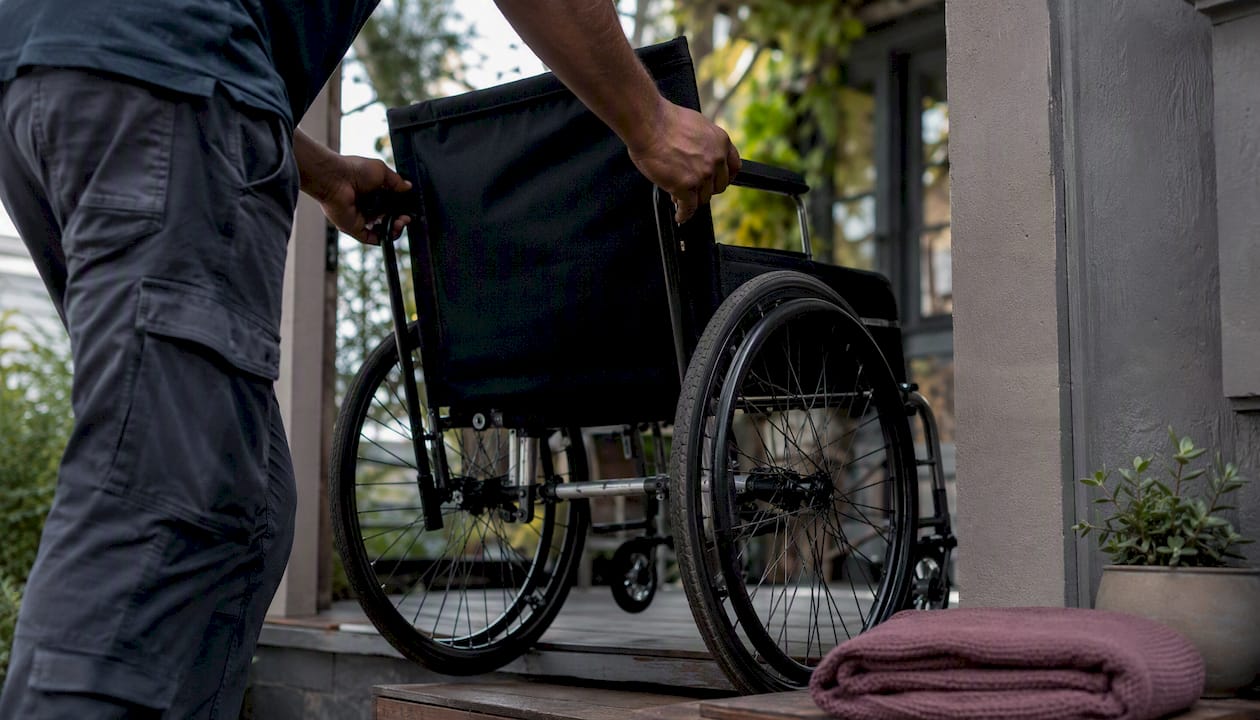
If you need a monthly wheelchair rental, the fastest reliable route is calling a local medical-equipment rental provider that offers same-day or next-day delivery, no upfront deposit, and a written rate sheet before you commit. Seventh Chakra Medical serves the Greater Vancouver area with exactly this setup, and it’s the option we’d point you to first if you’re weighing where to rent a wheelchair on short notice.
Budget expectations vary by chair type. A basic transport chair typically runs at the low end of the monthly scale, a standard manual wheelchair sits in the middle, and a power or electric wheelchair costs the most because of the motor, batteries, and controller involved. Bariatric and tilt chairs land higher still due to specialized frames and lower manufacturing volume.
Before you call, have three things ready:
- The delivery address and preferred delivery window (same-day or scheduled).
- Rental start and end dates, or at least an estimated duration.
- Basic user details: approximate weight, whether the user can self-propel, and whether the chair needs to fold for a vehicle or apartment hallway.
With that information in hand, most providers can quote you in a single phone call and often deliver the same day.
Table of Contents
- Types of wheelchairs available for monthly rental and when to pick each
- What does a monthly wheelchair rental typically cost?
- How do rental terms, delivery, and sanitization work?
- How do I rent a wheelchair step by step?
- Will insurance or provincial programs cover the cost?
- What should you ask a provider, and what are the red flags?
- What actually matters when you’re renting for a caregiving situation
- Book a monthly wheelchair rental with same-day delivery in Vancouver
- Key takeaways before you book
- Sources
- FAQ
Types of wheelchairs available for monthly rental and when to pick each
Not every wheelchair does the same job, and picking the wrong one is the single most common regret caregivers report after a rushed rental. Hospitals and rehabilitation centres generally sort wheelchairs into five categories, running from Type 1 for occasional or lighter use up through Type 5 for complex needs requiring tilt and advanced postural support, according to hospital patient education resources on wheelchair options. That classification is worth knowing because vendors and occupational therapists reference it constantly during assessment.
Transport chairs are the lightest option and are meant to be pushed by a caregiver rather than self-propelled. They fold flat, fit in most trunks, and work well for appointments, airports, and short outings where the user won’t be moving the chair themselves, as buyer guides on wheelchairs in Canada point out.
Standard manual wheelchairs have large rear wheels sized for self-propulsion, making them the right call for someone who wants independence around the house or neighbourhood. Lightweight and folding chairs trade a bit of durability for portability. Manual chairs commonly weigh 30 to 45 pounds, while lightweight rigid-frame models can drop to 15 to 25 pounds, a difference that matters a great deal if a caregiver is lifting the chair into a car trunk several times a day, per wheelchair buying guides.
Bariatric chairs offer reinforced frames and wider seats for higher weight capacities. Reclining and tilt chairs redistribute pressure for users at risk of skin breakdown or who need to rest in a semi-reclined position throughout the day. Electric and power wheelchairs give users with limited arm strength or endurance real independence over longer distances, running on rechargeable batteries with joystick controls.
| Chair type | Best for | Typical monthly usage |
|---|---|---|
| Transport chair | Appointments, travel, short outings | Occasional, caregiver-pushed |
| Standard manual | Everyday self-propulsion at home | Daily active use |
| Lightweight folding | Frequent car transport, apartment living | Daily, portability-focused |
| Bariatric | Higher weight capacity needs | Daily, home or facility use |
| Power/electric | Independent mobility over distance | Daily, longer-range use |
| Reclining/tilt | Pressure relief, complex postural needs | Daily, clinical support |
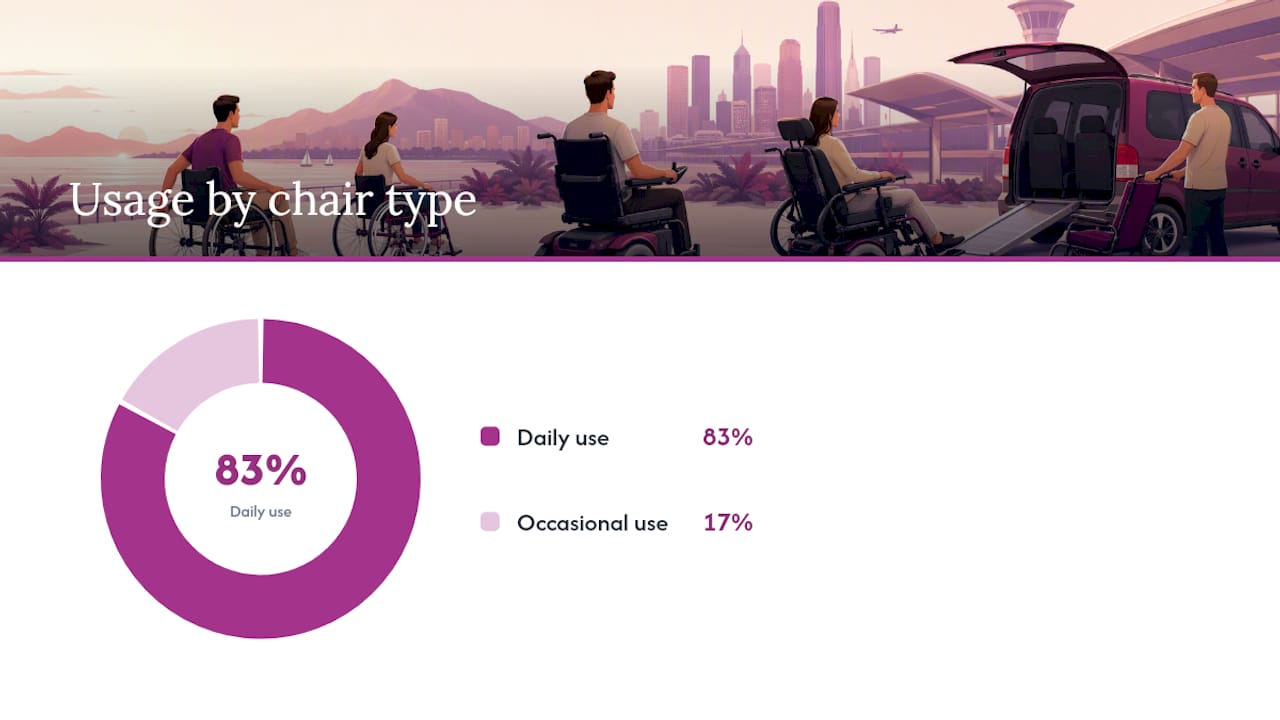
If you’re comparing options, Seventh Chakra’s lightweight folding wheelchair rental covers the travel and apartment-living scenario directly, while the electric wheelchair rental page is built for the longer-range independence case.
What does a monthly wheelchair rental typically cost?
Pricing depends heavily on chair type, and the gap between a transport chair and a power wheelchair can be substantial. As a rough guide: transport chairs sit at the affordable end, standard manual chairs cost somewhat more, lightweight folding models land in a similar range with a small premium for the frame material, bariatric chairs run higher because of reinforced components, and power wheelchairs top the scale due to battery and motor costs. Rates also shift by region, so a quote in a smaller town won’t necessarily match one in a major metro area.
Several factors explain why two providers can quote different monthly rates for what looks like the same chair on paper:
- Condition and age of the equipment. A two-year-old chair with worn tires rents for less than a recently refurbished one.
- Included accessories. Cushions, footrests, and safety brakes sometimes come standard and sometimes cost extra.
- Delivery distance. Same-day delivery across a city core costs less to fulfill than a delivery to an outlying suburb.
- Deposit policy. Providers who require a security deposit sometimes offer a lower base rate; providers with no deposit may price slightly higher to offset that risk.
- Minimum rental period. A 30-day minimum often unlocks a better per-day rate than booking week to week.
Rental pricing is commonly structured across daily, weekly, and monthly tiers, and renting for a longer stretch usually delivers a real per-day discount compared to daily rates, according to the Wheelchairrental. That same source notes a weekend rental can sometimes cost nearly as much as a full week, so always ask whether your rate becomes retroactive if you end up extending.
Pro Tip: Ask every provider for a written rate sheet before you agree to anything over the phone. A verbal quote can quietly shift once delivery fees, accessory charges, and late-return penalties get added at the end.
When comparing quotes, confirm: the base monthly rate, what’s included versus extra, the deposit amount (if any), delivery and pickup fees, and what happens if you need to extend past the original end date.
How do rental terms, delivery, and sanitization work?
Most monthly wheelchair rentals run on a 30-day minimum, though some providers offer daily wheelchair rentals for shorter needs and prorate the difference if you extend into a second month. Ask specifically how extensions are billed. Some providers apply the better monthly rate retroactively if you started on a shorter plan and decided to keep the chair longer; others charge the original daily rate for every day past the initial term, which adds up fast.
Delivery and pickup vary by provider. Some offer genuine same-day delivery within a defined service window, others schedule delivery a day or two out, and a few expect curbside pickup instead. Ask about the delivery fee structure up front, since it’s sometimes bundled into the monthly rate and sometimes billed separately.
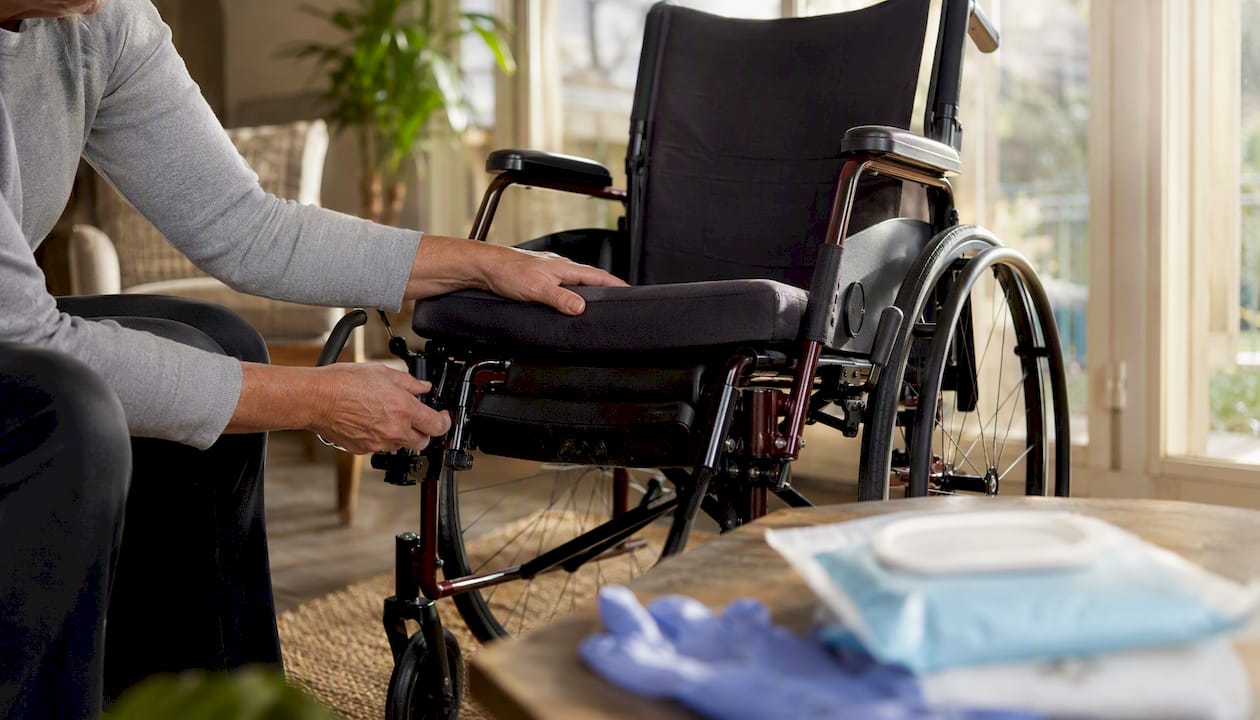
Sanitization matters more than most renters think to ask about. A wheelchair that’s been in someone else’s home for weeks should be fully cleaned and disinfected before it reaches you, not wiped down in the driveway. Ask what cleaning protocol the provider follows and whether it happens before every delivery, not just occasionally.
For anyone renting a chair that will be secured in a vehicle for transport, safety standards matter too. Guidelines from NMEDA on vehicle modification and wheelchair securement cover documentation, load capacity, and securement systems that reputable providers and converters should already be following.
Pro Tip: Take two or three photos of the wheelchair the moment it arrives, focusing on the tires, upholstery, and frame. It takes thirty seconds and can save you an argument over damage fees when you return it.
How do I rent a wheelchair step by step?
Renting doesn’t need to be complicated if you follow a consistent order:
- Do a quick needs assessment. Decide whether the user needs self-propulsion, caregiver-pushed transport, or powered mobility.
- Note measurements and specifics. Approximate weight, seat width needs, and whether the chair must fold for a car.
- Request a quote. Call or use online booking and ask for the full monthly rate, not just a headline number.
- Confirm accessories. Decide if you need a cushion, footrests, or brakes, and check whether they’re included.
- Book delivery. Pick a delivery window that matches when the user actually needs the chair, not just the earliest slot.
- Inspect on arrival. Check tires, brakes, and upholstery before the delivery driver leaves.
- Keep every document. Save the invoice and any condition notes in case you need them for an insurance or funding claim later.
When you call, have these questions ready: what’s the intended use (home, travel, appointments), what’s the user’s approximate weight, does the chair need to fit in a specific vehicle, how much mobility assistance does the user need day to day, and what’s the expected return window?
At delivery, expect a brief condition check and a quick walkthrough of brakes and adjustments. At return, most providers do the same inspection in reverse. Late returns typically carry a daily fee on top of the monthly rate, and damage beyond normal wear can trigger a separate charge, so ask what counts as “normal wear” before you sign anything.
Will insurance or provincial programs cover the cost?
Usually not for a short rental, and it’s worth knowing that upfront so you’re not caught off guard. Ontario’s Assistive Devices Program (ADP) can cover a portion of wheelchair costs, but applications require documentation and typically take one to two months to process, according to Ontario’s ADP program page. That timeline means a rental almost always ends up paid out-of-pocket while the paperwork works its way through.
If you’re renting because you’re planning to eventually buy, some vendors will refund part of an outright purchase after ADP approval comes through, using the rental period as a bridge while funding is processed, per guidance from Vital Mobility’s wheelchair types guide. It’s a workflow worth asking about directly if you expect to need the chair for more than a couple of months.
Private insurance behaves differently across plans. Some cover rental costs for a specified medically necessary period, but almost all require pre-authorization before the rental starts, not after the fact. Practical steps that protect you either way:
- Get a written quote before booking, not a verbal estimate.
- Keep every receipt, even for accessories.
- Ask the provider for an invoice formatted the way your insurer or ADP requires.
- If buying instead of renting, ask in advance whether a partial refund is possible once ADP approves your claim.
Readers researching broader assistive program support outside the wheelchair-specific process may also find value in community participation program guidance, which outlines how assistive programs generally structure eligibility and access.
What should you ask a provider, and what are the red flags?
A short phone call tells you almost everything you need to know about whether a provider is worth trusting with a month of someone’s mobility. Ask directly: is same-day delivery actually available, or is that just marketing language? What sanitization process runs before delivery? Is there a maintenance or service line you can call if something breaks mid-rental? Are cushions and footrests included, or extra? What’s the deposit policy?
Watch for these warning signs before you commit:
- Vague pricing that won’t be put in writing.
- No clear answer on how equipment gets cleaned between renters.
- Refusal to document the chair’s condition at delivery.
- Long minimum rental periods with no prorated exit if your needs change.
- Unclear or undefined damage fees buried in fine print.
A provider that hesitates to give you a written rate sheet, a documented delivery condition check, and a real phone number for support issues is telling you something about how they’ll handle a problem mid-rental. The businesses worth trusting make all three easy to get before you’ve paid a cent.
Manufacturer and dealer accreditation through programs like the NMEDA Manufacturer Quality Assurance Program sets expectations around service networks, training, and warranty coverage. It’s a reasonable proxy for whether a provider takes maintenance seriously, even outside the vehicle-conversion space it was originally written for.
What actually matters when you’re renting for a caregiving situation
Renting a wheelchair sounds like a straightforward transaction until you’re the one doing it for someone else, usually under time pressure, often while juggling a dozen other logistics. The trade-offs that matter most rarely show up in a price comparison.
Portability versus comfort is the first real fork in the road. A lightweight folding chair fits in a hatchback and saves your back, but it won’t offer the same cushioning or stability as a heavier standard frame. Caregivers travelling with an older relative for a family event often default to the cheapest weekly option, only to discover the chair doesn’t fold the way they expected when it’s time to load it for the drive home. That’s a frustrating discovery to make in a parking lot.
Same-day delivery versus a cheaper weekly rate is the second trade-off, and it’s usually not close. If a chair is needed tomorrow because a hospital discharge moved faster than expected, the provider who can deliver in hours wins every time, regardless of whether their rate sits a few dollars above a competitor’s. Paperwork for insurance or ADP claims takes real time too, so a provider willing to format an invoice the way your insurer wants saves you a second phone call you didn’t budget for.
My honest heuristic: prioritize providers who offer flexible extensions, a clear sanitization policy, and delivery windows that match your actual timeline, even if it costs a little more than the cheapest option you find. The peace of mind of knowing the chair will show up when promised, fit in your vehicle, and come with a phone number you can actually call if something goes wrong is worth more than shaving a few dollars off the monthly rate. A caregiver managing a parent’s recovery has enough to think about without also becoming a logistics expert on wheelchair rentals.
Book a monthly wheelchair rental with same-day delivery in Vancouver
Seventh Chakra Medical is built around the exact friction points this article just walked through: no upfront deposit, same-day delivery across the Greater Vancouver area, and every chair fully sanitized before it reaches your door.
Whether you need a standard wheelchair rental for a family member recovering at home, a lightweight folding option for travel and appointments, or an electric wheelchair for longer-range independence, the terms stay the same: transparent monthly pricing, flexible extensions if your needs run longer than planned, and on-call support if anything needs adjusting mid-rental. Seventh Chakra also carries standard wheelchairs for purchase if buying outright ends up making more sense than renting month to month.
Call or book online today, request a written quote and delivery window before your chair arrives, and have your delivery address and rental dates ready. Same-day service is available for anyone who needs mobility support right now, not next week.
Key takeaways before you book
Matching the right chair type to real-world use, confirming total monthly cost in writing, and choosing a provider with same-day delivery and documented sanitization determines whether your rental goes smoothly.
| Point | Details |
|---|---|
| Match chair type to use | Pick transport, standard, lightweight, bariatric, or power based on actual daily needs, not just price. |
| Confirm total monthly cost | Ask for a written rate sheet covering delivery, accessories, deposit, and late fees before booking. |
| Check sanitization and delivery | Confirm cleaning protocols and delivery windows before the chair arrives at your door. |
| Keep documentation | Save invoices and delivery condition photos for insurance or ADP claims. |
| Choose a supported provider | Seventh Chakra Medical offers no-deposit, same-day delivery, and on-call support across Greater Vancouver. |
Sources
For readers who want to dig deeper into funding, wheelchair classifications, or industry safety standards:
FAQ
Where can I rent a wheelchair?
Local medical-equipment rental providers, home health suppliers, and some pharmacies offer wheelchair rentals; providers like Seventh Chakra Medical in the Greater Vancouver area offer same-day delivery with no deposit required.
How much does it cost to rent a wheelchair?
Monthly rates vary by chair type, with transport chairs at the lower end, standard manual chairs in the middle, and power wheelchairs at the higher end due to motor and battery costs; delivery distance and included accessories also affect the final price.
Where can I rent a wheelchair if I’m travelling?
Search for a local provider near your destination that offers short-term or monthly rentals with delivery to your hotel or accommodation; confirm delivery windows and return logistics before you arrive.
How do I rent a wheelchair for a family member being discharged from hospital?
Call a provider offering same-day delivery, have the delivery address and basic user needs ready, and ask whether the invoice can be formatted for insurance or ADP claims if you plan to seek partial reimbursement.
Will my provincial health plan or insurance cover a monthly wheelchair rental?
Usually not immediately. Provincial programs like ADP require documentation and can take one to two months to process, so most renters pay out-of-pocket upfront and pursue reimbursement or pre-authorization separately.


