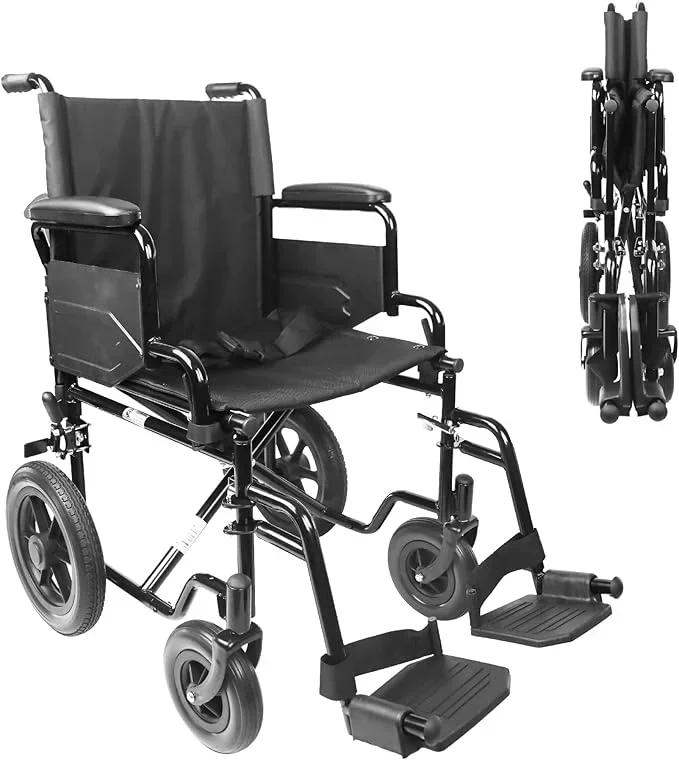

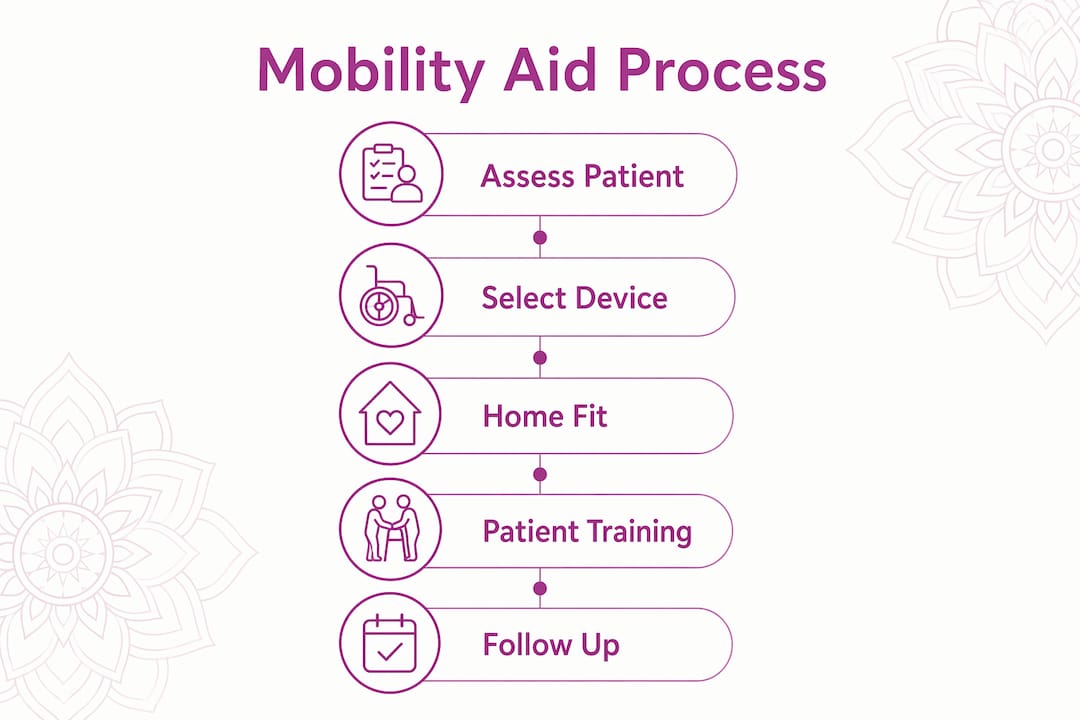
Mobility aids are defined as assistive devices that support safe movement and independence for patients transitioning from hospital to home. The role of mobility aids in discharge planning is to reduce fall risk, maintain functional independence, and prevent avoidable readmissions during the critical first weeks of home recovery. Canadian healthcare guidelines, including those from OHSE and resources like Holo Alert, recommend that patients and caregivers ask discharge teams about required equipment 24–48 hours before leaving hospital, with a follow-up booked within 7–14 days. Getting the right device matched to the right patient, in the right home environment, is the difference between a safe recovery and an emergency return to hospital.
How do mobility aids improve patient safety and reduce fall risk during home recovery?
Mobility aids reduce fall risk by providing external stability when a patient’s strength, balance, or coordination is compromised after surgery, illness, or injury. Walkers and rollators distribute weight across a wider base, canes shift load away from a weakened limb, and wheelchairs eliminate weight-bearing entirely when needed. Each device addresses a specific deficit. Choosing the wrong one, or using the right one incorrectly, creates new hazards.

OHSE guidelines for safe patient transfers state that caregivers must evaluate mobility, balance, and pain levels before every transfer or assisted walk. Any sign of distress should stop the activity immediately, and the incident must be documented for clinical follow-up. This standard applies at home just as it does in hospital.
Home environments introduce hazards that controlled hospital settings do not. Uneven flooring, narrow doorways, and low furniture all interact with mobility aids in ways that increase fall risk. Environmental modifications, including removing loose rugs, installing grab bars in bathrooms, and clearing walkways with adequate lighting, work together with the device itself to keep patients safe.
- Grab bars in bathrooms and near beds provide anchor points during transfers
- Nightlights along hallways prevent disorientation during night-time movement
- Clear pathways of at least 90 centimetres accommodate most walker and wheelchair widths
- Furniture at compatible heights reduces strain during sit-to-stand transitions
Pro Tip: Incorrect adjustment of a walker or cane is one of the most common hidden causes of post-discharge falls. Before the patient leaves hospital, have an occupational therapist or physiotherapist set the correct height for every device. A handle set too high forces the shoulders up; too low causes the patient to hunch forward and lose balance.
What types of mobility aids are used in discharge planning?
Discharge planners and caregivers work with a defined set of assistive devices, each suited to a different level of mobility impairment. Matching the device to the patient’s actual condition, rather than defaulting to the most familiar option, is the single most important clinical decision in this process.
Families often underestimate how different home furniture is from hospital equipment. Physiotherapy home assessments reveal practical compatibility challenges, such as a standard cane being too short for a high-set sofa, that are invisible on a hospital discharge checklist. A formal home assessment before or immediately after discharge prevents these mismatches.
The table below summarises the most common mobility aids used in discharge planning, their primary function, and the patient profile each suits best.
| Mobility aid | Primary function | Best suited for |
|---|---|---|
| Standard cane | Offloads one side, improves balance | Mild weakness or balance deficit on one side |
| Walker (standard) | Full front support, weight distribution | Moderate weakness, post-surgical patients |
| Rollator (wheeled walker) | Moving support with seat and brakes | Patients who fatigue quickly, need rest stops |
| Manual wheelchair | Full seated mobility, caregiver-assisted | Non-weight-bearing, post-operative recovery |
| Transport wheelchair | Lightweight, caregiver-propelled | Short-distance transfers, outpatient appointments |
| Mobility scooter | Powered independent travel | Patients with good upper-body control, longer distances |
Using a mobility scooter during recovery suits patients who retain upper-body strength and cognitive function but cannot walk distances safely. Scooters are particularly useful for patients recovering from lower-limb surgery who need to remain mobile for daily activities without risking weight-bearing injury. For a detailed comparison of powered options, the scooter vs wheelchair guide from Seventhchakra covers the clinical criteria clearly.
Pro Tip: When assessing aid suitability, test the device in the patient’s actual home before discharge day. A rollator that works perfectly in a hospital corridor may not fit through a standard bathroom doorway. Measure doorways and turning radii before committing to a device.
How to prepare the home environment for mobility aid use after discharge
Home preparation is not optional. A mobility aid placed in an unprepared home provides false security. The device itself cannot compensate for a cluttered hallway, a slippery bathroom floor, or a bed at the wrong height.
Bathroom safety upgrades are identified as the most cost-effective fall reduction measures for patients returning home from hospital. A grab bar beside the toilet and a non-slip mat in the shower cost very little compared to the cost of a fall-related readmission. These modifications should be in place before the patient arrives home, not after.
A practical concept gaining traction in 2026 discharge planning is the “recovery station.” Placing medications, a phone, water, and the patient’s mobility aid within arm’s reach of their primary resting spot reduces unnecessary movement during the highest-risk early recovery days. Patients who do not need to walk across the room to retrieve essentials are less likely to attempt unsafe movement when fatigued.
The following steps prepare a home effectively for mobility aid use:
- Remove all loose rugs and secure carpet edges with tape or tacks
- Install grab bars beside the toilet, in the shower, and at the bed
- Arrange furniture to create clear pathways of at least 90 centimetres
- Place nightlights in hallways, bathrooms, and the bedroom
- Set up a recovery station with all daily essentials within reach of the patient’s rest area
- Confirm that the patient’s bed and primary chair are at a height compatible with their mobility aid
- Move frequently used items to counter height to avoid bending or reaching
For a room-by-room breakdown, the safe home layout guide from Seventhchakra covers specific dimensions and placement recommendations for rented equipment.
Pro Tip: Check the width of every doorway the patient will use daily, including the bathroom and bedroom. Most standard walkers require a clear opening of at least 71 centimetres. Narrow doorways may require a different device or a simple door hinge offset kit.
What are best practices for patient and caregiver education on mobility aid use?
Education is the part of discharge planning most often compressed under time pressure. A patient who leaves hospital with the right device but no training on how to use it safely is at significant risk. The device becomes a hazard rather than a support.
Reconciling the discharge equipment list with what actually arrives at home reduces readmission risk in the first 1–2 weeks. Errors such as receiving a device in the wrong size, or a caregiver unfamiliar with how to assist a transfer, are common and preventable. A brief checklist review on arrival day catches most of these issues before they cause harm.
Effective caregiver education covers these core areas:
- Correct adjustment of device height for the specific patient (measure from wrist crease to floor while standing upright)
- Proper gait technique: lead with the stronger leg going up stairs, weaker leg going down
- Transfer technique: how to assist a patient from bed to walker without pulling on the arms
- Signs that the patient is fatiguing or losing balance, and when to stop activity
- Documentation of each assisted walk or transfer, noting any difficulty or pain for clinical follow-up
Home care teams and community physiotherapists play a direct role in reinforcing this education after discharge. A follow-up visit within the first week catches adjustment errors and technique problems before they result in a fall. Successful discharge planning also draws on informal supports. Friends, neighbours, and family members who understand the basics of mobility aid use fill critical care gaps during early recovery, particularly overnight or on weekends when formal care is unavailable.
Key takeaways
The role of mobility aids in discharge planning is to match the right device to the right patient, prepare the home environment before arrival, and train both the patient and caregiver to use the equipment safely from day one.
| Point | Details |
|---|---|
| Match device to patient condition | Assess mobility, strength, and balance before selecting a walker, wheelchair, or scooter. |
| Prepare the home before discharge | Install grab bars, clear pathways, and set up a recovery station before the patient arrives. |
| Adjust every device correctly | Incorrect height is a leading hidden cause of post-discharge falls; adjust before home use. |
| Train caregivers, not just patients | Caregivers need transfer technique and documentation skills to support safe recovery. |
| Follow up within 7–14 days | Book a clinical follow-up before discharge to catch equipment and technique errors early. |
What I have learned from watching discharge plans succeed and fail
From working closely with families navigating the hospital-to-home transition, the gap I see most often is not about the device itself. It is about timing and fit in the real home. A discharge coordinator writes “walker” on a list, a device arrives, and nobody checks whether the patient’s bathroom door is wide enough to use it. The family assumes the hospital covered everything. The patient attempts a transfer on day two, the walker catches on the door frame, and they are back in emergency by the weekend.
The families who navigate this well share one habit: they ask specific questions 24–48 hours before discharge, not on the day of. They ask what device is recommended, what size, and whether a home assessment has been arranged. They do not wait for the hospital to volunteer this information.
The other gap I see consistently is caregiver confidence. A family member who has never assisted a transfer is handed a patient and a walker and expected to manage. The OHSE transfer guidelines exist precisely because this is a skilled task. Caregivers deserve a proper demonstration, not a pamphlet.
Multidisciplinary collaboration, between the hospital discharge team, a community physiotherapist, and the family, is the standard that produces safe outcomes. When one of those three is missing, the risk climbs. Families should advocate for all three to be in communication before the patient leaves hospital.
— Chandan
Mobility aid rentals for home recovery in Vancouver and Richmond
Families and discharge coordinators in the Vancouver area need equipment that arrives quickly, fits the patient’s condition, and does not require a long-term financial commitment.
Seventhchakra provides wheelchair and scooter rentals across Vancouver, Richmond, and Surrey, with same-day delivery and no upfront deposit required. Every device is sanitised before delivery. Rental terms are flexible, covering short-term post-surgical recovery or longer convalescent needs. Options include manual wheelchairs, transport wheelchairs, mobility scooter rentals, and hospital beds, all matched to the patient’s specific recovery stage. For families coordinating discharge on short notice, Seventhchakra’s same-day service removes one significant logistical barrier from an already demanding process.
FAQ
What is the role of mobility aids in discharge planning?
Mobility aids support safe movement and independence during the transition from hospital to home, reducing fall risk and preventing avoidable readmissions. Discharge planners select and arrange devices based on the patient’s mobility level, home layout, and recovery timeline.
When should families arrange mobility aids for a patient coming home?
Families should ask the discharge team about required equipment 24–48 hours before discharge and confirm delivery is scheduled before the patient arrives home. Last-minute arrangements increase the risk of receiving the wrong device or size.
How does a mobility scooter differ from a wheelchair for home recovery?
A mobility scooter suits patients with good upper-body control who need to cover longer distances independently, while a wheelchair is better for patients who cannot bear weight or require caregiver assistance. The choice depends on the patient’s strength, balance, and the layout of their home and community.
What home modifications support safe mobility aid use after discharge?
Removing loose rugs, installing grab bars in bathrooms, clearing pathways to at least 90 centimetres, and adding nightlights are the most effective modifications. Bathroom safety upgrades are considered the most cost-effective fall prevention measure for patients returning home.
Why do incorrectly adjusted mobility aids cause falls?
A walker or cane set at the wrong height forces the patient into a posture that compromises balance. Handles set too high raise the shoulders and reduce control; handles set too low cause forward lean. Every device must be adjusted to the individual patient’s measurements before use at home.
Recommended
- Mobility aids for post-operative patients: a recovery guide | Seventh Chakra Medical Blog
- Matching mobility aids to patient condition: a practical guide | Seventh Chakra Medical Blog
- Safe home layout for rented mobility aids: a practical guide | Seventh Chakra Medical Blog
- Scooter vs wheelchair: choosing the right mobility aid | Seventh Chakra Medical Blog