Yes, you can rent a Sara Stedy in Canada. Specialist medical equipment rental providers carry the Arjo Sara Stedy sit-to-stand aid, and Seventhchakra offers local rental options in Greater Vancouver with same-day delivery and no deposit required.
Where to act right now:
- Seventhchakra (Greater Vancouver): Call or book online for availability, same-day delivery, and a pre-delivery sanitization check.
- National and regional suppliers: Several Canadian medical equipment dealers list the Sara Stedy for short-term rental or sale; confirm local stock before ordering.
- Typical rental minimums: Daily, weekly, and monthly terms are common; weekly and monthly rates are the most cost-effective for post-operative or recovery use.
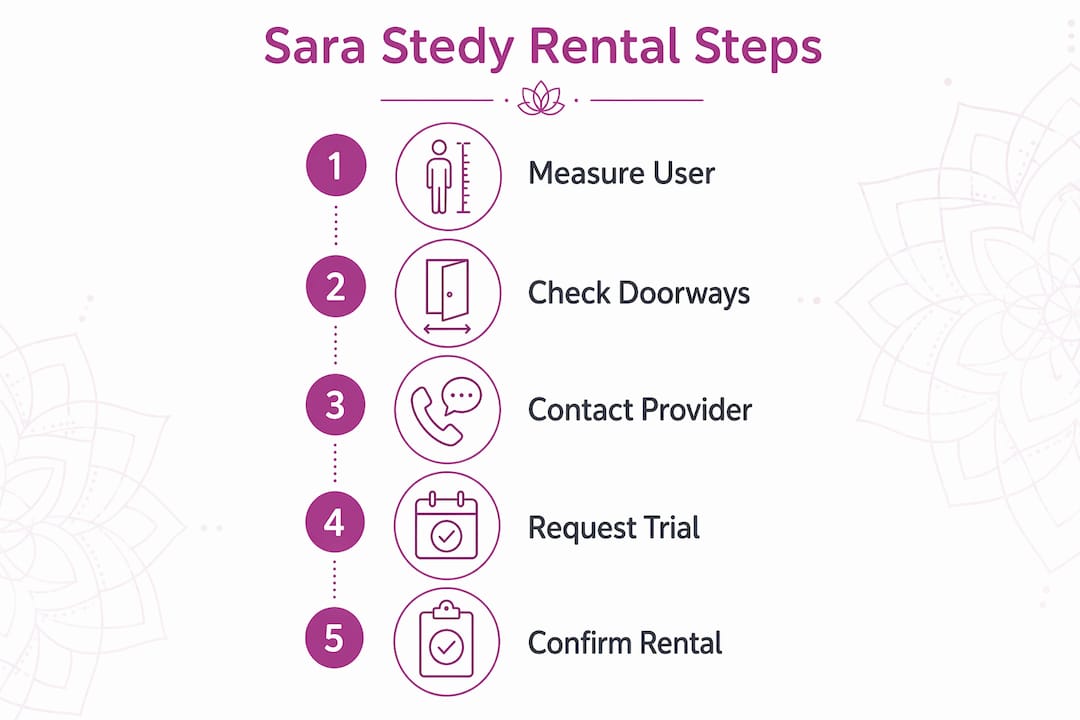
Pro Tip: Before you call, have the user’s height, weight, and a rough measurement of your home’s doorway widths and under-bed clearance ready. It cuts the booking conversation in half.
A trial or demonstration with the actual user is available through most providers — ask for it upfront. All equipment from Seventhchakra is sanitized before delivery.
Table of Contents
- What does the Sara Stedy do, and why does it matter for transfers?
- What specs should you confirm before renting a Sara Stedy?
- Which patients is the Sara Stedy suitable for, and why does a trial matter?
- What rental terms and price ranges should you expect in Canada?
- How are Sara Stedy rentals delivered, set up, and sanitised?
- Does insurance or provincial funding cover a Sara Stedy rental in Canada?
- What should you ask a rental provider before signing?
- When is a different transfer aid a better choice?
- How Seventhchakra supports sit-to-stand rentals in Greater Vancouver
- Key takeaways
- Renting versus buying: a perspective worth considering
- Seventhchakra: same-day mobility rentals in Greater Vancouver, no deposit
- FAQ
What does the Sara Stedy do, and why does it matter for transfers?
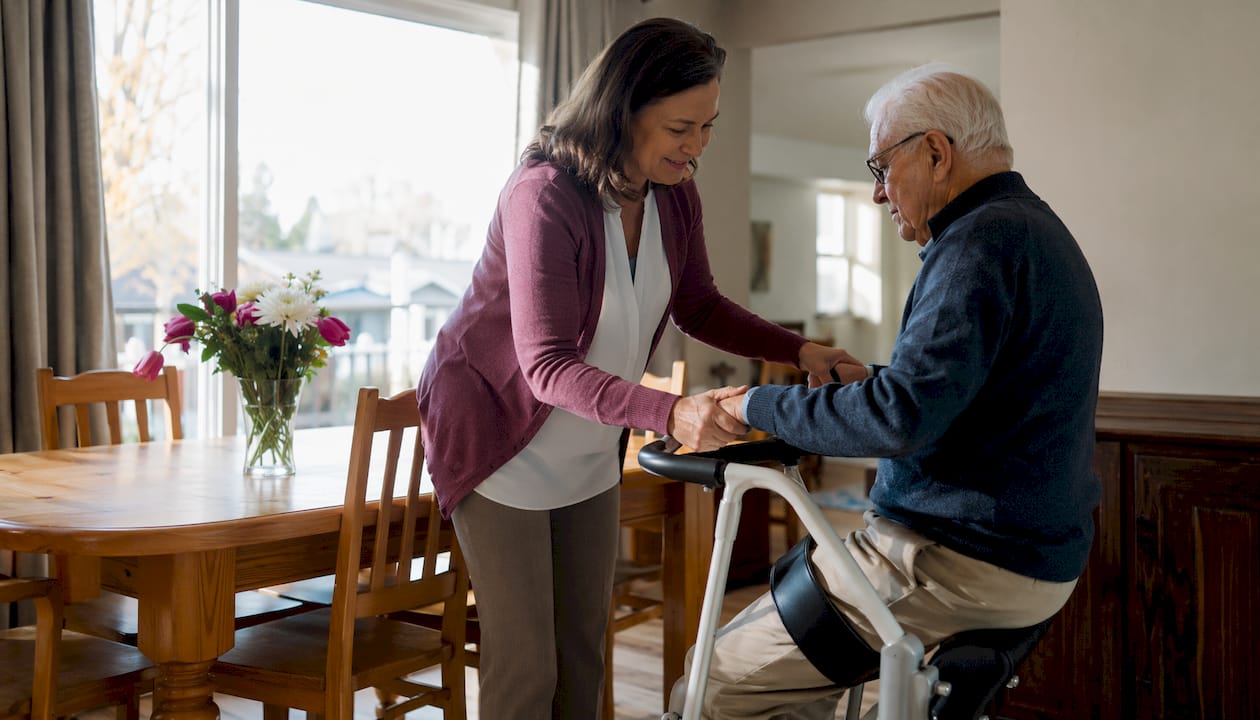
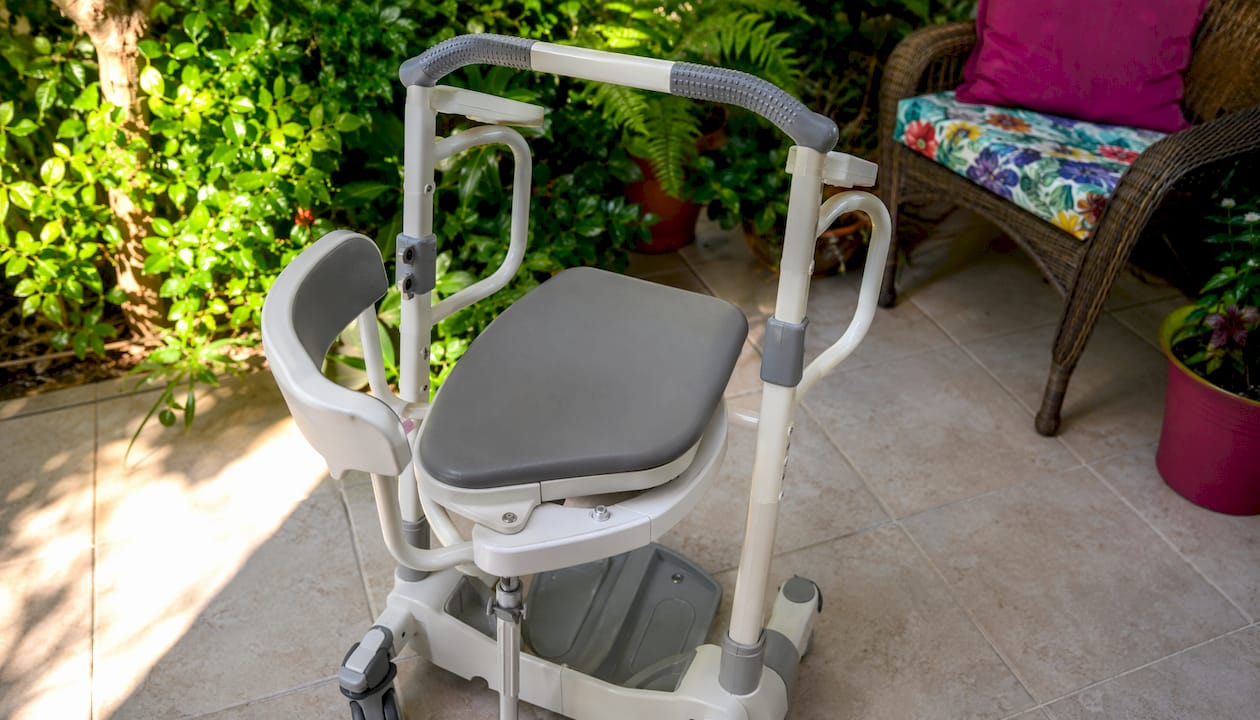
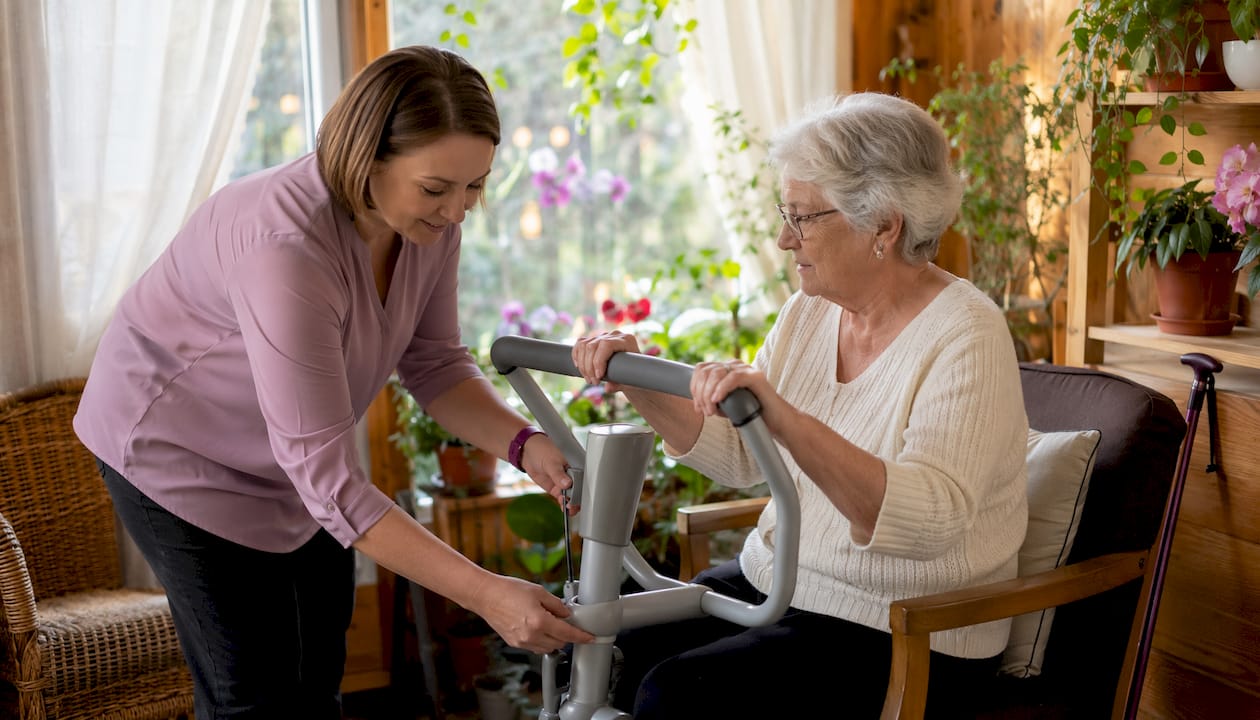
The Sara Stedy by Arjo is a non-powered sit-to-stand raising aid. It is not a mechanical hoist. The user grips a crossbar, rests their knees against a padded support, and actively pulls themselves to standing while a single caregiver guides the movement. That active participation is the point: the device supports the user’s own effort rather than replacing it entirely.
The primary benefit for caregivers is significant. One person can safely manage a sit-to-stand transfer without the physical strain of manual lifting, which reduces the risk of back injury over repeated daily transfers. For the person being assisted, the Sara Stedy keeps them at eye level with others in the room during movement, which supports social connection and dignity in a way a wheelchair transfer simply does not.
Core benefits at a glance:
- Enables a single caregiver to manage transfers safely
- Encourages active muscle engagement and weight-bearing during standing
- Supports early mobilisation and rehabilitation goals
- Pivoting seat allows the user to rest mid-transfer or between activities
- Highly manoeuvrable: the caregiver can push from the front or back
The Sara Stedy holds the Dementia Services Development Centre (DSDC) accreditation, a trust signal worth noting when selecting equipment for users with cognitive impairment. As care models shift toward rehabilitation, sit-to-stand aids that promote active standing are increasingly chosen for their therapeutic value, not just for the transfer itself.
Pro Tip: If the person you care for tends to fatigue quickly, the pivoting seat means they can sit back down on the Sara Stedy mid-activity rather than rushing back to a chair. That flexibility makes a real difference in daily routines.
What specs should you confirm before renting a Sara Stedy?
Choosing the wrong size or discovering the device won’t fit under the bed after delivery wastes everyone’s time. Arjo produces two models, and the specification document lists the clearance figures you need to compare against your home.
| Specification | Sara Stedy (Standard) | Sara Stedy Compact |
|---|---|---|
| Patient height range | 149–193 cm | 138–172 cm (4’6" to 5’8") |
| Max safe working load | 182 kg (400 lb) | 182 kg (400 lb) |
| External width (legs closed) | — | Narrower — confirm with provider |
| Chassis/leg clearance | Confirm with spec sheet | Confirm with spec sheet |
| Turning radius | Confirm with spec sheet | Confirm with spec sheet |
| Lift weight | Confirm with provider | Confirm with provider |
What to measure at home before you call:
- Under-bed clearance (the pedal-operated chassis legs need to slide under the bed or chair)
- Doorway widths on the route between bedroom, bathroom, and living area
- Distance in front of the toilet or chair where the device will be positioned
- Low-profile sofa or recliner height, if transfers happen there
Write these numbers down and share them with the rental provider. It lets them confirm fit before delivery and avoids a wasted trip.
Which patients is the Sara Stedy suitable for, and why does a trial matter?
The Sara Stedy suits users who can actively pull themselves toward standing and bear at least some weight through their legs. It is not appropriate for someone who is fully dependent or has zero weight-bearing capacity — those users need a sling-based or powered hoist instead.
Clinical fit checklist:
- User can grip the crossbar and initiate a pulling motion
- User can bear partial weight through legs (even briefly)
- User falls within the height range of the standard (149–193 cm) or compact (138–172 cm) model
- User has sufficient cognitive awareness to follow simple instructions during the transfer
- Caregiver has received a brief demonstration on correct positioning
Industry experts recommend basing the transfer-aid choice on a clinical assessment of the user’s ability to pull to standing. Caregivers often underestimate how much this matters until they attempt a transfer and find the user cannot engage. A physiotherapist or occupational therapist can assess this in one short visit.
Pro Tip: Always request an on-site trial with the actual user before committing to a rental. A device that works perfectly for one person can feel unstable for another, even at the same height and weight. Most reputable Canadian rental providers will accommodate this request.
Reducing physical strain on the caregiver matters too. Devices like the Sara Stedy are a practical tool for preventing caregiver burnout over the long term, particularly when transfers happen multiple times a day.
What rental terms and price ranges should you expect in Canada?
Sara Stedy rental options in Canada follow the same general model as other mobility equipment rentals: daily, weekly, and monthly terms, with monthly rates offering the best value for anything beyond a two-week stay.
Common rental structures:
- Daily rental: Available from some suppliers; best for very short post-procedure needs
- Weekly rental: The most practical option for post-operative recovery of two to six weeks
- Monthly rental: Standard for longer rehabilitation periods or while waiting for funding approval
Canadian rental listings show weekly and monthly price lines for sit-to-stand aids; exact figures vary by provider and region, so treat any number you see online as a starting point for negotiation rather than a fixed price. Retail purchase prices for the Sara Stedy standard model are listed around $3,371 USD on US listings, which gives you a rough sense of the asset value and why rental is the practical choice for short-term needs.
Contract terms to review before signing:
- Minimum rental period (some providers require a one-week minimum)
- Deposit policy — Seventhchakra waives the deposit entirely
- Delivery and pickup fees, and whether setup is included
- Damage liability and what counts as normal wear versus chargeable damage
- Sanitization confirmation in writing at handover
Rental is also commonly used as a bridging solution while a purchase or provincial funding application is being processed. Keep your invoices — some providers will credit rental fees toward a purchase if you decide to buy.
How are Sara Stedy rentals delivered, set up, and sanitised?
Delivery logistics vary by provider, but the standard options in Canadian metro areas include curbside drop-off, in-home delivery, and same-day delivery for urgent needs. Seventhchakra offers same-day delivery in Greater Vancouver for mobility equipment rentals, which matters when a discharge from hospital happens faster than expected.
What to verify at handover:
- Equipment has been cleaned and sanitized (ask for written confirmation)
- Pivot seat moves freely and locks correctly
- Knee pad is secure and positioned at the right height
- Chassis legs open and close without sticking
- Brakes and castors function correctly on your floor surface
- Safe working load label is visible and matches the user’s weight
Setup should include a brief demonstration with the actual user in their home, not just a verbal walkthrough at the door. A good provider will walk the caregiver through the correct positioning, show how the chassis legs slide under furniture, and confirm the device fits the specific transfer points in the home.
Pro Tip: Take a short video of the demonstration on your phone. When you’re doing a transfer alone for the first time, having a 60-second clip to reference is far more useful than trying to remember verbal instructions.
Does insurance or provincial funding cover a Sara Stedy rental in Canada?
Coverage is not guaranteed, and it varies significantly by province and insurer. The general rule is that many insurers expect families to exhaust provincial funding sources — such as Ontario’s Assistive Devices Program (ADP) — before considering coverage for mobility equipment. British Columbia has its own provincial program through the Ministry of Health; Alberta, Manitoba, and other provinces have equivalent pathways.
Practical steps to pursue coverage:
- Contact your provincial program early — approval timelines can run weeks to months
- Use a rental as an interim solution while the funding application is processed
- Save every invoice from the rental provider; most insurers require documentation
- Ask the rental provider for a letter confirming the equipment type, rental period, and cost
- Check whether your extended health benefits cover durable medical equipment rentals
- Ask your provider whether rental fees can be credited toward a purchase if funding comes through
Pro Tip: Call your insurer before you rent, not after. Ask specifically whether sit-to-stand aids are covered under your durable medical equipment benefit and what documentation they need. A five-minute call can save you from a denied claim.
What should you ask a rental provider before signing?
A few direct questions before you sign or accept delivery will prevent most problems.
Contract questions:
- What is the minimum rental term, and what is the daily/weekly/monthly rate?
- Is a deposit required, and under what conditions is it refunded?
- What is the cancellation and early return policy?
- Who is responsible for damage, and how is normal wear defined?
- What are the delivery and pickup fees, and what is the lead time?
Safety and fit checks at handover:
- Confirm the safe working load label matches the user’s weight
- Test the pivot seat: it should open and close smoothly
- Check the knee pad height and adjust it to the user before the first transfer
- Verify the chassis legs open to the correct width and slide under the target furniture
- Test brakes on your actual floor — carpet behaves differently than hardwood
- Ask for written confirmation that the unit has been sanitized and inspected
Request a live demonstration with the actual user in their home before the delivery driver leaves. If the provider cannot accommodate this, ask for a scheduled follow-up visit.
When is a different transfer aid a better choice?
The Sara Stedy is the right tool for a specific situation. When the user’s condition falls outside that range, a different device will serve them better.
When to choose a powered hoist or sling-based lift:
- The user has zero weight-bearing capacity
- The user cannot grip the crossbar or initiate any standing movement
- The user has significant spasticity or contractures that make active standing unsafe
- Two-caregiver transfers are already required for safety
When a lighter stand-assist or transfer cushion may be enough:
- The user is largely independent but needs a small amount of support to stand
- Transfers happen from a standard-height chair with good armrests
- The user’s weight is well within the range of a lighter device
For borderline cases, a physiotherapist or occupational therapist can assess the user in one visit and recommend the appropriate aid. Trialling the actual device with the actual user in their home remains the most reliable test regardless of what the assessment suggests.
How Seventhchakra supports sit-to-stand rentals in Greater Vancouver
Seventhchakra specialises in medical equipment rentals in Vancouver for families and caregivers who need equipment quickly, without the friction of large deposits or long wait times. For sit-to-stand aid rentals and comparable mobility equipment, the service includes same-day delivery across Greater Vancouver, pre-delivery sanitization, and flexible rental terms with no upfront deposit.
What Seventhchakra brings to a rental booking:
- Same-day delivery in Greater Vancouver for urgent post-discharge needs
- No deposit required on short-term rentals
- Equipment sanitized and inspected before every delivery
- On-site demonstration and caregiver training at handover
- Support for insurance documentation (invoices, equipment letters)
- Flexible rental terms — daily, weekly, or monthly
What to have ready when you call:
- User’s height and weight (to confirm model size and safe working load)
- Home measurements: under-bed clearance, doorway widths, transfer point dimensions
- Preferred delivery window and address
- Name of insurer or provincial program if you plan to seek reimbursement
Seventhchakra also rents wheelchairs, hospital beds, and mobility scooters, so if your care situation requires more than one piece of equipment, a single call covers the full picture.
Pro Tip: Ask about bundling. If you need a hospital bed and a sit-to-stand aid at the same time, a single provider handling both deliveries is far simpler than coordinating two separate companies.
Key takeaways
Renting a Sara Stedy in Canada is practical and available — the fastest path is to confirm user measurements, contact a local provider like Seventhchakra, and request a trial before committing.
| Point | Details |
|---|---|
| Rental is available in Canada | Specialist providers and Seventhchakra offer short-term Sara Stedy rentals with flexible daily, weekly, and monthly terms. |
| Two model sizes exist | Standard suits 149–193 cm users; Compact suits 138–172 cm users; both support up to 182 kg (400 lb). |
| Trial before committing | Always request an on-site demonstration with the actual user — clinical suitability depends on the user’s ability to actively weight-bear. |
| Pursue funding early | Contact your provincial program (e.g., Ontario’s ADP or BC’s equivalent) before renting; keep invoices in case rental fees can be credited toward a purchase. |
| Seventhchakra local option | Same-day delivery in Greater Vancouver, no deposit, pre-delivery sanitization, and caregiver training at handover. |
Renting versus buying: a perspective worth considering
The conventional advice is to buy if you need something long-term and rent if you don’t. That framing is too simple for most caregiving situations, and it leads families to make the wrong call at the worst time.
Post-operative recovery timelines are genuinely unpredictable. A patient discharged after hip surgery might need a sit-to-stand aid for six weeks or six months, and nobody knows which on day one. Buying a $3,000+ device on that uncertainty is a significant financial risk. Renting for the first month, reassessing, and then deciding whether to purchase or extend is a far more rational approach — and it gives the user time to confirm the device actually works for them in their specific home.
The funding angle makes this even clearer. Provincial programs can take weeks to process applications. Renting during that window is not a compromise; it is the correct interim step. The key is to document everything from day one so the rental period supports the funding application rather than complicating it.
Where purchase genuinely makes sense is in long-term care planning: a user who will need sit-to-stand assistance for years, whose condition is stable, and whose home is already set up for the device. In that case, the rental cost will exceed the purchase price within a few months, and ownership gives the family more flexibility. But that clarity rarely exists at the moment of discharge. Rent first, decide later.
Seventhchakra: same-day mobility rentals in Greater Vancouver, no deposit
When a family member is discharged from hospital and needs a sit-to-stand aid or comparable mobility equipment at home by end of day, the last thing you need is a two-week wait or a large deposit standing between you and the equipment.
Seventhchakra delivers mobility equipment rentals across Greater Vancouver with same-day availability, no upfront deposit, and full sanitization before every delivery. The rental inventory covers wheelchairs, hospital beds, mobility scooters, and sit-to-stand aids, with flexible terms that start from a single day. When you call, the team will confirm availability, walk you through delivery timing, and arrange an on-site demonstration so the caregiver is confident before the first transfer. To check availability and book, contact Seventhchakra directly through the website or by phone — have the user’s height, weight, and home measurements ready to make the call quick.
FAQ
Is a Sara Stedy rental covered by insurance in Canada?
Coverage varies by province and insurer. Many insurers require families to exhaust provincial funding sources such as Ontario’s ADP before considering reimbursement; keep all rental invoices and request a written equipment letter from your provider to support any claim.
How much does it cost to rent a Sara Stedy in Canada?
Rental rates vary by provider and rental term; weekly and monthly rates are the most common structures for post-operative use. Contact a local provider such as Seventhchakra for current pricing in Greater Vancouver.
What are the alternatives to a Sara Stedy for sit-to-stand transfers?
For users who cannot actively weight-bear, a sling-based powered hoist is the appropriate alternative. For users who need only minimal support, a stand-assist cushion or transfer belt may be sufficient; a physiotherapist can assess which option fits the user’s specific condition.
Is there a portable or compact version of the Sara Stedy?
Yes. The Sara Stedy Compact is designed for users 138–172 cm (4’6" to 5’8") tall and has a narrower profile than the standard model, making it better suited to smaller rooms and tighter transfer spaces. Both models support a maximum safe working load of 182 kg (400 lb).
Recommended
- Complete Guide to Home Medical Equipment in Vancouver: Rentals, Sales & What to Choose | Seventh Chakra
- Medical Equipment Tips & Guides | Seventh Chakra Medical
- Hospital Equipment for Home Use in Vancouver: Complete Buying & Rental Guide (2026) | Seventh Chakra
- Wheelchair Rentals in Vancouver: Cost, Availability, and Best Providers | Seventh Chakra