

Short-term medical equipment rentals are defined as temporary leases of devices needed for recovery periods typically lasting a few weeks up to six months. Families dealing with post-surgery recovery, a temporary mobility loss, or a visiting relative with physical limitations rely on these rentals to avoid the high cost of purchasing equipment they will only use briefly. Renting is recommended for recovery under six months, as ownership of temporary items rarely makes financial sense. The types of short-term medical equipment rentals available in Canada cover mobility aids, hospital beds, bathroom safety devices, patient lifts, and therapy accessories. Programmes like the Canadian Red Cross Medical Equipment Loan provide basic equipment at no cost for up to three months, often with a medical prescription required.
1. Mobility aids: the most common short-term rental category
Mobility aids are the most frequently rented category of short-term healthcare equipment in Canada. They cover a wide range of devices, from basic walkers to power wheelchairs, and suit different stages of recovery or levels of mobility loss.
Manual wheelchairs are the standard choice for patients who need seated transport but retain some upper body strength or have a caregiver to push them. Local suppliers often include delivery, setup, and maintenance in the rental fee, which removes the burden of self-assembly. Seventhchakra offers wheelchair rentals in Vancouver with same-day delivery and no upfront deposit.
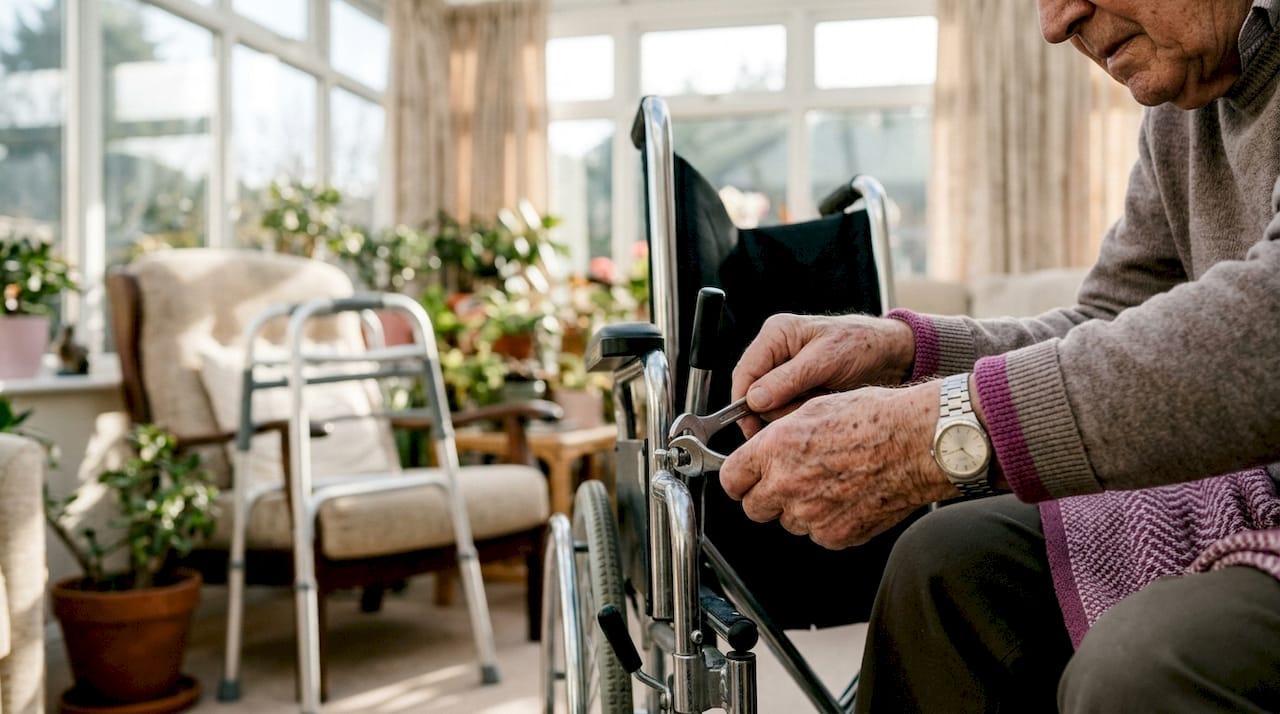
Lightweight wheelchairs suit people who need to transport the chair frequently, such as those travelling between appointments. They fold compactly and weigh significantly less than standard models. Seventhchakra’s lightweight wheelchair rental is a practical fit for this need.
Electric wheelchairs are the right choice when a person cannot self-propel and does not have a consistent caregiver available. They require more setup space and charging access, so confirm your home layout before renting. Seventhchakra provides an electric wheelchair for rent with full technical support.
Rollators are four-wheeled walkers with a built-in seat and hand brakes. They suit people who can walk but need balance support and occasional rest. Seventhchakra’s four-wheel rollator rental is a popular choice for post-hip or post-knee surgery recovery.
Mobility scooters cover longer distances and outdoor terrain that walkers and manual wheelchairs cannot handle. Three-wheel models are lighter and more manoeuvrable indoors, while four-wheel and heavy-duty models handle outdoor surfaces and heavier users. Seventhchakra carries three-wheel scooter rentals, four-wheel scooter rentals, and heavy-duty scooter rentals to match different terrain and weight requirements.
Pro Tip: Ask your physiotherapist or occupational therapist to specify the chair width and seat height before you rent. An ill-fitting wheelchair causes pressure sores and slows recovery.
2. Hospital beds and mattresses for home recovery
A hospital bed rental transforms a standard bedroom into a safe recovery space. The key difference from a regular bed is the ability to adjust head and foot positions, which reduces pain, prevents pressure sores, and makes transfers safer for both the patient and caregiver.
Semi-electric beds adjust the head and foot sections by motor but require manual crank adjustment for height. They suit most home recovery situations and are the most widely available rental option. Full-electric beds add motorised height adjustment, which is critical when a caregiver has back problems or when the patient transfers independently. Low beds sit close to the floor and reduce fall injury risk for patients with dementia or high fall risk. Bariatric beds support higher weight capacities and wider frames for larger patients.
Mattress choice matters as much as the bed frame. Foam mattresses provide basic pressure relief for short recovery periods. Air alternating pressure mattresses actively redistribute weight and are the clinical standard for preventing pressure ulcers in patients with limited mobility. Rental agreements often cover maintenance and emergency repairs at no extra cost, which is a significant advantage over ownership.
Pro Tip: Request a mattress upgrade when renting if the patient will spend more than eight hours per day in bed. The cost difference is small, and the pressure relief benefit is substantial.
3. Bathroom safety equipment for temporary mobility needs
The bathroom is the highest-risk room in the home for people recovering from surgery or managing temporary mobility loss. Bathroom safety rentals reduce fall risk without requiring permanent home modifications.
The most commonly rented bathroom safety items include:
- Shower chairs and benches: Allow patients to bathe seated, reducing fatigue and fall risk. Padded models add comfort for longer use.
- Transfer benches: Span the edge of the bathtub, letting the patient slide in from a seated position rather than stepping over the tub wall. This is the safest option for people with hip or knee restrictions.
- Raised toilet seats: Add height to a standard toilet, reducing the depth of the sit-to-stand movement. This is particularly useful after hip replacement surgery, where deep flexion is restricted.
- Commodes: Freestanding toilet chairs that can be placed beside the bed or anywhere in the home. They eliminate the need to walk to the bathroom at night, which is when most falls occur.
- Grab bars (portable): Clamp-on grab bars attach to the tub or toilet without drilling. They provide a stable handhold during transfers.
Most of these items install without tools and can be returned once the recovery period ends. Seventhchakra’s bath transfer bench rental is a frequently requested item for patients returning home after orthopaedic surgery.
4. Patient lifts, overbed tables, and therapy accessories
Patient lifts are mechanical or electric devices that transfer a person from a bed to a wheelchair, commode, or chair without manual lifting by the caregiver. They use fabric slings that fit under the patient and attach to the lift frame. This category of short-term healthcare rental is often overlooked until a caregiver sustains a back injury, at which point it becomes urgent.
Electric patient lifts are the safest option for home use. They require a compatible sling, which must be sized correctly for the patient’s weight and body shape. Professional fitting by an occupational therapist is critical here. An incorrectly fitted sling creates pressure points and increases fall risk during transfers.
Overbed tables are adjustable tables that position over the bed for meals, reading, or device use. They are a low-cost rental that significantly improves a patient’s comfort and independence during bed rest. Seventhchakra offers an overbed table rental as a practical add-on to a hospital bed rental.
Ice therapy machines (also called cold therapy units) circulate chilled water through a pad applied to a surgical site. Orthopaedic surgeons frequently recommend them for the first two to four weeks after knee, shoulder, or hip surgery. Renting one for this short window is far more cost-effective than purchasing.
5. How to choose the right short-term rental equipment
Selecting the right temporary medical supplies requires matching the device to three factors: the patient’s clinical needs, the home environment, and the expected rental duration.
- Get a clinical recommendation first. Many rental programmes, including government-funded options, require a medical prescription to confirm the equipment meets safety standards. Your doctor, physiotherapist, or occupational therapist can specify the exact model and configuration needed.
- Assess your home layout. A power wheelchair needs wider doorways and turning space. A hospital bed requires a room large enough to allow caregiver access on both sides. Measure before you rent.
- Estimate the rental duration honestly. Renting is financially wiser when use is temporary, freeing savings for home nursing or physiotherapy. If recovery extends beyond six months, purchasing may become the better option.
- Check programme eligibility. Provincial health guidelines influence equipment availability and funding across Canada. The Canadian Red Cross Medical Equipment Loan Programme and provincial assistive device programmes may cover part or all of the cost for eligible patients.
- Confirm rental terms in writing. Rental agreements vary on maintenance and emergency repair coverage. Confirm what is included before signing, particularly for powered equipment like electric beds and lifts.
- Factor in indirect costs of ownership. Families often underestimate the cost of storing and disposing of equipment after short-term use. Renting eliminates both problems entirely.
Key takeaways
The most cost-effective approach to temporary medical needs is renting equipment matched to your specific recovery stage, home layout, and expected duration of use.
| Point | Details |
|---|---|
| Rent for under six months | Renting is more cost-effective than buying for recovery periods under six months. |
| Match equipment to clinical needs | Always get a professional recommendation before selecting any rental device. |
| Confirm rental terms | Verify maintenance and repair coverage in writing before the equipment arrives. |
| Bathroom safety is high priority | Shower chairs, transfer benches, and commodes reduce the most common home fall risks. |
| Indirect costs favour renting | Renting avoids storage and disposal costs that families often overlook when buying. |
What I have learned from watching families navigate equipment rentals
A perspective from Chandan
The most common mistake I see families make is renting equipment without consulting anyone first. They search online, pick something that looks right, and then discover the wheelchair is too wide for the bathroom doorway or the hospital bed does not fit the bedroom. That one oversight costs time, stress, and often a second delivery fee.
The second mistake is underestimating how much the service around the equipment matters. A rental that includes delivery, setup, and a phone number to call when something goes wrong is worth more than a cheaper rental that drops the equipment at your door and disappears. When a caregiver is managing a recovering family member at home, the last thing they need is to troubleshoot a mechanical issue alone at 9:00 PM.
My honest advice: treat the rental process the same way you would treat a prescription. Get professional input, confirm the specifications, and choose a provider who stands behind the equipment after delivery. The equipment lease for recovery should reduce your stress, not add to it. Programmes like the Canadian Red Cross loan and provincial assistive device funding exist precisely to make this easier. Use them before spending out of pocket.
— Chandan
Medical equipment rentals in Richmond BC from Seventhchakra
Seventhchakra provides short-term medical equipment rentals across Vancouver, Richmond, and Surrey, with same-day delivery and no upfront deposit required. Every item is sanitised before delivery, and rental terms are flexible enough to match your actual recovery timeline rather than a fixed contract.
Whether you need a wheelchair rental in Vancouver, a mobility scooter, a hospital bed, or bathroom safety equipment, Seventhchakra carries the full range. The team can advise on the right configuration for your home and recovery stage. Visit the Richmond BC rental page to see the complete catalogue, check availability, and arrange delivery on your schedule.
FAQ
What counts as short-term medical equipment rental?
Short-term medical equipment rental covers devices leased for a few weeks up to six months for recovery or temporary mobility support. Common examples include wheelchairs, hospital beds, rollators, and bathroom safety aids.
Do I need a prescription to rent medical equipment?
Many rental programmes, including government-funded options, require a medical prescription to confirm clinical suitability. Commercial providers like Seventhchakra can often rent without a prescription, though a professional recommendation is always advisable.
Is renting cheaper than buying for a short recovery?
Renting is the more cost-effective choice for recovery periods under six months. It also avoids the indirect costs of storing and disposing of equipment after use.
What is included in a typical rental agreement?
Most rental agreements include delivery, setup, and pickup. Coverage for maintenance and emergency repairs varies by provider, so confirm these terms in writing before the equipment is delivered.
How quickly can rented medical equipment be delivered?
Delivery timelines depend on the provider and location. Seventhchakra offers same-day delivery across Vancouver, Richmond, and Surrey for most rental items.


