
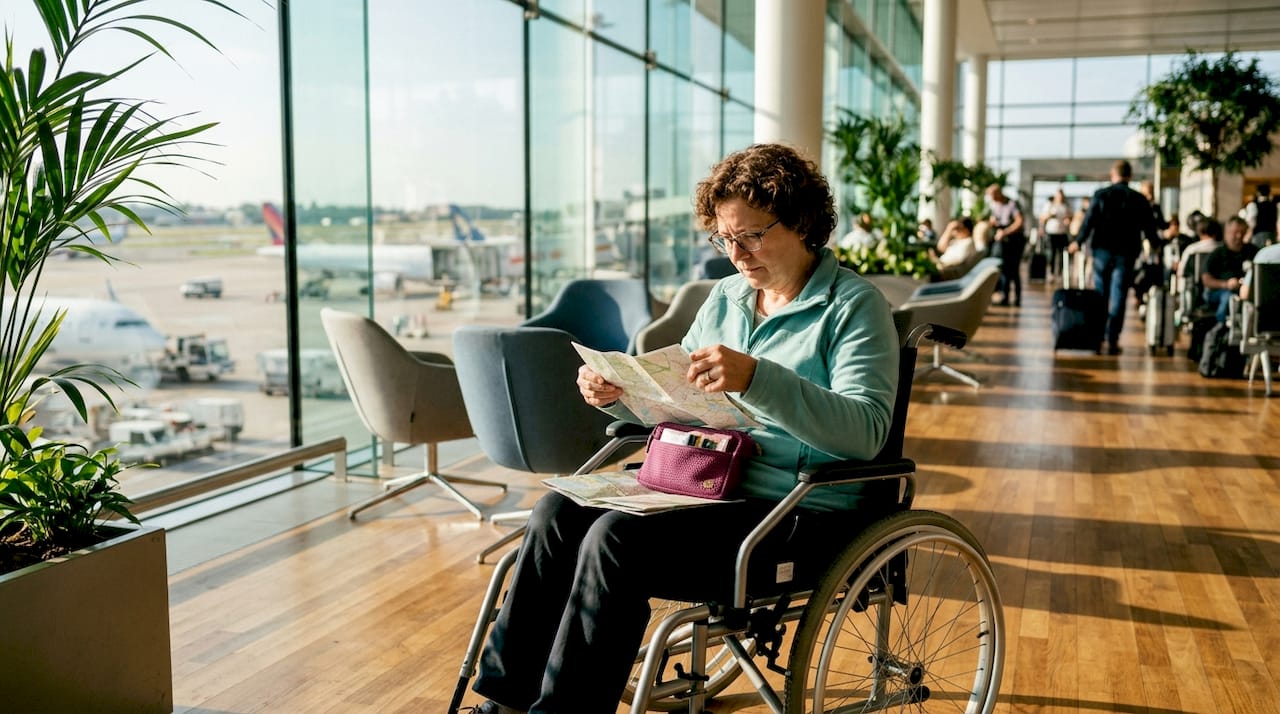
An airport mobility aid is any device or assistance service that helps travellers with mobility challenges move through airports and board flights safely and comfortably. The term covers everything from manual wheelchairs and power scooters to guided escort services and boarding lifts. In Canada, the Canadian Transportation Agency (CTA) and the Canadian Air Transport Security Authority (CATSA) set the standards that govern how these aids are handled at every stage of your trip. Knowing what options exist and what your rights are makes the difference between a stressful travel day and a smooth one.
What is an airport mobility aid and what types are available?
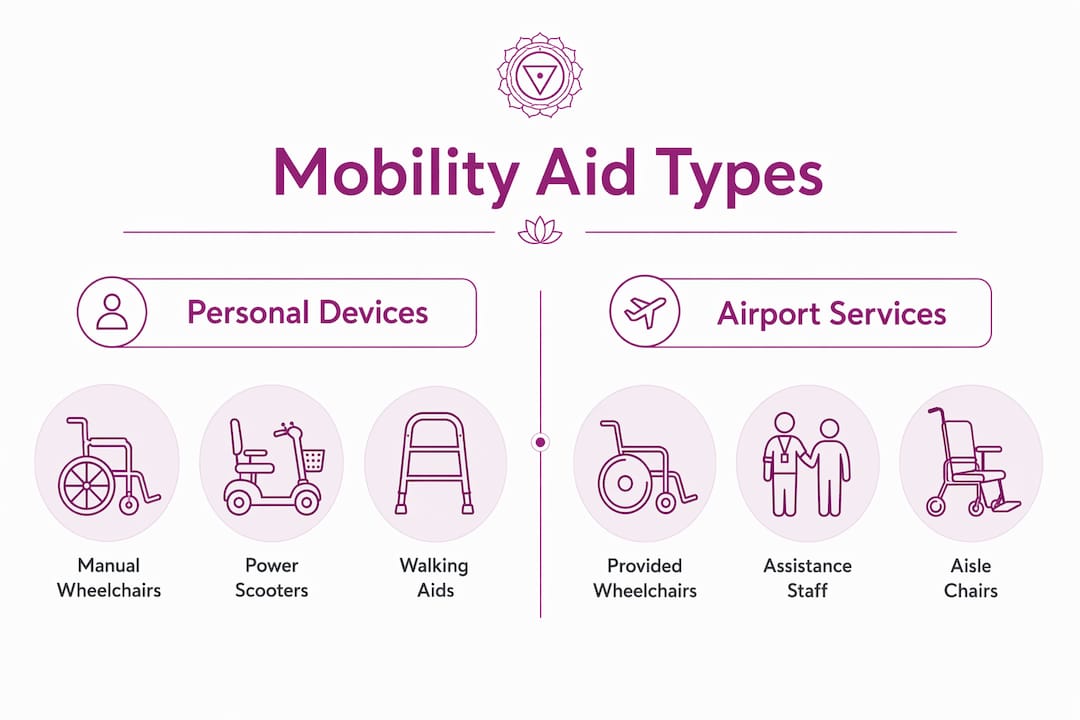
Airport mobility aids fall into two broad categories: personal devices you bring yourself, and equipment or services the airport provides. Mobility aids such as wheelchairs, scooters, canes, crutches, walkers, and prosthetic devices are all permitted through Canadian airport security. Each type serves a different level of mobility need.
Personal mobility devices
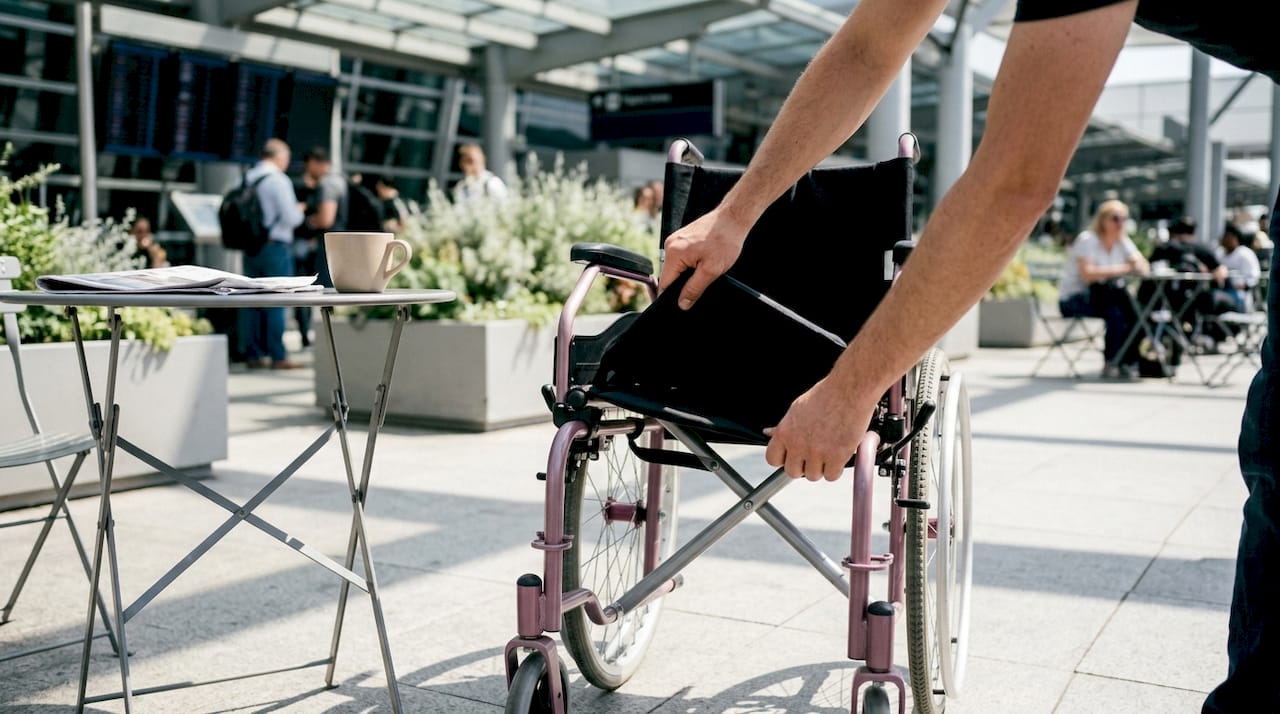
Manual wheelchairs are the most common personal device. They fold flat, fit in most aircraft cargo holds, and work well for travellers who have a companion to push them. Power wheelchairs and mobility scooters give independent movement but require more planning because of their size and battery type. Canes, crutches, and walkers suit travellers who can walk short distances but need support over longer terminal stretches.
Airport-provided equipment and services
Airports supply manual wheelchairs at no charge for travellers who need them on arrival. The Airport Customer Assistance Program (ACAP) goes further, providing multilingual staff who guide travellers from the curb to their aircraft seat, with electric wheelchair charging stations available throughout the terminal. ACAP staff speak over 60 languages, which matters in a country as diverse as Canada.
| Aid type | Best for | Key consideration |
|---|---|---|
| Manual wheelchair | Short distances, companion travel | Requires a pusher or self-propulsion |
| Power wheelchair | Independent long-distance movement | Battery rules apply for air cargo |
| Mobility scooter | Moderate independence, terminal use | Size must fit airport pathways |
| Walker or rollator | Partial mobility support | Screened at security like other aids |
| Cane or crutch | Minimal support needs | Easiest to carry on board |
| ACAP escort service | Full assistance, curb to seat | Book in advance through the airline |
Pro Tip: If you use a power wheelchair or scooter, photograph your device from multiple angles before the trip. That record protects you if the airline damages it in transit.
How do airline and airport policies affect the use of mobility aids?
Canadian law gives travellers with disabilities clear protections. The Canadian Transportation Agency defines passenger rights covering mobility device carriage, service animals, and accommodation at every point of the journey. Airlines must carry your mobility device free of charge. They cannot charge you a surcharge for needing assistance.
The 48-hour notification rule
Notify your airline at least 48 hours before departure to arrange mobility aid assistance. This gives the airline time to confirm staff availability, reserve accessible seating, and prepare any specialised boarding equipment. Missing this window does not remove your rights, but it can cause delays on travel day.
Key policies at a glance
- Airlines carry personal mobility devices at no extra cost.
- Service animals travel in the cabin at no charge under CTA rules.
- Ontario’s Accessibility for Ontarians with Disabilities Act (AODA) prohibits transport providers from adding surcharges for accommodating mobility devices or service animals at airports.
- Accessible taxis and shuttles at Canadian airports must comply with AODA requirements.
- Airport accessibility plans for 2026–2029 at airports like YVR commit to boarding lifts, accessible shuttles, and improved infrastructure as standard service.
Pro Tip: Ask your airline for written confirmation of your assistance booking. A reference number gives you something concrete to show staff if there is any confusion at the gate.
Reviewing the scooter vs wheelchair guide before you book can help you decide whether your personal device is the right fit for airport distances or whether you need something different for travel day.
How should travellers prepare and use airport mobility aids effectively?
Preparation is the single biggest factor in a smooth airport experience with a mobility aid. The steps below cover what to do before you leave home, at the airport, and during connections.
- Book assistance when you buy your ticket. Most airlines have an accessibility field in their booking system. Fill it out immediately rather than calling later.
- Provide exact device dimensions and weight. Providing precise mobility aid dimensions when booking transport prevents last-minute refusals, especially for power wheelchairs and scooters. Measure your device and keep those numbers in your travel documents.
- Arrange accessible ground transport in advance. Confirm that your taxi, limo, or shuttle can physically fit your device. Under AODA, providers cannot refuse you or charge extra, but a vehicle that is too small still causes delays.
- Download the airport’s accessibility map. Major Canadian airports publish these online. Knowing where elevators, accessible washrooms, and ACAP desks are located before you arrive saves time and reduces stress.
- Charge power devices fully before departure. Airlines typically require lithium batteries to be within specific watt-hour limits. Check your airline’s policy and carry documentation for your battery if it is close to the limit.
- Plan extra time for connections. Airport staff need time to retrieve your device from the cargo hold and prepare the boarding area. Budget at least 90 minutes for domestic connections and two hours for international ones.
- Confirm service animal arrangements separately. If you travel with a service animal, notify the airline at the same time as your mobility aid booking. Both requests go through different departments at most carriers.
Pro Tip: If you are visiting Vancouver and your own device is too large or heavy for the trip, renting a local mobility scooter for the duration of your stay is often more practical than shipping your personal equipment.
Mobility rental improves travel confidence precisely because it removes the anxiety of damaging an expensive personal device in transit.
What should travellers expect during security screening and boarding?
Security screening with a mobility aid follows a clear process at Canadian airports. CATSA screens mobility aids alongside travellers whenever possible, and private screening areas are available on request. Knowing what to expect removes the uncertainty that makes screening feel difficult.
At the security checkpoint
- Travellers in wheelchairs or scooters are screened while seated. You do not need to transfer to a standard chair unless you choose to.
- Implanted devices such as pacemakers remain on the body during screening. Carry a medical device card from your doctor to show CATSA officers.
- Passengers using mobility aids may undergo additional screening such as physical swabbing. This is standard procedure and applies to the device, not just the traveller.
- If you need a private screening area, ask any CATSA officer before the process begins. This is your right, not a special request.
- Service animals pass through screening with you and are not separated from their handler.
Boarding options
Canadian airports use several methods to board travellers with mobility aids. Jet bridges are the most accessible option when the aircraft is parked at a gate. For remote stands, airports use ambulifts or Eagle Lifts. Boarding devices like Eagle Lifts and ambulifts improve safety and dignity during boarding and deplaning, and Canadian airports are expanding their use under current accessibility plans.
Aisle chairs are narrow wheelchairs used to move travellers from the jet bridge door to their seat inside the aircraft. Your personal power wheelchair or scooter goes into the cargo hold at this point. Ask the gate agent to tag your device as “fragile” and confirm it will be returned to the jet bridge on arrival rather than the baggage carousel.
Key takeaways
Airport mobility aids cover a wide range of devices and services, and knowing your rights under the Canadian Transportation Agency makes every stage of the journey more manageable.
| Point | Details |
|---|---|
| Notify early | Contact your airline at least 48 hours before departure to confirm assistance and device handling. |
| Know your rights | Canadian law requires airlines to carry mobility devices free of charge and prohibits surcharges for assistance. |
| Prepare device specs | Record exact dimensions and battery details for your mobility aid before booking transport. |
| Use ACAP | The Airport Customer Assistance Program provides curb-to-seat support at major Canadian airports at no cost. |
| Consider local rental | Renting a wheelchair or scooter locally avoids transit damage and simplifies your packing. |
My honest view on travelling with mobility aids in Canada
I have spoken with enough travellers to know that the biggest source of airport stress is not the mobility aid itself. It is the uncertainty about what will happen next. Will the staff know what to do? Will the device come back undamaged? Will the boarding lift actually show up?
The answer to all three questions is almost always yes, provided you have done the groundwork. Accessibility improvements at Canadian airports reflect a genuine shift toward treating disability support as a core service, not an afterthought. That shift is real and measurable in the infrastructure being built right now.
What I find most travellers underestimate is the value of specificity. Saying “I use a wheelchair” is not enough. Telling the airline “I use a 68-kilogram power wheelchair with a 300-watt-hour lithium battery and I need an ambulift at both ends” gets results. Knowledge of passenger rights and airport services reduces stress and builds confidence. That is not a platitude. It is the practical difference between a smooth trip and a chaotic one.
For travellers coming to Vancouver, I also think the local rental option is underused. Shipping a heavy power wheelchair across the country, or worrying about it in cargo, adds stress that a short-term rental eliminates entirely. The equipment arrives clean, tested, and ready. That peace of mind is worth more than most people expect before they try it.
— Chandan
Mobility equipment rental in Vancouver for your travel needs
Travellers arriving in Vancouver or the surrounding area often need reliable mobility equipment the moment they land.
Seventhchakra offers wheelchair rentals in Vancouver and mobility scooter rentals with same-day delivery across Vancouver, Richmond, and Surrey. Every piece of equipment is sanitised before delivery, and there are no upfront deposits. Rental terms are flexible, whether you need a device for three days or three months. For travellers who want power mobility without the hassle of shipping their own equipment, Seventhchakra’s electric wheelchair rental is a practical option that pairs well with airport assistance services. Contact Seventhchakra to confirm availability and arrange delivery to your accommodation.
FAQ
What is an airport mobility aid?
An airport mobility aid is any device or assistance service that helps travellers with mobility impairments move through airport terminals and board aircraft. Examples include manual wheelchairs, power wheelchairs, mobility scooters, walkers, and escort services like ACAP.
How far in advance should I notify my airline about a mobility aid?
Notify your airline at least 48 hours before departure. This allows staff and equipment to be confirmed, and accessible seating to be arranged.
Are mobility aids screened at Canadian airport security?
Yes. CATSA screens all mobility aids, including wheelchairs and scooters, alongside the traveller whenever possible. Implanted devices remain on the body, and private screening areas are available on request.
Does it cost extra to bring a mobility device on a Canadian flight?
No. Canadian airlines are required to carry personal mobility devices free of charge under Canadian Transportation Agency rules. Surcharges for mobility assistance are also prohibited under AODA in Ontario.
Can I rent a mobility aid instead of bringing my own to the airport?
Yes. Renting locally from a provider like Seventhchakra avoids transit damage and simplifies travel. Equipment is delivered directly to your accommodation, ready to use from the moment you arrive.
Recommended
- How tourists rent wheelchairs locally: a 2026 guide | Seventh Chakra Medical Blog
- Mobility aids for post-operative patients: a recovery guide | Seventh Chakra Medical Blog
- Why mobility rental improves travel confidence | Seventh Chakra
- Matching mobility aids to patient condition: a practical guide | Seventh Chakra Medical Blog


