What Richmond Caregivers Rent for Bathroom Safety and How to Choose

Yes, you can rent bathroom safety equipment in Richmond right now. Some suppliers deliver shower chairs, commodes, grab bars, and related gear the same day in many cases, fully sanitized before it reaches your door. British Columbia’s Medical Equipment Provision Program (MEPP) may cover short term needs for eligible clients through Island Health, but for most families a private rental fills the gap faster. The rest of this guide covers exactly which equipment fits your situation and how the rental process works.
TL;DR:
- Most bathroom safety equipment rentals in Richmond are available for same-day delivery, with some suppliers offering no deposit and equipment fully sanitized.
- Equipment selection depends on bathroom size, user weight, transfer needs, and caregiver strength, with precise measurements critical for proper fit.
- Delivery should include secure installation, demonstration transfers, and safety checks like anchored grab bars and non-slip mats to ensure safe use.
- Short-term rentals typically cover post-surgery recovery or temporary mobility issues, with monthly rates providing better value for longer durations.
- Private rentals fill urgent needs when program coverage, such as Island Health’s MEPP, is unavailable or unsuitable.
Table of Contents
- Which bathroom safety equipment can you rent in Vancouver?
- How do you choose the right rental for your bathroom?
- What do bathroom safety rentals cost, and how long should you rent?
- What should delivery and installation actually include?
- What Richmond families actually rent, and how it speeds things up
- How to book bathroom safety equipment with Seventh Chakra
- Where to check safety guidance and program eligibility
- Sources
- FAQ
Which bathroom safety equipment can you rent in Vancouver?
Not every recovery or mobility issue calls for the same gear. Matching the right piece of equipment to the actual problem, standing tolerance, toileting difficulty, or a mobility device requirement, saves money and prevents a second delivery call.
Here’s what’s typically available through a bathroom mobility aids rental in the Richmond and Greater Vancouver area:
- Shower chair: a stable seat for people who can stand briefly but shouldn’t stand through a full shower.
- Shower or transfer bench: spans the tub wall so a person can sit down outside the tub and slide in, ideal after hip or knee surgery.
- Commode chair: a portable toilet option for bedrooms or spaces without easy bathroom access at night.
- Raised toilet seat and frame: adds height and armrests for anyone with limited knee or hip flexibility.
- Grab bars, temporary or floor to ceiling: installed without wall drilling, useful in rentals or during a short recovery window.
- Bath lift: lowers and raises a person seated in the tub, meant for those who can no longer manage a standard transfer.
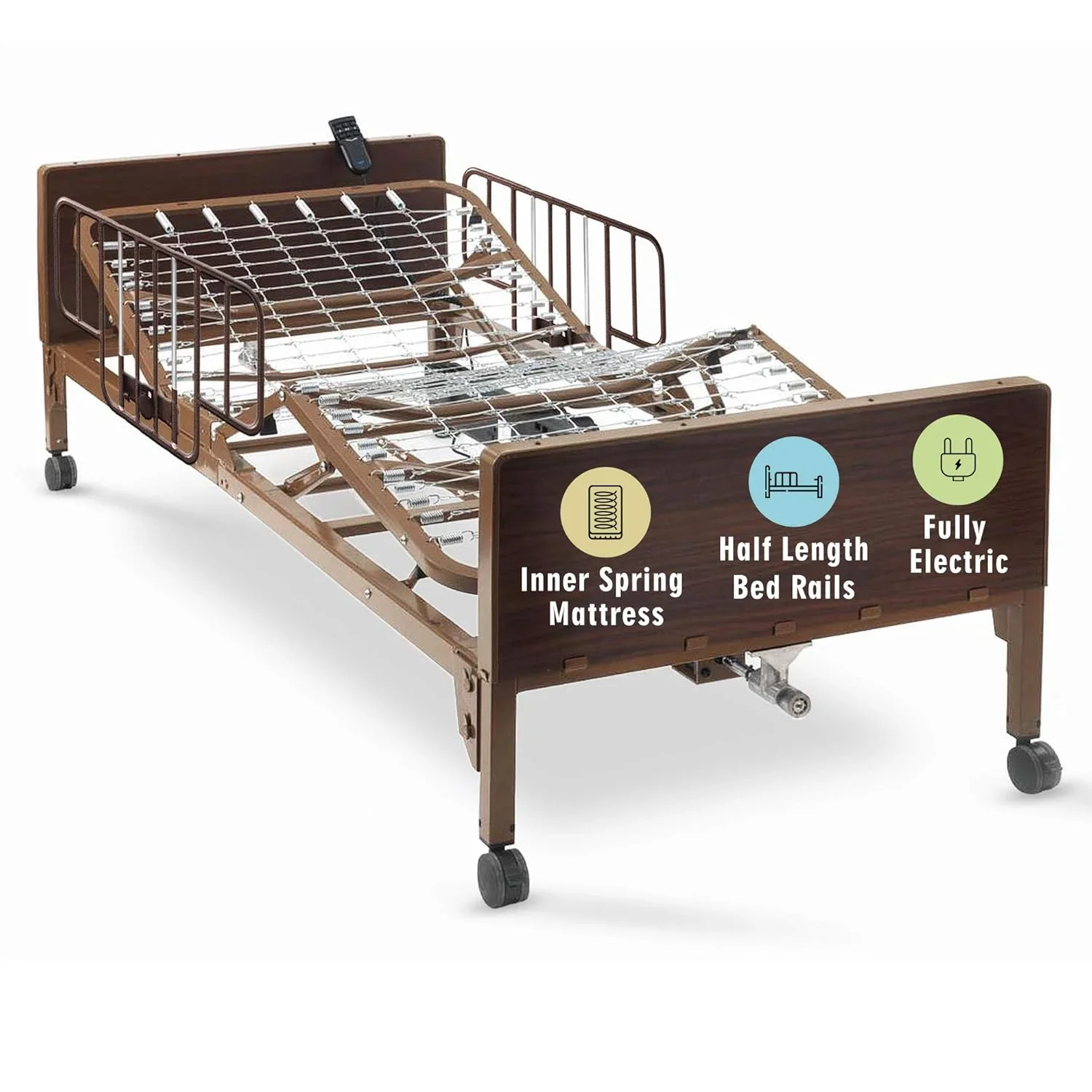
- Hospital bed: adjustable height and positioning for anyone recovering at home or managing a chronic condition.
- Standard or electric wheelchair: for daily mobility indoors and out.
- Mobility scooter: for longer distances outdoors, errands, or getting around larger homes.
- Knee scooter: an alternative to crutches for lower leg injuries.
Before booking anything, confirm the weight capacity and seat width against the actual user, not an estimate. A complete guide to bathroom safety equipment for seniors covers sizing details for each category in more depth.
How do you choose the right rental for your bathroom?
The equipment that works in a magazine photo often doesn’t work in a real Richmond bathroom with a 30 inch doorway and a tub with no lip. Start with the physical space, then match the device to it.
- Measure the doorway and turning space. A standard wheelchair needs roughly 32 inches of clearance; a transfer bench needs enough tub deck to sit flat.
- Confirm weight capacity against the actual user’s weight, not a rounded guess. Bariatric equipment exists for a reason.
- Identify the transfer side. Someone recovering from hip surgery usually has a “good side” they lead with, and a bench or commode should be positioned accordingly.
- Account for caregiver strength. If a family member is doing the lifting, a bath lift or powered options reduce injury risk more than a manual bench.
- Check seat height against the user’s knee height, especially for raised toilet seats and commodes.
When you call a supplier, ask these questions directly: Do you install grab bars and benches on site, or drop and go? Can someone demonstrate a transfer before the technician leaves? Is the equipment sanitized between renters? What’s the return and pickup process when the rental ends?
Watch for red flags: a supplier who can’t give a straight weight capacity number, no offer of on-site setup for anything beyond a simple shower chair, or fees that appear only at pickup.
Pro Tip: Take a photo of your bathroom doorway, tub, and toilet area before you call. Suppliers can often confirm the right fit over the phone in minutes instead of guessing on delivery day.

What do bathroom safety rentals cost, and how long should you rent?
Rental terms in the Vancouver area generally run daily, weekly, or monthly, with monthly rates offering the best value for anything longer than a few weeks. Same-day delivery is common for standard items like commodes, shower chairs, and transfer benches, and reputable suppliers sanitize every piece before it leaves the warehouse.
Public health guidance backs up why this equipment matters at all: Health Canada and the Public Health Agency of Canada name the bathroom as a common site for falls among seniors, and specifically recommend non-slip mats, raised toilet seats, and transfer benches as preventive measures, not just recovery tools.
For eligible clients, Island Health’s MEPP provides basic short-term equipment following a clinician assessment or referral, typically for limited periods. Program equipment usually comes without a deposit requirement, but BC provincial policy notes the recipient is responsible for its care and return, and private rental terms differ, so confirm deposit and liability rules with whichever supplier you use.
A few practical scenarios:
- Post-surgery recovery (4 to 8 weeks): commode, transfer bench, raised toilet seat, monthly rate.
- Temporary mobility loss (a few days to weeks): wheelchair or knee scooter, weekly rate.
- Ongoing daily need: hospital bed or mobility scooter, monthly rental or purchase comparison worth running.
If MEPP equipment isn’t available fast enough, or doesn’t include the specific item you need, a private rental covers that gap without the wait.
What should delivery and installation actually include?
A proper delivery isn’t just a drop at the curb. For anything involving a transfer, bath lift, or hospital bed, the technician should place the equipment, check that grab bars or benches are anchored securely, and walk through one demonstration transfer with the caregiver present.
Run through this checklist once the equipment is in place:
- Non-slip mats are down both inside and outside the tub or shower.
- Grab bars are anchored, not just resting against tile; if wall studs aren’t accessible, a temporary floor-to-ceiling pole is a reasonable short-term substitute, though permanently anchored bars remain the safer long-term option according to CMHC’s accessible housing guidance.
- Do a test transfer with the caregiver watching, before the technician leaves.
- Check water temperature at the tap, scalding risk rises with reduced sensation or mobility.
- Clear the path to the bathroom for a nighttime walk, no cords, no loose rugs.
- Confirm any bed rails or lift locks have a working emergency release.
If the situation involves complex transfers, a bariatric case, or a fast-declining condition, ask for an occupational therapist assessment before final setup. It costs a phone call and prevents a mismatched piece of equipment from sitting in a hallway.
Pro Tip: Delivery technicians who verify weight capacity labels and complete one demonstration transfer with a caregiver watching cut down return trips significantly, ask for this every time, especially with hospital beds and lifts.
What Richmond families actually rent, and how it speeds things up
Most calls from Richmond families for medical equipment rentals fall into two buckets: short recovery bundles (a hospital bed paired with a commode and transfer bench for four to eight weeks post-surgery) and ongoing mobility bundles (a wheelchair or scooter alongside grab bars for daily independence). Bundling those items together usually means one delivery instead of three.

Same-day delivery and no deposit may matter more than a few dollars off a daily rate when someone is coming home from hospital tomorrow. Sanitization between renters is generally considered baseline hygiene for shared medical equipment.
Booking moves faster when you have the doorway width, the user’s weight, and the transfer side ready before you call. A five-minute conversation beats a delivery that shows up wrong.
— Chandan
How to book bathroom safety equipment with Seventh Chakra
Some local suppliers offer same-day delivery across Richmond and the Greater Vancouver area, no deposit up front, and sanitize equipment before delivery, providing an alternative to waiting on program referrals or driving to a big-box retailer for short-term equipment needs.
The lineup covers what most Richmond households actually ask for: mobility scooter rentals, both standard and electric wheelchair rentals, and hospital bed rentals with electric adjustment and same-day setup. Before you call, have three things ready: the user’s approximate weight, the space where the equipment will go, and how long you expect to need it. That’s usually enough for a supplier to confirm fit and get a delivery window locked in.
If you’re recovering from surgery, supporting an aging parent, or just need a scooter for a visiting relative, book through Seventhchakra and expect a call back the same day to confirm delivery.
Where to check safety guidance and program eligibility
For fall prevention basics, Health Canada’s home safety guidance and the Safe Living Guide both offer practical checklists. For bathroom design standards, see CMHC’s accessible housing guidance. For program eligibility, contact Island Health’s MEPP directly, and browse Seventh Chakra’s Vancouver service area for local booking.
Sources
FAQ
Can I rent bathroom safety equipment same day in Richmond?
Some suppliers offer same-day delivery for many items including commodes, shower chairs, and transfer benches, sometimes without requiring a deposit.
Does MEPP cover bathroom safety equipment rental?
Island Health’s MEPP can provide short-term equipment for eligible clients following a clinician referral, but private rental fills gaps when program equipment isn’t available quickly enough or doesn’t include a needed feature.
What’s the difference between a shower chair and a transfer bench?
A shower chair sits fully inside the shower or tub for someone who can step in independently, while a transfer bench spans the tub wall so a person can sit first and slide across, avoiding a standing step-over.
How long can I rent a hospital bed for?
Rental periods range from a few weeks for post-surgery recovery to ongoing monthly terms for chronic conditions, with monthly rates generally offering better value past the first few weeks.
Do I need a deposit to rent equipment in Vancouver?
Not with every supplier. Seventh Chakra rents wheelchairs, mobility scooters, and hospital bed with no deposit required, though private rental deposit policies vary by company, so confirm terms before booking.