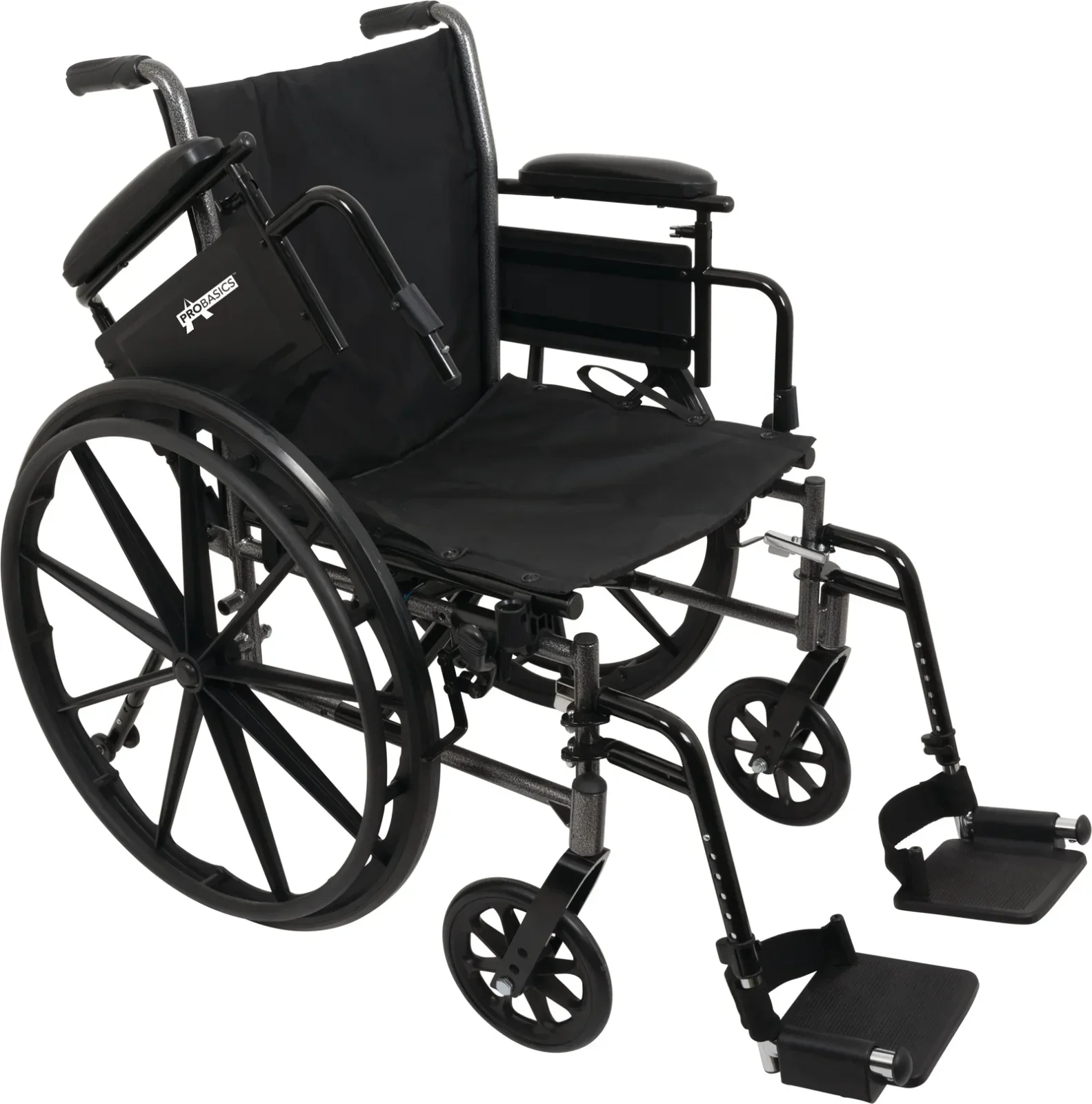
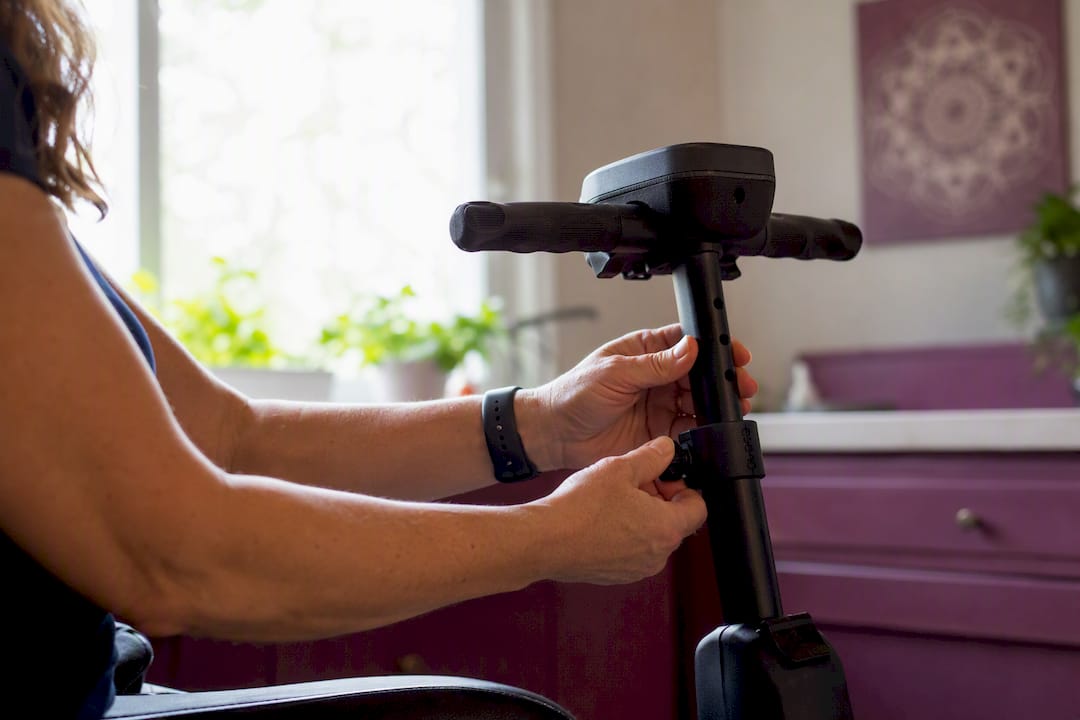
Most caregivers need one of four equipment types: a walker or rollator for balance support, a manual or transport wheelchair for seated mobility, a mobility scooter or power chair for longer distances, or a hospital bed and lift chair for safe transfers at home. The right pick depends on the specific mobility limitation, not the price tag.
Before buying anything, take three steps this week:
- Get a clinician assessment or prescription so the equipment matches the actual condition.
- Measure doorways, hallways, and bathroom clearances in the home.
- Decide rent versus buy based on how long the need will realistically last.
If the need is urgent, renting from a local supplier like Seventhchakra gets equipment delivered same day without a deposit, which buys time to make the right long-term decision instead of a rushed one.
Key Takeaways
The right mobility equipment choice depends on matching the device category to a clinician-confirmed need, verified home measurements, and a clear rent-versus-buy timeline.
| Point | Details |
|---|---|
| Start with clinical input | Get a clinician assessment before shopping, since fit and safety outrank lowest price. |
| Measure before you commit | Check doorways, bathroom clearances, and transfer heights before choosing any equipment. |
| Rent for uncertain timelines | Renting suits short or unclear recovery periods; buying suits confirmed long-term needs. |
| Battery care prevents failures | Charge power equipment nightly and store batteries properly to avoid the most common maintenance issue. |
| Protect your own back | Bend knees, widen your stance, and keep loads close to your body during every transfer. |
| Seventhchakra offers a low-friction rental start | Same-day delivery, no deposit, and sanitized equipment let caregivers trial fit before buying. |
Table of Contents
- Caregiver mobility equipment guide: walkers and rollators explained
- Choosing between manual wheelchairs and transport chairs
- Mobility scooters and power chairs: what caregivers need to know
- Hospital beds and lift chairs for safer home care
- When do caregivers need a mechanical patient lift?
- How to choose the right mobility equipment: a caregiver checklist
- Daily and weekly maintenance routines that prevent breakdowns
- What to expect from a trusted rental supplier
- Training caregivers on proper equipment use
- Protecting your own back during transfers and daily use
- Why renting first is the smarter default for most caregivers
- Get the right equipment delivered today
- Sources
- FAQ
Caregiver mobility equipment guide: walkers and rollators explained
Walkers and rollators suit people who need balance support but can still bear weight and walk short distances. A standard walker works for someone with significant instability; a rollator, with its wheels and seat, suits someone who needs to rest mid-walk but can manage momentum.
- Set handle height so the wrists sit level with the hip crease when arms hang naturally.
- Check seat height on rollators. Feet should touch the ground flat when seated.
- Test the brakes on a flat surface and again on a slight incline before daily use.
- Match wheel size to the home. Larger wheels handle thresholds and outdoor sidewalks better than small casters.
Renting suits short recoveries, like after a hip fracture. Buying makes more sense once the need looks permanent, according to guidance on rent-versus-buy timelines.
Choosing between manual wheelchairs and transport chairs
A self-propelled manual wheelchair lets the user push the wheels themselves and works for people with upper-body strength and some independence. A transport chair is lighter, has smaller wheels, and is built for a caregiver to push. It is not meant for self-propulsion.
- Measure seat width and depth against the user’s hips and thigh length. A poor fit causes pressure sores over time.
- Check the weight capacity rating against the user’s actual weight, not an estimate.
- Confirm the folded dimensions fit in your vehicle’s trunk if transport is part of the routine.
- Consider your own back and shoulders. Pushing a heavier manual chair repeatedly strains a caregiver fast.
Renting a wheelchair rental in Vancouver works well for hospital discharges or trial periods before a purchase decision. If the lightweight wheelchair options suit the user’s build, buying outright becomes more attractive once the rental period proves the fit.
Mobility scooters and power chairs: what caregivers need to know
Scooters and power chairs shine outdoors, on uneven terrain, or for distances a walker can’t cover. Indoors, they run into trouble fast. Standard four-wheel scooters often can’t turn in a narrow hallway or clear a raised threshold without a ramp.
- Best for: grocery trips, errands, larger outdoor properties, and users who tire quickly but don’t need full wheelchair support.
- Limiting factor indoors: turning radius and doorway width, which most homes underestimate until the scooter arrives.
- Battery type matters. Sealed lead-acid batteries are cheaper but heavier and shorter-lived than lithium options.
- Charge nightly rather than waiting for the battery to run flat. Deep discharges are the fastest way to shorten battery lifespan.
Battery care is the single most common maintenance failure point for powered mobility equipment, and proper charging habits and storage extend battery life substantially. Renting first lets you test whether a scooter actually clears your home’s doorways before committing to a purchase.
Hospital beds and lift chairs for safer home care
- Check the height range on the bed. A bed that adjusts from low to hip height makes standing transfers far safer than a fixed-height frame.
- Confirm side rail compatibility and mattress fit. A mismatched mattress creates gaps that increase fall risk.
- Test the control ergonomics. Caregivers, not just the patient, need to operate the controls easily during the night.
- For lift chairs, check the standing transfer height. The chair should lift the user close to standing without forcing a caregiver to pull or brace them.
- Ask what sanitization and setup a rental supplier provides before delivery, since a bed that arrives unclean or unassembled defeats the point of renting.
Short-term recoveries, such as post-surgery care lasting a few weeks to a couple of months, almost always favour renting a hospital bed in Vancouver over buying one outright.
When do caregivers need a mechanical patient lift?
Gait belts and transfer boards work for users who can bear some weight and just need steadying. Sit-to-stand lifts help users who can partially support themselves but need mechanical assistance rising. Full-body lifts become necessary once a person can’t bear weight at all, and this is where manual transfers turn dangerous for both parties.
- If a caregiver has ever felt their back strain during a transfer, that’s the signal a mechanical lift should have already been in place.
- Lifts require correct sling sizing and anchor point installation, which is not a task to improvise.
- Ask any supplier who installs the equipment, how often it gets serviced, and what the response time is if a lift fails mid-use.
- A technician-backed rental relationship matters more here than with simpler equipment, because a lift failure during a transfer is a safety event, not an inconvenience.
How to choose the right mobility equipment: a caregiver checklist
Work through this checklist before signing anything or handing over payment.
- Start with a clinician. A prescription or assessment tells you the device category, not just a guess based on symptoms. Consumer Reports recommends starting with a clinician before shopping on price, since fit and safety matter more than the cheapest listing.
- Measure the home. Doorways, bathroom entries, hallway turns, and vehicle trunk space all determine which equipment will actually fit.
- Note transfer heights. Bed height, chair height, and toilet height should line up closely enough that transfers don’t require lifting.
- Trial before buying. A rental period lets you test whether a scooter clears the hallway or a wheelchair fits through the bathroom door.
- Ask suppliers direct questions. Confirm delivery timing, setup, a live demonstration, damage policy, and after-hours support before booking, since a solid rental checklist covers exactly these points.
- Run the cost math. Compare weekly or monthly rental costs against the purchase price to find the break-even point, then check whether extended health benefits or an FSA covers any portion.
Pro Tip: Call your insurance provider or benefits plan before you call a supplier. Some plans reimburse rentals but not purchases, and that single call can change your entire decision.
Health Canada’s own guidance on assistive devices stresses matching the device type to the specific need rather than defaulting to whatever’s cheapest or most familiar.
Daily and weekly maintenance routines that prevent breakdowns
Skipping small checks is how a $30 fix turns into a $400 repair. Build these into a routine instead of waiting for something to fail.
- Daily: test brakes, check wheels for debris, inspect for loose bolts, and wipe down contact surfaces.
- Weekly: check tire pressure on wheelchairs and scooters, tighten any fasteners that feel loose, and confirm the battery charged fully overnight.
- Monthly: inspect upholstery and slings for wear, check brake pad thickness, and review the charging cable for fraying.
Keep a short log with dates and what you checked. A simple maintenance record helps with warranty claims and resale value, and it flags a slow decline before it becomes a sudden failure.
Call a professional technician if brakes feel inconsistent, a battery won’t hold charge after a full night, or any structural part feels loose despite tightening. Routine daily checks paired with an annual professional service extend equipment life and cut down on emergency repairs.
What to expect from a trusted rental supplier
Seventhchakra’s own rental terms illustrate what caregivers should expect from any supplier: no deposit required upfront, same-day delivery for urgent needs, full sanitization before every delivery, and rental terms built around the actual recovery timeline instead of a rigid contract.
Ask any supplier these questions before you commit:
- Will you deliver and set up the equipment, or does that fall on me?
- Do you sanitize equipment before it arrives, and can you confirm that in writing?
- What happens if the equipment breaks down after hours?
- Can I switch equipment types if the first choice doesn’t fit?
A short rental period lets you trial fit and function before deciding whether to buy.
Training caregivers on proper equipment use
Owning the right equipment solves half the problem. Using it correctly solves the rest, and this is where most caregivers get shortchanged. Suppliers rarely walk you through technique in detail, so it falls on you to learn it deliberately.
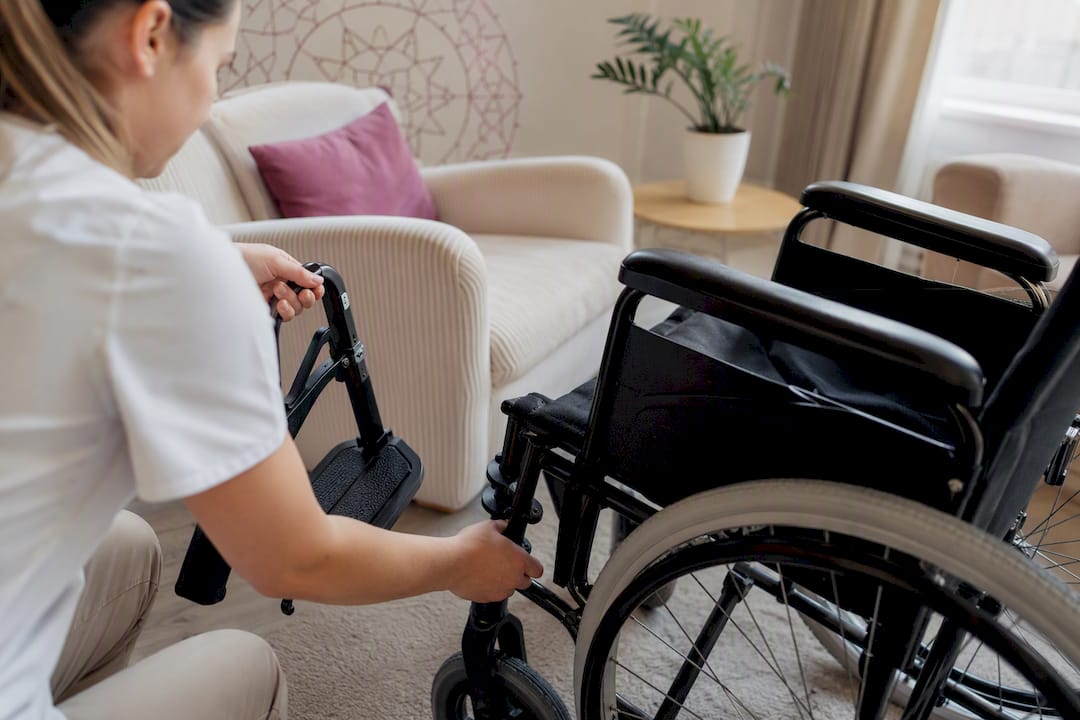
Start with the transfer sequence for whatever equipment is in play. For a wheelchair transfer, lock both brakes, swing away or remove the footrests, and position the chair at a slight angle to the bed or seat rather than straight on. That angle shortens the pivot distance and reduces strain on both people. For a hospital bed, learn the control sequence for raising the head and adjusting height before an emergency forces you to figure it out at 2 a.m.
For gait belts, the belt sits around the waist, not the chest, and your grip should use an underhand hold rather than gripping over the top. That underhand position gives you far more control if the person’s legs buckle mid-transfer.
Practise with the actual person while they’re stable and calm, not for the first time during a crisis. Walk through the exact sequence you’ll use daily: brake, position, transfer, brake release. Ask whoever delivers the equipment, whether that’s a clinician or a rental technician, to demonstrate the technique in person rather than relying on a printed sheet. A five-minute walkthrough at delivery prevents most of the injuries that happen in the first two weeks of using new equipment, when the routine still feels unfamiliar.
Protecting your own back during transfers and daily use
Caregiver injury is one of the most underdiscussed risks in home care, and it’s almost always preventable with better body mechanics rather than more strength.
The core rule: bend your knees, not your back, and keep the person’s weight as close to your body as possible during any transfer. The farther a load sits from your spine, the more torque your lower back absorbs. That’s true whether you’re lifting a person or adjusting a hospital bed frame.

Set equipment height to match your own body, not just the user’s. A bed or wheelchair set too low forces you into a hunched position dozens of times a day, and that repetitive strain adds up faster than a single heavy lift. If you’re pushing a manual wheelchair often, check that the handle height doesn’t force your shoulders into a rounded position.
Widen your stance before any transfer instead of keeping your feet together. A wider base gives you better balance and reduces the chance you’ll twist your spine if the person shifts unexpectedly. Never twist at the waist while holding weight. Pivot with your feet instead.
Gentle daily movement helps caregivers as much as it helps care recipients. Yuneyoga’s gentle yoga routines for older adults also offer caregivers a useful model: slow, controlled movement patterns that build the same core stability and flexibility you need to transfer someone safely without straining your own back.
If you feel persistent lower back or shoulder pain after transfers, that’s your body telling you a mechanical lift should replace manual lifting, not a sign to push through with better form.
Why renting first is the smarter default for most caregivers
The conventional advice tends to frame mobility equipment as a single big purchase decision: research, compare, buy, done. That framing misses how uncertain most caregiving situations actually are. You rarely know in week one whether a parent’s mobility loss is temporary post-surgery weakness or a permanent decline. Buying immediately locks you into a guess.
What the evidence actually supports is treating rental as the default first move, not a fallback for people who can’t afford to buy. A rental period reveals whether a scooter clears your hallway, whether a bed’s height actually matches your bathroom transfer, and whether the person’s condition is improving or not, all before you’ve spent a large sum on equipment that might sit unused in a garage within three months.
The gap I see most often is caregivers overweighting price per month and underweighting flexibility. A rental with no deposit and flexible terms costs more per week than the cheapest used listing, but it costs far less than a wrong purchase you can’t return. Prioritize trial fit and supplier responsiveness first. Compare monthly rates second.
— Chandan
Get the right equipment delivered today
If you need a wheelchair, scooter, or hospital bed now, waiting on a big-box order or a used listing isn’t realistic. Seventhchakra delivers the same day, with no deposit required and every piece of equipment fully sanitized before it reaches your door, so you can start caring for your loved one without a days-long delay.
Booking is straightforward: choose the equipment type, confirm your address for same-day delivery, and our team sets it up and walks you through proper use on arrival. Rental terms flex around your actual timeline instead of locking you into a fixed contract, which matters when you don’t yet know if the need is temporary or permanent.
Whether it’s a mobility scooter rental, a standard wheelchair rental, or a hospital bed for post-surgery recovery, start with a rental to trial the fit before committing to a purchase. Check availability and book delivery through Seventhchakra’s rental listings today.
Sources
- Seniors and aging - assistive devices
- Mobility equipment buying advice (Consumer Reports)
- Cleaning, maintaining, and storing mobility equipment: a complete care guide | MobilityLane
- How to maintain your mobility aid - Wrightway Medical
FAQ
Should I rent or buy mobility equipment first?
Rent first if the need is temporary or uncertain, since a rental period reveals whether the equipment actually fits your home before you commit to a purchase.
Does insurance cover mobility equipment rentals?
Some extended health benefits and FSAs cover rentals but not purchases, so call your provider before booking to confirm your specific plan’s terms.
How often should I charge a scooter or power wheelchair battery?
Charge nightly rather than waiting for a full discharge, since deep discharges are the leading cause of shortened battery life in powered mobility equipment.
When should I call a technician instead of doing my own maintenance?
Call a professional if brakes feel inconsistent, a battery won’t hold charge overnight, or any structural part stays loose after tightening, and plan for an annual professional service beyond that.
Does Seventhchakra deliver mobility equipment the same day?
Yes, Seventhchakra offers same-day delivery with no deposit required, and every piece of equipment is sanitized before it reaches your door.
Recommended
- Lightweight wheelchair options for caregiving: a Canada guide | Seventh Chakra
- Why mobility aid sizing matters: a clinical guide | Seventh Chakra
- Where to Buy the Best Mobility Equipment in Vancouver: Complete 2026 Buyer’s Guide | Seventh Chakra
- Medical Equipment Tips & Guides | Seventh Chakra Medical