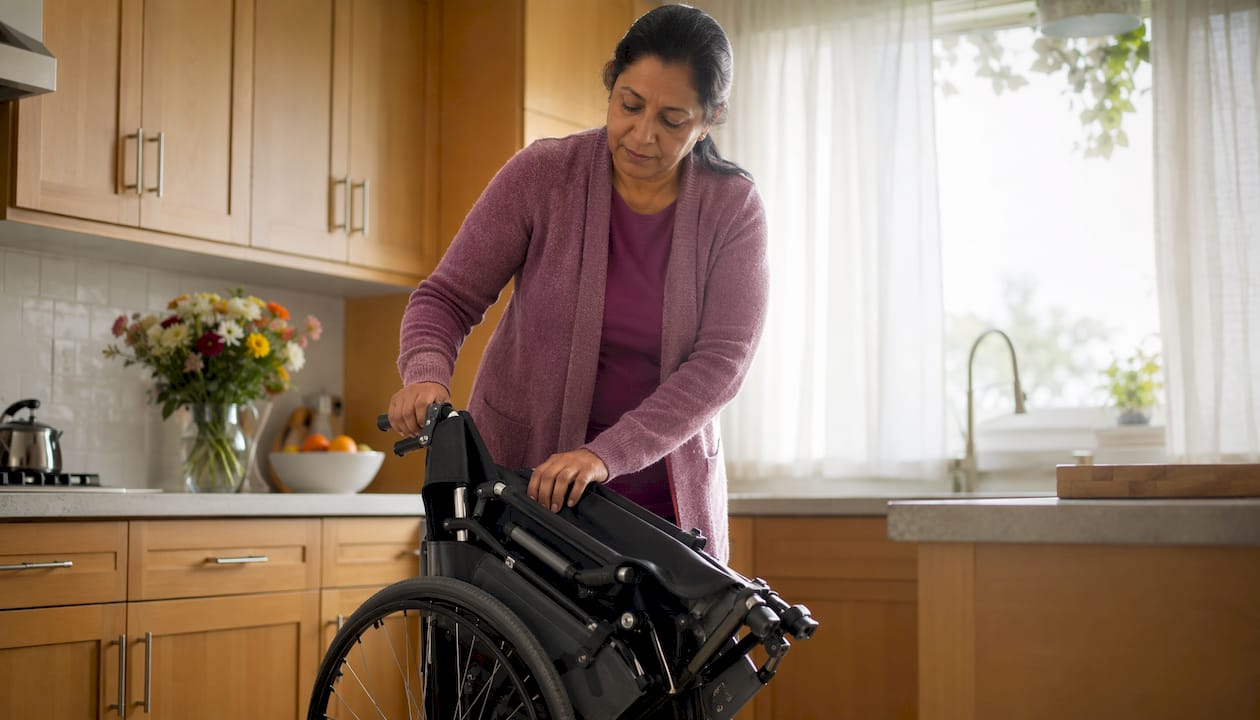
For most caregiving situations, a transport wheelchair or lightweight folding manual chair is the right starting point. Both weigh under the typical lightweight threshold, fold in seconds, and are designed to be pushed by an attendant rather than self-propelled. If you need one today, rent locally. If this is a long-term arrangement, book an occupational therapy assessment and start a provincial funding application in parallel.
Quick decision guide:
- Rent now if: the need is short-term (post-surgery recovery, a hospital discharge, travel), you want to trial a chair before buying, or you need equipment within hours.
- Buy if: the person you care for will use the chair daily for months or years, has specific seating or pressure-relief needs, or you have provincial funding in place.
- Immediate next step for urgent need: call a local rental provider that offers same-day delivery. Seventhchakra serves Greater Vancouver with sanitized equipment and no upfront deposit.
- Immediate next step for long-term need: request an occupational therapist (OT) referral, get a prescription, and apply to your provincial assistive devices programme.
Table of Contents
- What lightweight wheelchair options work best for caregiving?
- How do you choose the right chair as a caregiver?
- What do the weight numbers actually mean for you as a caregiver?
- Should you buy or rent? Canadian costs and funding explained
- How do you keep a lightweight wheelchair safe and reliable?
- How Seventhchakra helps caregivers get a wheelchair fast in Vancouver
- Key takeaways
- Why speed and safety matter more than the perfect chair
- Seventhchakra: same-day wheelchair rentals for caregivers in Vancouver
- Useful sources
- FAQ
What lightweight wheelchair options work best for caregiving?
Not all lightweight chairs are built for the same job. The four main classes each solve a different caregiving problem, and picking the wrong one creates daily friction.
| Class | Typical weight (lbs / kg) | Caregiver pros | Best use case |
|---|---|---|---|
| Transport wheelchair | 15–25 lb / 7–11 kg | Lightest to lift, small folded footprint, attendant-push design | Short trips, travel, post-discharge recovery |
| Lightweight manual | 25–38 lb / 11–17 kg | Wider seating options, self-propel rings available, durable | Daily home and community use |
| Ultralight manual | 15–25 lb / 7–11 kg | Minimal lifting strain, carbon fibre or titanium frames | Active users, long-term daily use |
| Lightweight power chair | — | Reduces caregiver push effort, clinical seating options | Endurance or postural limitations |
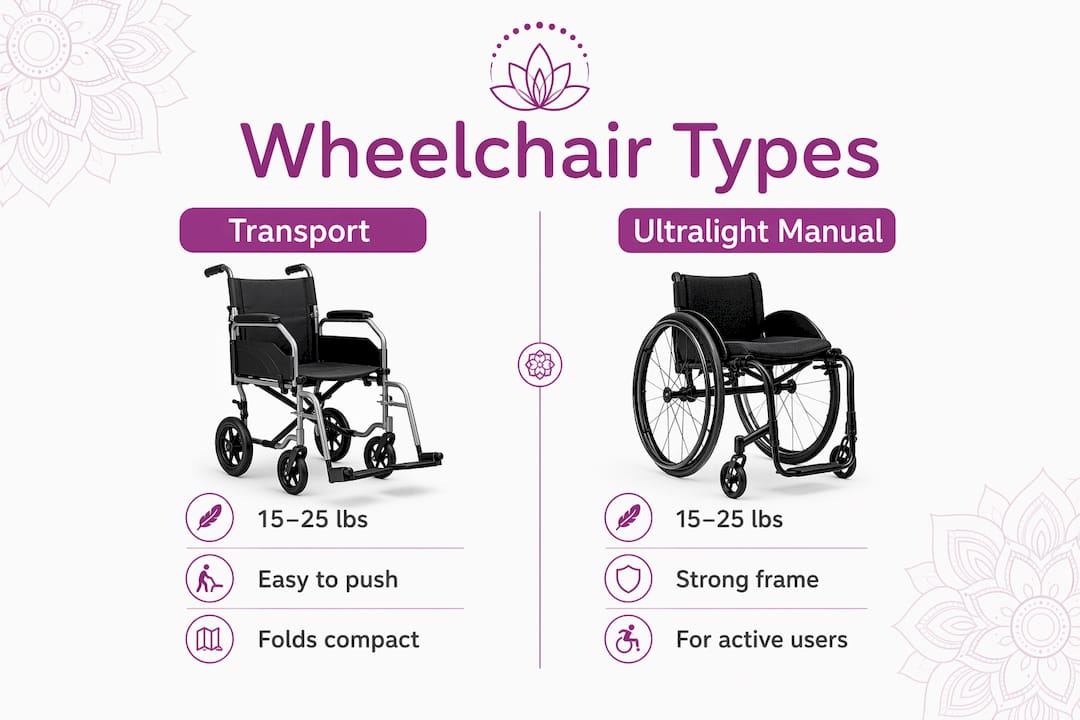
Data on typical weight ranges for each class comes from Holland Bloorview’s patient education guide.
Transport wheelchairs: the caregiver default
Transport chairs are built specifically for attendant pushing. They have small rear wheels (no self-propel rings), fold compactly, and are the lightest class you can buy. The trade-off is that the person you care for cannot move the chair independently. For caregivers managing short outings, medical appointments, or airport travel, that trade-off is usually fine. Transport chairs are compact and attendant-driven, which is exactly what most family caregivers need.
Ultralight manual chairs: when the caregiver’s back matters
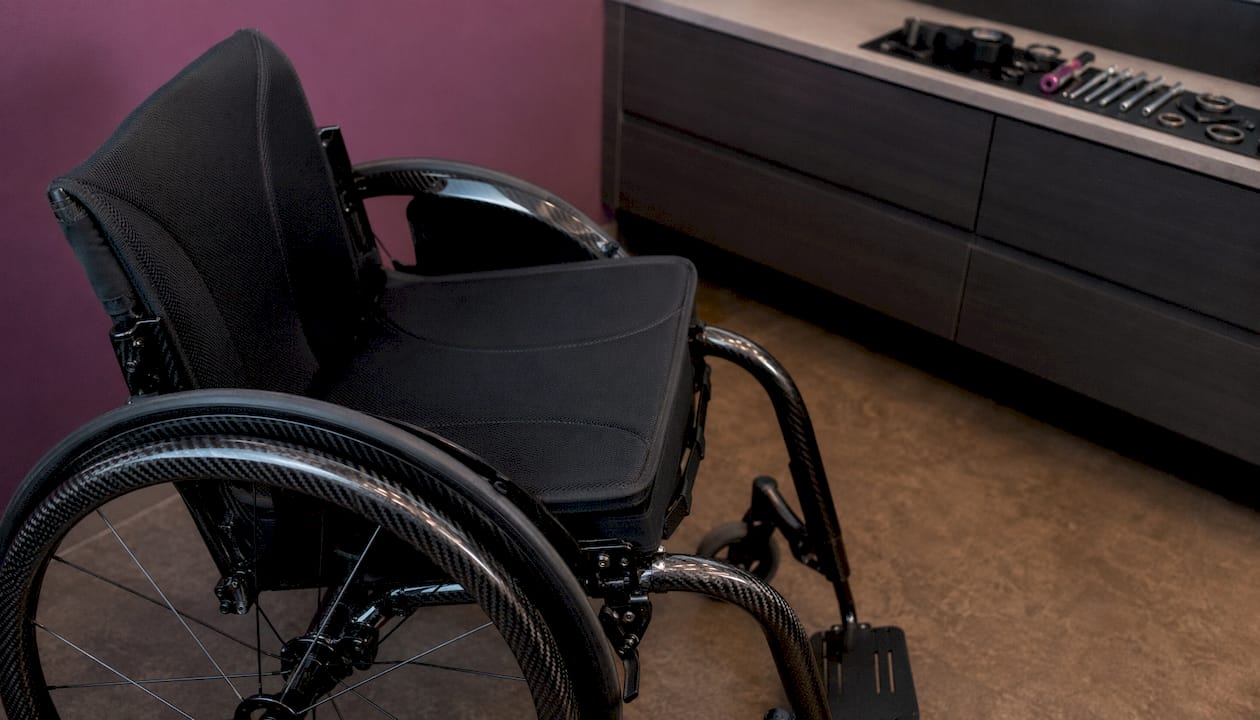
Ultralight frames, often made from carbon fibre or titanium, are typically 15–25 lb. The QUICKIE 2 family, for example, lists weights from 23.5–25 lb depending on configuration, with weight capacities reaching 300–350 lb on heavier-duty variants. These chairs suit users who self-propel part of the time and caregivers who load and unload the chair from a vehicle multiple times a day. The cost is higher, but the reduction in cumulative lifting strain over months of daily use is real.
Lightweight power chairs vs manual: what caregivers should know
Power chairs reduce the physical push effort, but they are heavier, harder to transport, and require a clinical seating assessment for long-term use. Scooters favour endurance and outdoor travel; power chairs address complex postural needs. If the primary issue is that the person tires quickly on longer outings, a mobility scooter may actually be the better fit than a power chair. If the issue is posture, pressure management, or full-time seating, a power chair with clinical setup is worth the process.
Caregiver implications at a glance:
- Transport and ultralight chairs: easiest to lift, store, and travel with.
- Standard lightweight manual: versatile but heavier than ultralight; check the folded weight before buying.
- Power chairs: eliminate push effort but add transport complexity and cost.
- Scooters: good for endurance limitations, poor for clinical seating needs.
How do you choose the right chair as a caregiver?
Work through these questions before you call a supplier or rental desk. They will also help you get a useful answer from a clinician in a short appointment.
- Who will push the chair? If it is primarily you, a transport or lightweight folding chair is the priority. If the user self-propels part of the time, they need rear push-rims and a manual chair with the right seat height.
- Where will the chair be stored? Measure your hallway, the car boot, and any doorways the chair must pass through. Federal programme guidelines note that the chair must fit within the client’s home environment, including doorways. A folded width under 25 inches clears most standard Canadian interior doors.
- What is your vehicle’s boot space? Lift the chair into the boot before you commit to buying. A chair that weighs 28 lb on paper may feel much heavier after a long day of caregiving.
- What is the user’s weight? Every chair has a manufacturer-specified weight capacity. Never buy below the user’s weight, and leave a margin of at least 10–15 lb.
- Are there seating or pressure concerns? For optimal fit, measure the widest point of the seated hips and add 1–2 inches for seat width; measure back-of-hip to back-of-knee and subtract 1–2 inches for seat depth. A seat that is too narrow or too deep raises pressure-sore risk.
- How often will transfers happen? Swing-away or removable footrests and flip-back armrests make transfers significantly safer and faster.
Questions to ask your supplier or clinician
- “What is the folded footprint, width and height?”
- “Can you demonstrate lifting this model into a standard car boot?”
- “What is the maximum weight capacity, and does that include accessories?”
- “Are the footrests removable, and how much do they weigh separately?”
- “Does this chair have attendant handbrakes?”
Red flags to walk away from
- No attendant handbrakes on a chair that will be pushed on slopes or ramps.
- Weight capacity at or below the user’s current weight, with no margin.
- No manufacturer spec sheet available (weight, dimensions, capacity).
- Fixed footrests when the user needs frequent transfers.
- A supplier who cannot demonstrate folding and unfolding the chair in under 30 seconds.
What do the weight numbers actually mean for you as a caregiver?
The weight listed on a spec sheet is the bare frame. What you actually lift is the frame plus everything attached to it.
A practical example: an ultralight frame at 15 lb, plus two footrests at roughly 3 lb, plus a pressure-relief cushion at 4 lb, equals a real lift weight of around 22 lb. That is before the chair has been used all day and collected a bag or two on the handles. Lightweight manual chairs typically weigh in the range common for this class, and ultralight models can be as light as the lower end typical for this class using carbon fibre or titanium frames.
Weight ranges caregivers actually lift: Standard manual: 30–45 lb (14–20 kg) | Lightweight: 25–38 lb (11–17 kg) | Ultralight: 15–25 lb (7–11 kg)
Those numbers add up fast when you are loading and unloading a car twice a day, five days a week. Cumulative lifting strain is one of the leading causes of caregiver back injury, and choosing a chair that is 10 lb lighter than the next option is a meaningful ergonomic decision, not a luxury.
Pro Tip: Remove the footrests and cushion before lifting the chair into a vehicle. Most footrests detach with a single lever, reducing the lift by 5–8 lb. Store them in the boot first, then lift the frame. Your lower back will thank you after six months of this routine.
For caregivers managing seniors with mobility and pain concerns, reducing your own physical load is just as important as managing theirs. Two-person lifts are always safer for chairs over 30 lb. When loading into a vehicle alone, use a ramp or a lift assist device rather than a straight overhead lift. Keep your knees bent, back straight, and the chair close to your body.
Should you buy or rent? Canadian costs and funding explained
Buying vs renting: the honest comparison
A standard wheelchair starts at around $500 for a basic model. Lightweight and ultralight chairs cost more, with clinical configurations running considerably higher. Rental, by contrast, gives you same-day access with no large upfront cost, and you return the chair when the need ends.
Renting makes sense when:
- The need is short-term (post-surgery, a visiting family member, a trial period).
- You are waiting on a funding application and need equipment now.
- You are unsure which chair type fits the care routine.
Buying makes sense when:
- Daily use is expected for six months or more.
- The user has specific clinical seating needs that require a custom configuration.
- Provincial funding will cover a significant portion of the cost.
How Canadian provincial funding works
Ontario’s Assistive Devices Programme (ADP) can cover up to 75% of eligible equipment costs if the chair is prescribed and deemed medically necessary. Other provinces have equivalent programmes with similar prescription and assessment requirements. The federal Non-Insured Health Benefits (NIHB) programme covers wheelchair costs for eligible First Nations and Inuit clients, provided the chair is not available through another programme and is supported by an OT or physiotherapist assessment.
An OT or physiotherapist assessment is required to confirm medical necessity and create the prescription for funding programmes like ADP. The clinician documents the user’s physical status, transfer method, home environment, and the clinical rationale for the specific chair and accessories requested.
Step-by-step timeline: assessment to delivery
- Request an OT or physiotherapy assessment (your GP can refer you, or you can self-refer to a registered OT).
- OT completes the assessment and writes the prescription, specifying the chair model, dimensions, and accessories.
- Submit the funding application to ADP or your provincial equivalent, with the prescription attached.
- Supplier orders the equipment once approval is received.
- Delivery occurs after the order is fulfilled, which can take several weeks for custom configurations.
Rental timelines run same-day to 48 hours; funded custom purchases can take weeks from assessment to delivery. If the person you care for needs a chair this week, renting locally while the funding application moves through the system is the practical answer, not a compromise.
How do you keep a lightweight wheelchair safe and reliable?
A chair that is not maintained is a chair that fails at the worst moment. The good news is that a basic maintenance routine takes under ten minutes a week.
Daily checks:
- Brakes engage firmly and hold on a slight slope.
- Footrests are locked in position before the user sits.
- Seat cushion is in place and not shifted to one side.
- No visible damage to the frame, wheels, or push handles.
Weekly checks:
- Tyre pressure (pneumatic tyres): check with a gauge and inflate to the manufacturer’s specification.
- Tighten any loose bolts or quick-release axle pins.
- Wipe down the frame, armrests, and push handles with a disinfectant-safe cloth.
- Inspect the upholstery for tears or wear that could create pressure points.
Cleaning and sanitization for rentals:
When you receive a rental chair, confirm it has been sanitized before delivery. Seventhchakra sanitizes all equipment before each rental. For ongoing use, clean contact surfaces after each outing, particularly if the chair has been in a medical facility. Use a mild disinfectant that is safe for vinyl and powder-coated metal; avoid bleach-based sprays on upholstery.
When to call for professional servicing:
- Brakes are not holding even after adjustment.
- The folding mechanism is stiff or does not lock flat.
- A wheel wobbles or the axle feels loose after tightening.
- The frame shows a crack or weld separation.
Pro Tip: Always lock both brakes before a transfer, even on flat ground. A chair that rolls during a transfer is the most common cause of caregiver and user falls. Make locking the brakes a non-negotiable first step, every single time, until it is automatic.
Warranty and service expectations vary by manufacturer. Most lightweight chairs carry a one-year frame warranty; rental chairs are serviced by the provider. If you are buying, ask the supplier about their repair turnaround time before you commit.
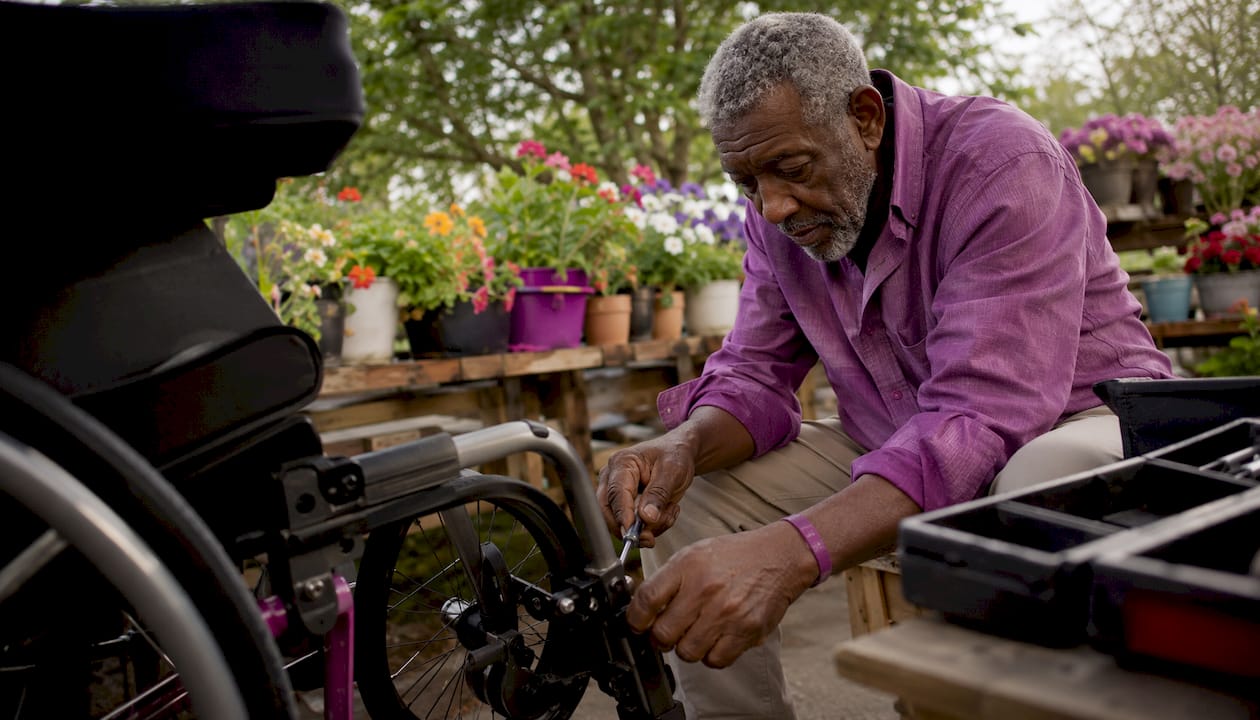
How Seventhchakra helps caregivers get a wheelchair fast in Vancouver
For caregivers in Greater Vancouver who need a chair today, Seventhchakra offers lightweight folding wheelchair rental with same-day delivery, no upfront deposit, and sanitized equipment on every order. The rental catalogue also includes standard wheelchair rental and electric wheelchair rental, so you can match the chair to the care situation without committing to a purchase.
Booking is straightforward: contact Seventhchakra by phone or through the website, confirm the delivery address and timing, and the chair arrives sanitized and ready to use. No lengthy paperwork, no waiting on approvals. For caregivers arranging a hospital discharge on short notice, that same-day window is often the difference between a smooth transition home and a scramble.
A standard wheelchair is available for purchase at $500 for caregivers who prefer to buy outright. For those who need to trial a chair before committing, the rental route lets you assess fit and handling in the actual home environment before spending more on a clinical or ultralight model.
Pro Tip: When the chair is delivered, test the folding mechanism, check both brakes, and confirm the seat width fits the user comfortably before the delivery driver leaves. If long-term use is expected, ask Seventhchakra about requesting an OT referral at the same time. Catching a fit issue on day one is far easier than correcting it after weeks of use.
Key takeaways
For most caregivers, a lightweight folding transport chair is the fastest, safest, and most practical starting point — rent one locally for urgent needs, and pursue a funded clinical assessment for long-term use.
| Point | Details |
|---|---|
| Transport chairs are the caregiver default | Attendant-push design, small folded footprint, and weights as low as 15 lb make them the easiest class to handle daily. |
| Ultralight frames reduce cumulative strain | Chairs in the 15–25 lb range (carbon fibre or titanium) cut the daily lifting load meaningfully over weeks of use. |
| ADP provides partial coverage in Ontario for eligible equipment based on prescription by a qualified clinician | A prescription from a registered OT or physiotherapist is required to access provincial funding programmes. |
| Rent first for urgent or short-term needs | Same-day rental is available in Greater Vancouver; funded purchases can take weeks from assessment to delivery. |
| Seventhchakra for fast local access | Seventhchakra offers same-day, sanitized, no-deposit wheelchair rentals in Greater Vancouver for caregivers who need equipment now. |
Why speed and safety matter more than the perfect chair
The most common mistake caregivers make is spending two weeks researching the ideal chair while the person they care for is managing without one. A good-enough chair that arrives today is worth more than a perfect chair that arrives in a month.
That said, “good enough” has a floor. A chair without attendant handbrakes, or one that is too narrow for the user’s hips, creates real safety risks that compound over time. The checklist in this guide is not bureaucratic caution; it is the short list of things that actually cause falls and pressure injuries when they are wrong.
My honest recommendation: start with a lightweight folding transport chair unless you already know the user has specific postural or pressure needs. It is the most forgiving choice for a caregiver who is new to this. You can always upgrade once you have lived with the chair for a few weeks and understand what the daily routine actually demands.
For pressure-relief or complex posture concerns, do not skip the OT assessment. A chair that looks right and fits wrong is a slow-motion injury. The assessment is the one step that cannot be shortcut, even when everything else is urgent.
Seventhchakra: same-day wheelchair rentals for caregivers in Vancouver
When a family member comes home from hospital and needs a wheelchair today, the last thing you want is a two-week wait. Seventhchakra delivers sanitized, ready-to-use wheelchairs and mobility scooters across Greater Vancouver with same-day service and no upfront deposit. Rental terms are flexible, pricing is transparent, and every piece of equipment is cleaned before it reaches your door.
Whether you need a lightweight folding chair for a post-surgery recovery, a standard wheelchair rental for ongoing home care, or an electric wheelchair for a user with endurance limitations, Seventhchakra has the equipment and the local knowledge to match the right chair to your situation. If clinical seating needs are involved, a prescription and OT assessment will be required, and Seventhchakra can point you toward the right next step. Contact Seventhchakra today to confirm availability and arrange delivery.
Useful sources
The following Canadian resources will help you verify funding rules, find a registered OT, and check programme steps for your province.
- Ontario Assistive Devices Programme (ADP): Eligibility criteria, how to apply, and the list of registered vendors and authorizers. Start here if you are in Ontario.
- NIHB Mobility Equipment and Supplies Benefits List: Federal coverage criteria for wheelchairs for eligible First Nations and Inuit clients, including documentation requirements.
- Holland Bloorview / HRH Wheelchair Options Guide: Plain-language patient education PDF covering measurement, fit, and chair types. Useful for caregivers preparing for an OT appointment.
- Seventhchakra lightweight folding wheelchair rental: Local rental page for Greater Vancouver, with same-day delivery and no deposit.
- Seventhchakra wheelchair rental in Vancouver: Practical guide to what to expect from the rental process locally, including documentation and delivery steps.
- Seventhchakra mobility equipment blog: Ongoing guides on wheelchair types, scooter rentals, and home care equipment for Canadian caregivers.
FAQ
What is the easiest wheelchair for a caregiver to push?
A transport wheelchair is the easiest option for a caregiver to push. Transport chairs are designed for attendant pushing, have smaller rear wheels, and fold compactly, making them lighter and more manoeuvrable than standard manual chairs.
What is the best lightweight wheelchair for seniors in Canada?
For most seniors, a lightweight folding transport chair or a lightweight manual chair in the 25–38 lb (11–17 kg) range works well for daily caregiving. If the senior self-propels part of the time, a lightweight manual with push-rims is the better fit; if a caregiver does all the pushing, a transport chair in the 15–25 lb (7–11 kg) range saves weight and effort.
Should I rent or buy a wheelchair for a family member recovering from surgery?
Rent for a post-surgery recovery. Rental gives you same-day access, no large upfront cost, and the flexibility to return the chair when it is no longer needed. Seventhchakra offers same-day sanitized wheelchair rentals in Greater Vancouver with no deposit required.
What is an alternative to a wheelchair for someone with limited endurance?
A mobility scooter is often the better choice when the primary issue is endurance rather than posture or clinical seating. Scooters excel for endurance and outdoor travel, while power chairs are better suited to users with complex postural needs. For older adults planning outings, travelling with a scooter can extend range and reduce fatigue significantly.
Does provincial funding cover lightweight wheelchairs in Canada?
Yes, in Ontario the ADP covers up to 75% of eligible equipment costs when the chair is prescribed by a registered OT or physiotherapist and deemed medically necessary. Other provinces have equivalent programmes. The application requires a clinical assessment and prescription, so the process takes weeks; renting locally while the application is in progress is the practical short-term solution.
This article provides general information for caregivers and is not a substitute for professional medical or clinical advice. Confirm current funding eligibility and programme requirements with your provincial programme office or a registered occupational therapist for your specific situation.
Recommended
- Buying a Wheelchair in Vancouver: Top Stores, Online Options, and Buyer’s Guide | Seventh Chakra
- Medical Equipment Tips & Guides | Seventh Chakra Medical
- Buy Transport Chairs Online in Vancouver: Complete Guide to Choosing the Best Lightweight Mobility Chair | Seventh Chakra
- How tourists rent wheelchairs locally: a 2026 guide | Seventh Chakra