Proper sizing of a mobility aid directly determines safety, comfort, postural alignment, skin protection, and the device’s ability to restore meaningful mobility. Get it wrong and the consequences range from pressure ulcers to falls to permanent musculoskeletal damage. Get it right and the device does what it is supposed to: give someone their life back.
Your immediate next step depends on urgency:
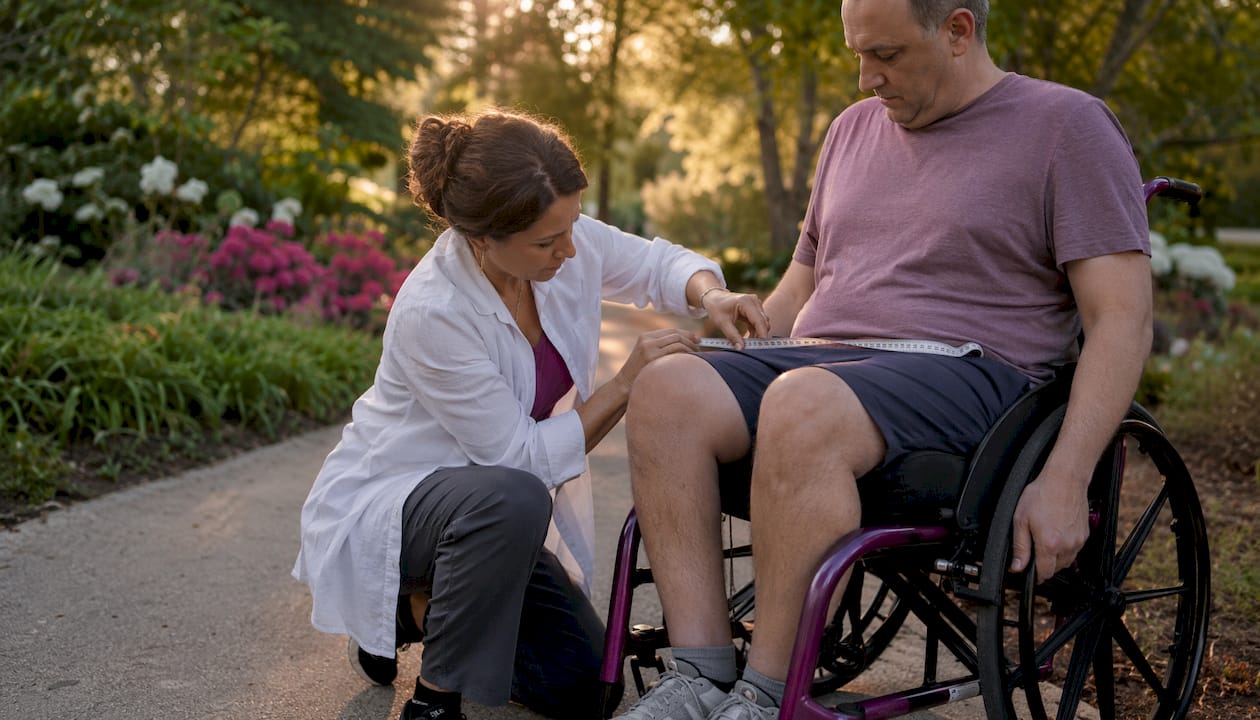
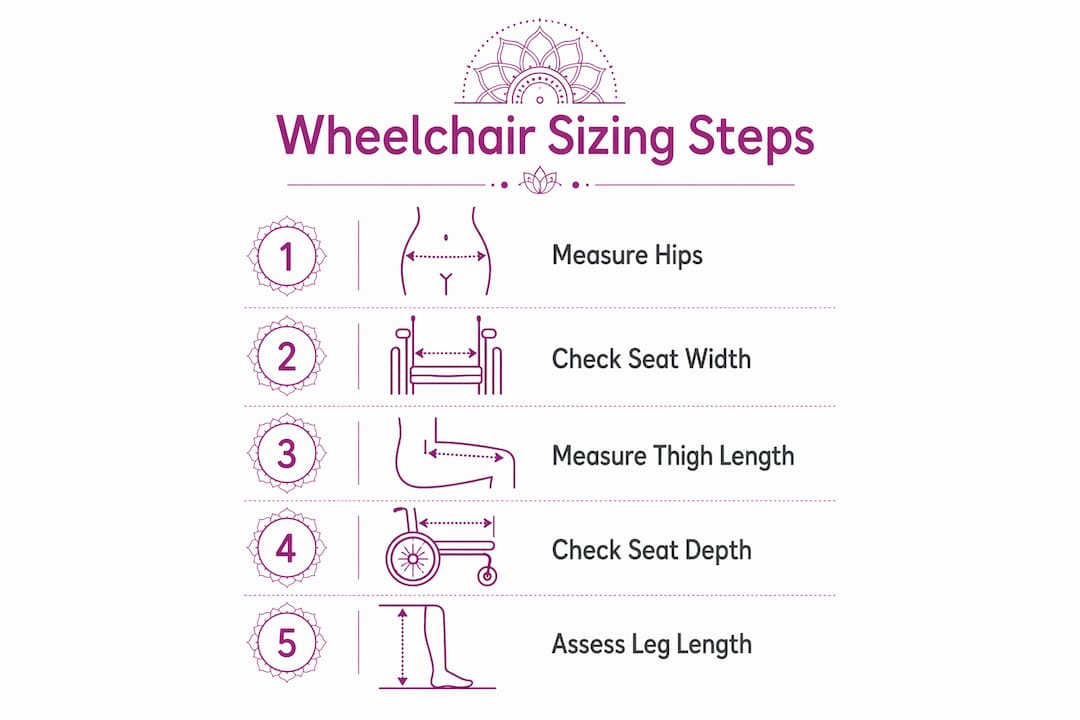
- Measure first. Sit on a firm, flat surface and record seat width (hip width plus 2.5–5 cm), seat depth (thigh length minus 5 cm), and seat-to-floor height (lower-leg length with footwear).
- Book a fitting. The Canadian Association of Occupational Therapists (CAOT) recommends that complex seating assessments be performed by a registered occupational therapist (OT) or physiotherapist (PT), ideally one credentialled as an Assistive Technology Professional (ATP).
- Trial before you commit. For urgent needs, a short-term rental from Seventhchakra Medical in Greater Vancouver gives you a real device to measure against while your clinical assessment is arranged.
- Lean on Canadian evidence. Research connected to the University of British Columbia and Fraser Health confirms that inconsistent seating service delivery leads to pressure wounds, pain, and reduced participation — sizing is a clinical decision, not a retail one.
Table of Contents
- Why does mobility aid sizing matter for fit and function?
- What happens when the fit is wrong?
- How to measure accurately, step by step
- Simple adjustments vs when you need custom equipment
- Why sizing is a clinical responsibility in Canada
- When should you reassess fit?
- Key takeaways
- The part most people skip
- Seventhchakra Medical: trial a rental while your assessment is arranged
- Useful Canadian sources and further reading
- FAQ
Why does mobility aid sizing matter for fit and function?
Every dimension of a wheelchair or mobility aid connects to a specific clinical outcome. A seat that is 2.5 cm too wide changes how you push, where your pelvis sits, and whether your shoulders take damage over months of use. The table below maps each measurement to its purpose and the red flag that signals it is wrong.
| Measurement | How to measure | Functional goal | Clinical red flag |
|---|---|---|---|
| Seat width | Hip width (widest point) + 2.5–5 cm | Pelvic stability; propulsion reach | Skin rubbing on armrests; excessive lateral lean |
| Seat depth | Back of buttock to back of knee, minus 5 cm | Thigh support; pressure distribution | Pressure behind knees; sacral sliding |
| Seat-to-floor height | Floor to back of knee with footwear | Foot clearance; propulsion efficiency | Feet dragging; knees above hips |
| Back height | Seat surface to shoulder blade (or axilla for self-propellers) | Trunk support; arm freedom | Trunk collapse; restricted push stroke |
| Armrest height | Seat surface to bent elbow + 2.5 cm | Shoulder offloading; lateral stability | Shoulder elevation; leaning to one side |
| Footrest/legrest length | Seat surface to heel with footwear | Thigh pressure relief; ankle clearance | Pressure under thighs; ankle hitting casters |
Cushions and back supports change every one of these numbers. A foam cushion of measurable thickness raises the effective seat height and reduces functional seat depth. Always measure with the cushion in place, and note its thickness separately. The Nova Scotia Health wheelchair seating guide recommends documenting cushion medium and contour alongside all body measurements because cushion choice shifts with postural goals: a user with a reducible pelvic obliquity needs a different contour than one with a fixed deformity.
Pro Tip: Measure in the clothing and footwear the person will actually wear in the chair. A thick winter boot adds 1–2 cm to lower-leg length, which changes footrest height enough to cause ankle pressure.
What happens when the fit is wrong?
Poor sizing is not just uncomfortable. It creates a chain of clinical harms that compound over weeks and months.
Pressure injuries are the most serious short-term risk. A seat that is too deep pushes the front edge into the back of the knees, cutting off circulation. A seat that is too narrow concentrates load on the ischial tuberosities. Published research on wheelchair safety in Canada argues that wheelchair-related injuries are common and that regulatory oversight and post-market surveillance remain limited, making clinician-led fitting the primary safeguard.
Falls and instability follow from incorrect seat-to-floor height and centre-of-gravity placement. A chair set too high for a self-propelling user shifts weight backward; too low and forward transfers become dangerous. For walkers and rollators, research on older adults shows that incorrect use is common and directly associated with reduced stability, particularly during single-support phases of gait.
The stakes are real: A qualitative study of occupational therapists in the Fraser Health Authority found that inconsistent delivery of complex seating services leads to pressure wounds, chronic pain, and reduced community participation. Participants called for dedicated specialist seating teams precisely because off-the-shelf sizing decisions were causing preventable harm.
Chronic musculoskeletal damage builds quietly. A seat that is too wide forces a wider push stroke, which loads the rotator cuff asymmetrically. Over months, that becomes shoulder impingement. A back height set too low removes trunk support and forces the user to recruit lumbar extensors continuously, leading to fatigue and pain.
Equipment abandonment is the downstream result nobody talks about. When a device is uncomfortable or unsafe, people stop using it. That is not a preference issue; it is a sizing failure.
Short-term discomfort (soreness after a first session) is normal. Skin redness that does not resolve within 20–30 minutes of pressure relief, recurring pain in the same location, or postural collapse by mid-afternoon are long-term warning signs that the fit needs clinical review.
How to measure accurately, step by step
Follow this sequence on a firm, flat surface (a plinth or a hard chair, not a sofa). Have the person sit in their normal posture with footwear on.
- Seat width. Measure the widest point across the hips or thighs. Add 2.5–5 cm for clearance. For self-propelling users, stay closer to 2.5 cm; excess width increases push-stroke reach and shoulder strain.
- Seat depth. Measure from the back of the buttock to the back of the knee. Subtract 5 cm so the front edge does not press the popliteal fossa.
- Seat-to-floor height. Measure from the floor to the back of the knee with footwear on. This sets footrest length and, for self-propellers, foot-propulsion clearance.
- Back height. For transit users, measure from the seat surface to the top of the shoulder for full trunk support. For self-propelling users, measure to the axilla (armpit) so the back does not block the push stroke.
- Armrest height. Measure from the seat surface to the bent elbow and add 2.5 cm. Too high elevates the shoulders; too low causes lateral lean.
- Footrest/legrest length. Measure from the seat surface to the heel. The footrest should support the full foot without lifting the thigh off the seat.
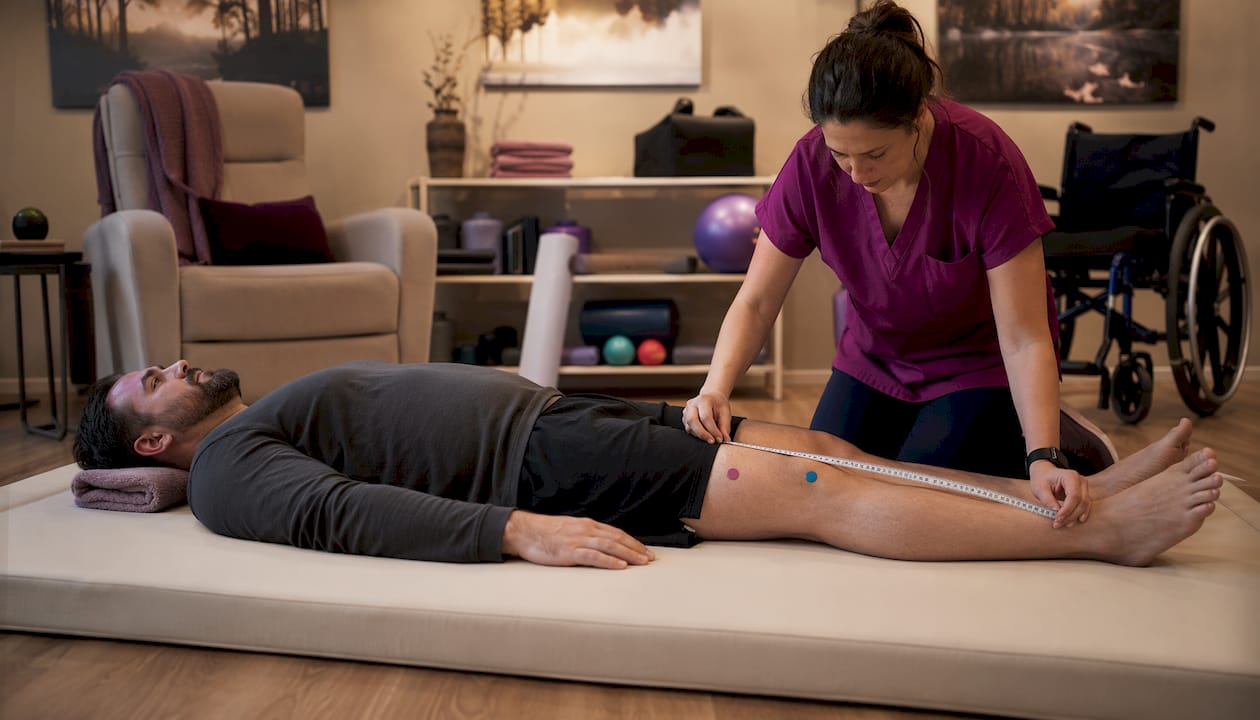
Measuring someone who cannot sit unaided: Use a supine measurement on a mat table for seat depth and lower-leg length, then transfer those figures to the chair. Note any fixed contractures or asymmetries that will require accommodation rather than correction.
Clothing and orthoses: Always add the thickness of any ankle-foot orthosis (AFO) to the lower-leg measurement. A standard AFO adds roughly 1–1.5 cm to foot height, which changes footrest position enough to shift thigh pressure.
Exceptions that change priorities:
- Self-propelling users need a lower seat-to-floor height to allow foot propulsion and a centre-of-gravity adjustment (axle position) to reduce shoulder load. Clinicians balance seat width for propulsion efficiency against the need for pelvic stability.
- Transit-only chairs prioritise caregiver ergonomics and doorway clearance. Many domestic doors measure 23–27 inches, so a 20-inch seat width chair will not pass a 23-inch opening without a narrow-profile model.
- Significant spinal deformity requires accommodation of the fixed posture rather than forcing neutral alignment, which increases fatigue and secondary complications.
- Paediatric users need growth allowances built into the prescription, typically 2.5–5 cm of adjustability, and reassessment every 6–12 months or after any significant growth spurt. For families navigating complex paediatric fittings at home, paediatric home visit services can bring assessment to the child rather than requiring a clinic trip.
Simple adjustments vs when you need custom equipment
Not every fit problem requires a custom chair. Many issues resolve with low-cost, quick changes.
Simple adjustments worth trying first:
- Swap the cushion (foam to gel or contoured foam) to redistribute ischial pressure.
- Adjust footrest height and angle to relieve ankle pressure or thigh loading.
- Add armrest pads or lateral trunk supports for comfort and stability.
- Reposition a lap belt to correct pelvic tilt without changing the chair frame.
- Swap to elevating leg rests if oedema or post-surgical positioning requires leg elevation.
When simple adjustments are not enough, custom equipment becomes necessary. The indicators are specific:
- A pressure injury that recurs despite cushion changes.
- Complex postural asymmetry (fixed scoliosis, significant pelvic obliquity) that a standard back cannot accommodate.
- Body dimensions outside standard frame ranges (very small or bariatric users).
- Repeated difficulty with transfers that suggests the seat height or armrest configuration is fundamentally wrong.
On cost and availability in Canada: Custom seating through provincial assistive technology programmes (such as British Columbia’s At Home Program or Ontario’s Assistive Devices Program) can take weeks to months from referral to delivery. Standard manual wheelchairs are widely available for purchase or short-term rental across Canada. Custom power chairs and complex seating systems involve longer lead times and specialist clinics, which are concentrated in urban centres. Renting a standard chair while waiting for a custom assessment is a practical, low-risk way to maintain mobility and gather real-world fit data for the clinician.
Why sizing is a clinical responsibility in Canada
The Canadian evidence on this is consistent and sobering. A qualitative study connected to the University of British Columbia and Fraser Health found that when complex seating services are delivered inconsistently, clients experience pressure wounds, pain, and reduced participation in daily life. Occupational therapists interviewed in that study called for dedicated seating teams and specialist resources because community-level provision was leaving gaps.
On the training side, a cross-program survey of Canadian entry-to-practice programmes found major variability in how much time OT, PT, nursing, and pharmacy students spend on walking-aid fitting. Many programmes dedicate limited time to some walking-aid topics, which means the clinician prescribing a walker or cane may have had limited hands-on training. That gap is one reason specialist referral matters.
Who should assess and what to request: A registered OT or PT, ideally credentialled as an Assistive Technology Professional (ATP), should lead complex seating assessments. For a basic manual chair, a community OT with seating experience is appropriate. Ask for a written assessment report that documents: body measurements, postural findings, ROM limits, functional goals, cushion and back-support specifications, and a reassessment date. The Ontario Society of Occupational Therapists seating and mobility process guide outlines the full assessment sequence, from health history through trial and client education.
The Nova Scotia Health wheelchair seating guide reinforces that seating assessment must document posture, range-of-motion limits, and functional goals, and must consider cushions, back supports, and adjustable features together, not as separate decisions.
For paediatric cases specifically, where clinic access can be difficult, home-based assessment models offer a way to bring specialist evaluation to the child’s actual environment, which often reveals fit problems that a clinic setting misses.
When should you reassess fit?
Fit is not a one-time decision. Bodies change, and so do functional needs.
- After surgery or hospitalisation. Weight loss, muscle changes, and altered posture during recovery can shift measurements significantly within weeks.
- After a weight change of roughly 5 kg or more. Both gain and loss affect seat width, cushion compression, and centre-of-gravity.
- After any new skin breakdown. A pressure mark that does not resolve within 30 minutes of offloading is a reassessment trigger, not a “wait and see” situation.
- Every 6–12 months for long-term users. Even without obvious changes, gradual postural shifts accumulate. Annual review catches problems before they become injuries.
- Whenever function changes. A new diagnosis, a change in upper-limb strength, or a move to a different home environment (different floor surfaces, narrower doorways) all warrant a fit review.
Red flags that mean see a clinician now, not next month:
- A new or worsening pressure injury, particularly over the sacrum, ischials, or heels.
- A fall or near-fall that involved the device (tipping, footrest catching, wheel locking unexpectedly).
- New unexplained pain in the shoulders, wrists, lower back, or hips that correlates with device use.
- A sudden drop in sitting tolerance or transfer ability with no other obvious cause.
If any of these appear, stop using the current configuration if it is clearly unsafe, photograph any skin changes, document when symptoms started, and contact an OT/PT or a local rental provider for interim equipment while the assessment is arranged.
Key takeaways
Correct mobility-aid sizing is a clinical decision that directly prevents pressure injuries, falls, and long-term musculoskeletal damage — and Canadian evidence confirms that inconsistent sizing leads to measurable harm.
| Point | Details |
|---|---|
| Sizing prevents serious harm | Incorrect fit causes pressure ulcers, falls, chronic pain, and equipment abandonment. |
| Several key measurements define fit | Seat width, depth, height, back height, armrest height, and footrest length each link to a specific clinical outcome. |
| Seek specialist assessment | A registered OT, PT, or ATP should lead complex seating; training gaps exist across Canadian entry-to-practice programmes. |
| Reassess regularly | Review fit regularly and after significant physiological or functional changes. |
| Seventhchakra rentals bridge the gap | A short-term wheelchair or scooter rental from Seventhchakra Medical lets you trial fit and gather real-world data before committing to a purchase or custom order. |
The part most people skip
There is a tendency, especially when someone needs a mobility aid quickly, to treat sizing as a formality: pick the closest standard size, order it, and adjust later. That approach is understandable. It is also how preventable pressure injuries happen.
What I find consistently overlooked is the dynamic nature of fit. A chair that measures correctly in a clinic can still injure a user who habitually leans to one side, shifts weight during long sitting periods, or uses the chair on surfaces the assessment never accounted for. Static measurements are the starting point, not the finish line. The follow-up appointment, the cushion trial, the footrest tweak after the first week at home — those are where fit actually gets resolved.
The other thing worth saying plainly: the Canadian system makes this harder than it should be. Specialist seating clinics are concentrated in urban centres. Wait times for funded equipment can stretch for months. That is not a reason to skip the assessment; it is a reason to use interim options (rentals, trial periods) strategically while the proper process runs its course. Measure before you buy. Ask for a trial. And if a clinician recommends a reassessment date, put it in the calendar.
Seventhchakra Medical: trial a rental while your assessment is arranged
Getting the right fit takes time, and waiting without a safe mobility aid is not a realistic option for most people. Seventhchakra Medical offers wheelchair rentals in Vancouver with same-day delivery, no upfront deposit, and equipment sanitised before it arrives at your door. That means you can have a working chair in your home today, use it to gather real-world fit data, and bring those observations to your OT or PT appointment.
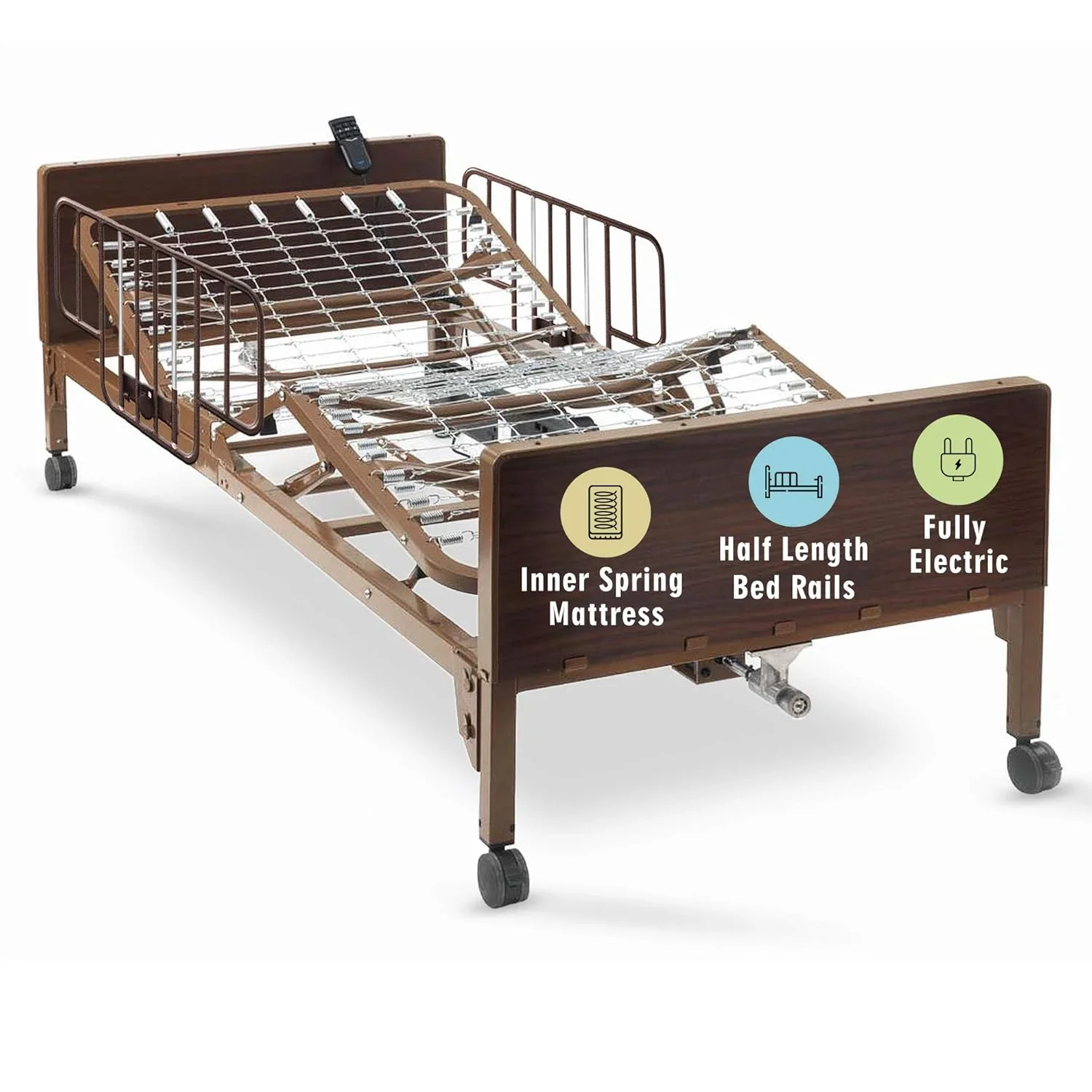
The practical rental workflow is straightforward: rent a standard or electric wheelchair for a short trial period, note what is comfortable and what is not (seat height, footrest position, cushion feel), share those notes with your clinician, then decide whether a standard purchase or a custom order is the right next step. Seventhchakra also offers mobility scooter rentals and hospital bed rentals on the same flexible terms, covering the full range of interim mobility needs.
When you book, ask specifically for adjustable footrests and a cushion option suited to your skin-risk level. Seventhchakra’s team can advise on what is available and arrange delivery to your home in Greater Vancouver.
Useful Canadian sources and further reading
- Complex wheelchair seating provision: UBC/Fraser Health qualitative study — Primary Canadian evidence on service gaps and clinical outcomes when complex seating is delivered inconsistently; essential reading for clinicians and prescribers.
- Nova Scotia Health: Wheelchair Seating and Positioning Guide — Practical clinical checklist covering measurements, cushion selection, and documentation; useful for both clinicians and informed consumers.
- Ontario Society of Occupational Therapists: Seating and Mobility Provision Process — Step-by-step assessment framework from health history through trial and education; the standard reference for OT-led seating assessments in Ontario.
- Walking aid training in Canadian entry-to-practice programmes — Survey documenting training variability across OT, PT, nursing, and pharmacy programmes; explains why specialist referral is important.
- Wheelchair safety and regulatory oversight in Canada — Policy commentary on injury risk and the case for treating wheelchairs as regulated medical devices.
- Canadian Association of Occupational Therapists (CAOT) — National professional body; use the directory to find a registered OT with seating and mobility experience in your province.
- Seventhchakra Medical: mobility equipment guides and rentals — Local resource hub covering equipment selection, sizing tips, and rental logistics for Greater Vancouver.
FAQ
How do I know what size wheelchair to buy?
Measure seat width (hip width plus 2.5–5 cm), seat depth (thigh length minus 5 cm), and seat-to-floor height (lower-leg length with footwear), then match those figures to a chair’s frame dimensions. A registered OT or PT can confirm the fit and account for cushion thickness and postural needs.
How do you tell if a wheelchair is too small?
The clearest signs are skin redness or pressure marks on the hips or thighs after sitting, difficulty with lateral stability, and the user’s knees sitting noticeably above hip level. A seat that is too narrow will also cause the armrests to press against the outer thighs during propulsion.
Should I choose a 16-inch or 18-inch wheelchair seat?
The right width depends on your hip measurement, not a standard preference. An 18-inch seat suits most average-build adults, but a self-propelling user near the borderline often benefits from the narrower 16-inch frame because it reduces push-stroke reach and shoulder strain. Measure first, then choose.
Can a standard wheelchair fit through a 25-inch doorway?
Many domestic doors measure 23–27 inches, so a narrow-profile or transport chair is often needed for older Canadian homes with standard interior door widths.
When should I ask for a professional sizing assessment?
Book a professional assessment whenever the user has a pressure injury, complex postural asymmetry, significant weight or height outside standard frame ranges, or difficulty with transfers. For straightforward cases, a community OT with seating experience is sufficient; for complex needs, seek a clinician credentialled as an Assistive Technology Professional (ATP).
Recommended
- Medical Equipment Tips & Guides | Seventh Chakra Medical
- Where to Buy the Best Mobility Equipment in Vancouver: Complete 2026 Buyer’s Guide | Seventh Chakra
- Top 10 Mobility Equipment Solutions in Vancouver for Seniors and People with Disabilities | Seventh Chakra
- Mid Size Mobility Scooter Rental | Seventh Chakra Medical