
Post-acute care equipment is defined as any medical device or assistive tool prescribed to support recovery at home after a hospital discharge. These devices cover a wide range, from adjustable hospital beds and manual wheelchairs to rollators, grab bars, and mobility scooters. Understanding how post-acute care equipment works gives caregivers and recovering patients the confidence to use each device safely and effectively. The right equipment, set up correctly, reduces fall risk, eases daily tasks, and shortens the overall recovery timeline.
How post-acute care devices work and what they do
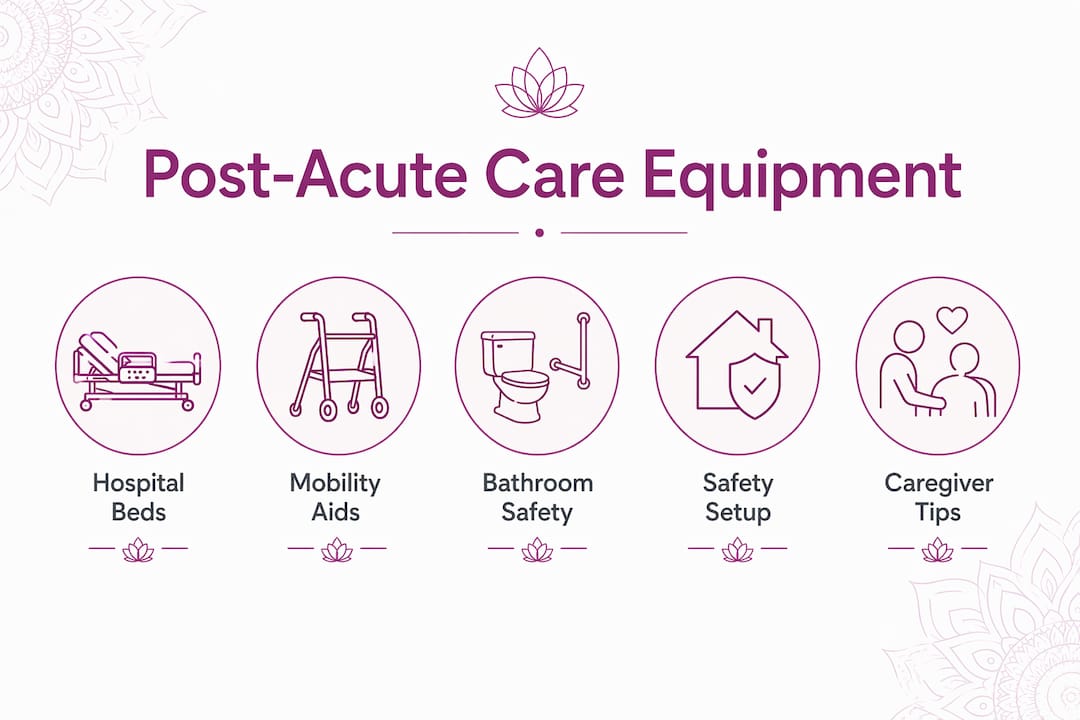
Post-acute care tools fall into three broad categories: positioning equipment, mobility aids, and bathroom safety devices. Each category addresses a specific gap between what a patient can do independently and what they need support with during recovery.
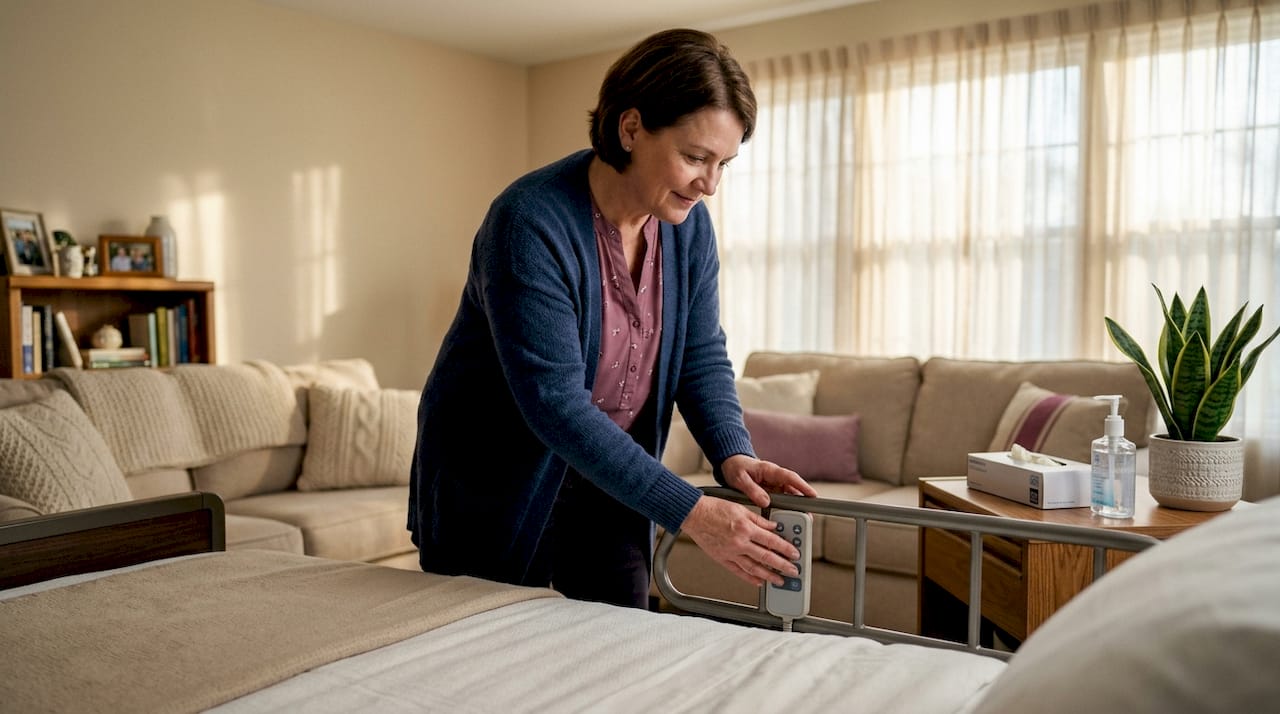
Hospital beds are the centrepiece of home recovery for patients with limited mobility. An adjustable hospital bed raises and lowers the head and foot sections independently, which reduces pressure on surgical sites and helps patients move from lying to sitting without straining. Most home hospital beds also adjust in overall height, which is critical for safe transfers. Pressure-relief mattresses distribute body weight evenly across the surface, reducing the risk of pressure injuries during extended bed rest. Safety rails fold down for transfers and lock upright to prevent rolling during sleep.

Mobility aids work by extending a patient’s base of support and reducing the load on injured or weakened limbs. A standard walker provides four contact points with the floor, giving patients a stable frame to push against. Rollators add wheels and hand brakes, allowing patients who can walk but tire quickly to move more freely and sit when needed. Manual wheelchairs transfer the effort of movement to the upper body or to a caregiver pushing from behind. Electric wheelchairs for rent remove that effort entirely, making them the right choice for patients with limited arm strength or endurance. Mobility scooters serve a similar purpose outdoors, giving patients independence over longer distances.
Bathroom safety equipment focuses entirely on fall prevention. Grab bars anchor to wall studs and give patients a fixed point to push or pull against during transfers. Shower chairs eliminate the need to stand for the full duration of bathing. Raised toilet seats reduce the depth of the sit-to-stand movement, which is one of the most physically demanding transitions for post-surgical patients.
Pro Tip: Before the patient arrives home, have every caregiver practise operating each device. A dry run with equipment lasting even 5–10 minutes significantly reduces anxiety and errors during actual use.
What safety setup does post-acute care equipment require?
Safe equipment setup is not optional. The physical layout of a room directly affects whether a device protects or endangers the patient.
Hospital bed placement follows a clear rule: 36 inches of clearance on at least one side of the bed is required for safe caregiver access and equipment integration. That same 32–36 inch pathway width accommodates a wheelchair moving alongside the bed during transfers. Measure your room before delivery, not after.
Powered devices add an electrical safety requirement. Hospital beds and oxygen concentrators must plug into grounded 3-pronged outlets. Extension cords create both fire hazards and trip hazards and should never be used with powered medical equipment. Check outlet placement before the equipment arrives.
Fall prevention in the broader room matters just as much as the device itself. Optimal bed height for fall prevention is 20–25 inches from floor to mattress top. Loose rugs, poor lighting, and cluttered pathways each increase fall risk independently. Remove them before setup.
Locking casters on hospital beds and wheelchairs are non-negotiable. Unlocked bed casters cause dangerous shifting during transfers, which can result in falls or entrapment. All four casters must be locked, even on carpeted floors.
Pro Tip: Walk the full path from the bed to the bathroom with a tape measure before any equipment arrives. If a wheelchair cannot pass through comfortably, rearrange furniture now rather than on delivery day.
How do you choose and acquire post-acute care equipment in Canada?
Selecting the right device starts with a professional assessment, not a product catalogue. Occupational therapists (OTs) provide the most reliable equipment assessments by matching devices to a patient’s functional capacity, cognitive ability, and home layout. You can access an OT through a family physician referral, a hospital discharge planner, or a private clinic.
Once you have a recommendation, the next step is understanding your funding options. Provincial programmes vary significantly across Canada. Ontario’s Assistive Devices Programme (ADP) is one example of a provincial funding model that partially or fully covers approved equipment costs. Provincial funding programmes typically cover 75% of approved essential equipment prices, with 100% coverage available for some benefit recipients. Documentation including a prescription and pre-authorisation is required before coverage applies.
The rental versus purchase decision comes down to recovery timeline and equipment type. For short-term recovery after surgery, renting a hospital bed or mobility scooter avoids a large upfront cost and eliminates the problem of storing equipment after recovery ends. Purchasing makes more sense for patients with long-term or permanent mobility needs.
Before accepting any equipment, check Health Canada’s database for safety alerts and recalls. This step is especially critical for second-hand devices. Many caregivers skip this check and unknowingly use equipment with known safety defects.
Key questions to answer before acquiring any device:
- Does the patient’s OT or physician recommend this specific device type?
- Has the patient’s provincial programme pre-authorised the equipment?
- Does the rental or purchase include a safety inspection and sanitisation?
- Is the equipment free of active Health Canada recalls?
- Does the home layout physically accommodate the device?
Common mistakes and best practices when using rehab equipment at home
The most common mistake caregivers make is skipping the trial run. Patients often arrive home from hospital while caregivers are still figuring out how to operate the bed controls or fold the wheelchair. Practise every function before the patient depends on it.
The second most frequent error is ignoring locking mechanisms. Wheels left unlocked on a hospital bed or wheelchair during a transfer create a moving surface that patients instinctively grab, which causes falls. Make locking every caster a non-negotiable habit before any transfer begins.
Failing to adapt equipment as the patient improves is a subtler but equally important mistake. A patient who needed a heavy-duty wheelchair in week one may be ready for a rollator by week four. Sticking with the original device past its usefulness slows recovery and reduces motivation. Regular check-ins with the OT or physiotherapist keep the equipment matched to the patient’s current ability.
Best practices that consistently improve outcomes:
- Inspect all equipment weekly for loose bolts, worn grips, and damaged wheels.
- Communicate any changes in the patient’s strength or balance to the healthcare team immediately.
- Match mobility aids to the patient’s current condition, not their condition at discharge.
- Keep the equipment manual accessible and review it when anything feels off.
Pro Tip: Set a weekly five-minute equipment check into your calendar. Tighten any loose parts, wipe down surfaces, and confirm all locking mechanisms engage fully. Small maintenance tasks prevent large safety failures.
Key takeaways
Post-acute care equipment works best when it is correctly matched to the patient’s needs, properly set up in the home, and actively maintained throughout recovery.
| Point | Details |
|---|---|
| Equipment categories | Hospital beds, mobility aids, and bathroom safety tools each address a specific recovery need. |
| Home setup clearance | Maintain at least 36 inches of clearance beside a hospital bed for safe caregiver access. |
| Locking casters | Lock all four casters on beds and wheelchairs before every transfer to prevent dangerous shifting. |
| OT assessment first | An occupational therapist assessment prevents unsafe or ineffective equipment choices. |
| Rental over purchase | Renting suits short-term recovery and avoids storage costs once the patient no longer needs the device. |
What I’ve learned from watching caregivers set up recovery equipment
Most caregivers I’ve worked with underestimate how much the physical environment shapes recovery outcomes. They focus on the equipment itself and overlook the room it goes into. A hospital bed in a cramped bedroom with no clear pathway is genuinely more dangerous than no bed at all.
The second thing I’ve observed is that caregivers consistently skip the trial run because they feel pressed for time. The patient is coming home tomorrow, the equipment just arrived, and there are a dozen other things to do. That pressure is real. But the five minutes spent learning how to raise the bed head or lock the wheelchair brakes pays back immediately the first time a transfer goes smoothly instead of sideways.
Equipment quality matters, but it is not the whole story. I’ve seen patients recover confidently with basic manual wheelchairs and struggle with expensive powered devices that were never properly set up or explained. The device is only as good as the knowledge behind it.
My honest recommendation: prioritise safety features over aesthetics every time. A pressure-relief mattress and locking casters are not glamorous, but they are the features that reduce caregiver stress and patient complications. Choose the device that fits the home and the patient, get a professional assessment, and then practise until operating the equipment feels automatic.
— Chandan
Seventhchakra’s equipment rentals for home recovery in Vancouver
Recovering at home is far more manageable when the right equipment arrives quickly and without complicated paperwork.
Seventhchakra serves Vancouver, Richmond, and Surrey with same-day delivery of sanitised hospital beds, wheelchairs, and mobility scooters. There are no upfront deposits, and rental terms flex to match your recovery timeline, whether you need equipment for two weeks or six months. Every device is inspected and cleaned before delivery. If you are unsure which device fits your situation, Seventhchakra’s team can help you identify the right option based on your home layout and the patient’s mobility needs. Contact Seventhchakra directly to confirm availability and get equipment to your door when you need it.
FAQ
What is post-acute care equipment?
Post-acute care equipment includes any medical device used to support recovery at home after a hospital stay, such as hospital beds, wheelchairs, walkers, and bathroom safety tools. These devices improve mobility, safety, and comfort during the recovery period.
How much clearance does a hospital bed need at home?
A hospital bed requires at least 36 inches of clearance on one side for safe caregiver access and wheelchair transfers. Standard doorways need a minimum of 32 inches of clearance for equipment to pass through.
Does provincial funding cover post-acute care devices in Canada?
Provincial programmes typically cover 75% of approved essential equipment costs, with full coverage available for some benefit recipients. Pre-authorisation and a prescription are required before funding applies.
Should I rent or buy post-acute care equipment?
Renting is the better choice for short-term recovery after surgery, as it avoids large upfront costs and the problem of storing unused equipment. Purchasing makes more sense for patients with long-term or permanent mobility needs.
How do I check if home medical equipment is safe to use?
Search Health Canada’s medical device recall database before using any equipment, particularly second-hand devices. This step identifies known safety defects that could put the patient at risk.
Recommended
- Role of home medical equipment in caregiving | Seventh Chakra Medical Blog
- Mobility aids for post-operative patients: a recovery guide | Seventh Chakra Medical Blog
- Matching mobility aids to patient condition: a practical guide | Seventh Chakra Medical Blog
- What is a transport wheelchair: a caregiver’s guide | Seventh Chakra Medical Blog


