A portable mobility scooter is a battery-powered personal mobility device designed to fold or disassemble for easy transport in vehicles, on public transit, and aboard aircraft. For travellers, the two main portable mobility scooter types are folding scooters and disassembling travel scooters. Choosing the right type affects how easily you load your car, whether you can board a flight without delays, and how much energy you spend on setup. Canadian airline battery rules updated for 2026 add another layer of complexity. Getting this decision right before you travel saves time, money, and frustration at the gate.
1. What are the two main portable mobility scooter types for travellers?
Portable mobility scooters fall into two distinct categories: folding models and disassembling (travel) models. Each serves a different kind of traveller, and the differences go well beyond how they pack.
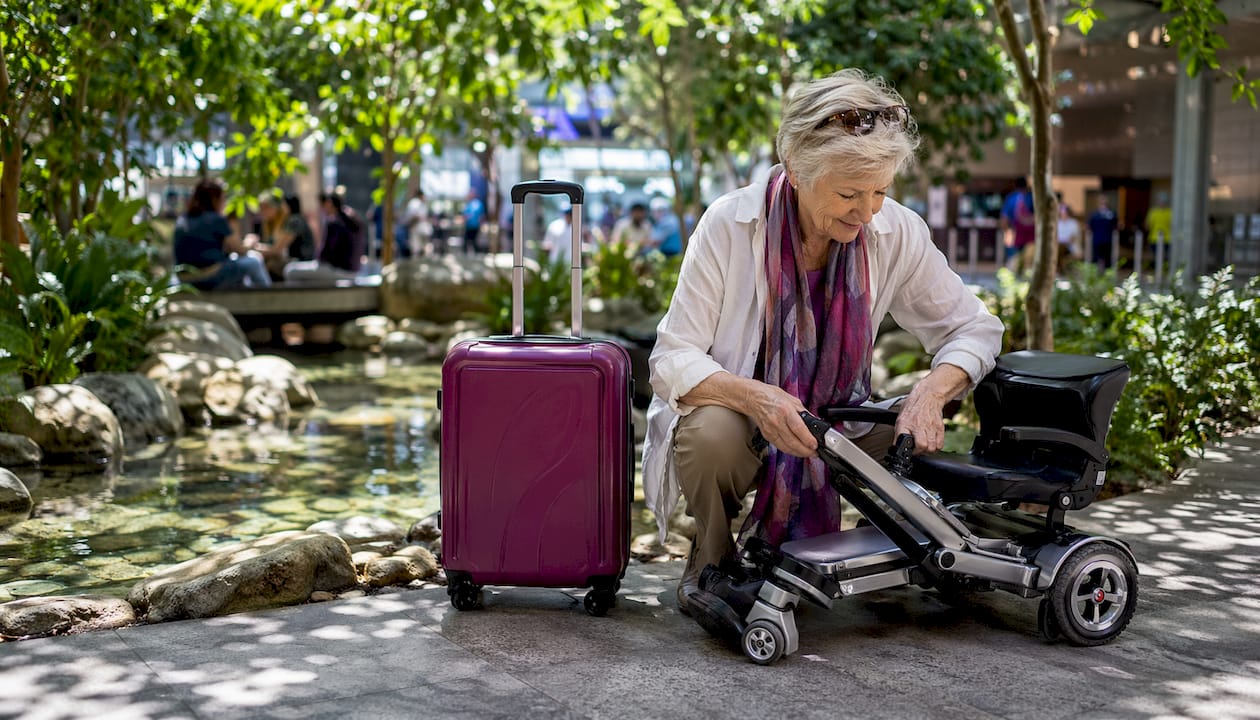
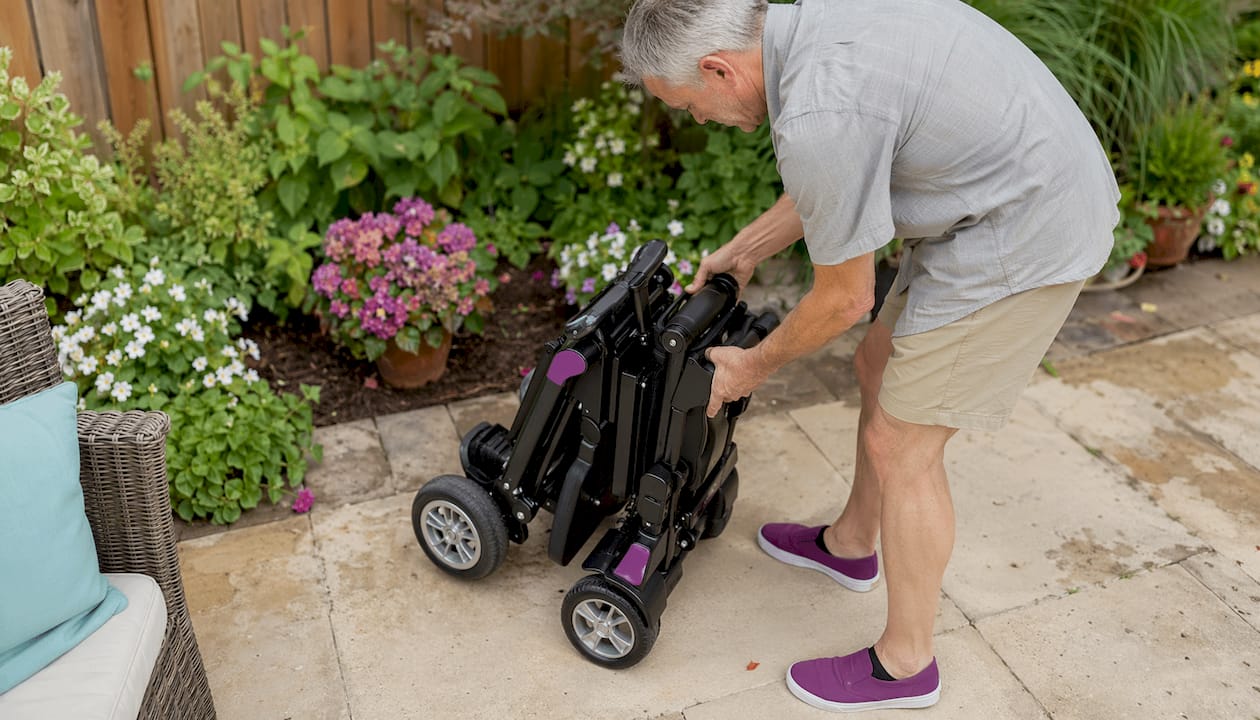
A folding scooter collapses into a single compact unit. You fold it in one motion, often with a remote or a single lever, and lift it into a car boot or taxi. A disassembling scooter breaks apart into four or five separate pieces. You remove the seat, battery, tiller, and body sections individually, then reassemble at your destination.
Both types are built for paved, accessible environments. Most portable scooters travel at speeds under 6–8 km/h to comply with Canadian safety bylaws and urban accessibility standards. That speed range is appropriate for sidewalks, cruise terminals, and airport concourses, but not for unpaved trails or gravel paths.
2. What are folding mobility scooters and why are they popular for travel?
Folding scooters are the go-to choice for travellers who prioritise speed and simplicity. The entire unit folds in seconds and lifts as one piece into a car, taxi, or transit vehicle.
Folding scooters weigh 40–60 lbs as a single unit. That weight is manageable for many travellers, but it requires a confident one-piece lift. If you or your travel companion have shoulder or back limitations, that single lift can be a barrier.
Key advantages of folding scooters for travel:
- Fast setup: Fold and unfold in under 30 seconds with most models.
- Public transit friendly: Compact footprint fits bus ramps, SkyTrain spaces, and taxi boots.
- No loose parts: One unit means nothing gets left behind or lost in transit.
- Consistent weight distribution: Easier to wheel into a lift or hotel corridor before folding.
The main limitation is storage space. A folded scooter still occupies a defined rectangular volume. If your car boot is shallow or irregularly shaped, the single unit may not fit even if the total weight is acceptable.
Pro Tip: Measure your car boot opening width and height before purchasing or renting a folding scooter. A unit that fits the interior volume may still not pass through the opening.
3. What are disassembling mobility scooters and their advantages for travellers?
Disassembling scooters are built for travellers who need lighter individual lifts rather than a fast single-piece fold. The scooter breaks into four or five components, each light enough to handle separately.
The heaviest single piece on a disassembling scooter weighs 25–35 lbs. That is a meaningful reduction compared to lifting a 50 lb folding unit in one go. For travellers managing arthritis, post-operative recovery, or limited upper body strength, this difference is significant.
Advantages of disassembling scooters for travellers:
- Lighter lifts: Each component stays under 35 lbs, reducing strain on the back and shoulders.
- Fits smaller trunks: Pieces can be arranged around other luggage in compact car boots.
- More comfort options: Disassembling models often include wider seats and longer battery range.
- Better for longer trips: The added stability and comfort features suit full-day city exploration.
The trade-off is assembly time. Putting the scooter together at your destination takes two to five minutes and requires familiarity with the process. First-time users sometimes struggle with the tiller connection or seat post alignment.
Pro Tip: Practise assembling and disassembling your scooter at home at least three times before your trip. Muscle memory makes airport reassembly far less stressful.
4. How do battery types and airline regulations affect your travel scooter choice in Canada?
Battery type is the single most overlooked factor when selecting a travel mobility scooter. Canadian airline rules for 2026 set firm limits that directly affect which scooter you can bring aboard.
Lithium-ion batteries on portable scooters have a 300 Wh limit for airline travel in Canada. Batteries exceeding 600 Wh are prohibited entirely. This matters because about 60% of modern scooters carry batteries affected by the 300 Wh limit, and most travellers do not know their scooter’s watt-hour rating before arriving at the gate.
AGM (non-spillable) batteries are generally exempt from the strict 300 Wh lithium-ion restrictions. AGM batteries offer more flexibility for international travellers and are common on disassembling scooter models. If you fly frequently, an AGM-equipped scooter removes a significant compliance headache.
| Battery type | Airline limit (Canada 2026) | Typical scooter type | Air travel flexibility |
|---|---|---|---|
| Lithium-ion | 300 Wh max; >600 Wh banned | Folding scooters | Moderate; requires documentation |
| AGM (non-spillable) | Generally exempt from Wh limits | Disassembling scooters | High; fewer restrictions |
| Lithium-ion (>300 Wh, <600 Wh) | Requires airline pre-approval | Both types | Low; approval not guaranteed |
Canadian airlines require 48 hours’ advance notice for mobility scooter accommodation. Scooters travel free of charge as medical mobility aids, but only when properly declared in advance. Showing up without notification risks boarding denial.
Widespread unfamiliarity with scooter battery watt-hour calculations leads to frequent travel delays and disruptions at airline gates. Know your battery’s Wh rating before you book your flight, not after you arrive at the airport.
Pro Tip: Carry a printed copy of your scooter’s battery specifications, including the watt-hour rating and battery chemistry, in your carry-on bag. Airline gate agents may ask for it, and having it ready prevents delays.
5. How to select the right portable mobility scooter type for your travel needs
Selecting the right travel scooter comes down to four factors: your physical lifting ability, your vehicle’s storage dimensions, how you plan to travel, and how long your trips typically last.
When a folding scooter is the better choice:
- You travel frequently by taxi, rideshare, or public transit.
- You or your companion can comfortably lift 40–60 lbs as one unit.
- Your car boot has a wide opening and sufficient depth.
- Speed of setup matters more than maximum comfort.
When a disassembling scooter is the better choice:
- You have lifting restrictions due to injury, surgery, or chronic pain.
- Your vehicle has a smaller boot or an awkward opening shape.
- You want a wider seat and longer battery range for full-day trips.
- You are comfortable with a two to five minute assembly routine.
| Feature | Folding scooter | Disassembling scooter |
|---|---|---|
| Single-piece weight | 40–60 lbs | N/A (no single-piece lift) |
| Heaviest component | Full unit | 25–35 lbs |
| Setup time | Under 30 seconds | 2–5 minutes |
| Boot space needed | Large, wide opening | Flexible; pieces arrange around luggage |
| Best for | Quick trips, public transit | Longer trips, lifting limitations |
| Battery options | Primarily lithium-ion | Lithium-ion and AGM |
For city exploration, both types work well on paved paths and accessible routes. The role of a mobility scooter in city exploration is most effective when the scooter matches the traveller’s physical capacity and transport method. A scooter that is difficult to load defeats its own purpose.
Pro Tip: If you are unsure which type suits you, rent before you buy. A short-term rental lets you test real-world loading and unloading before committing to a purchase.
6. What practical tips make travelling with a portable mobility scooter easier?
Preparation separates a smooth trip from a stressful one. Most travel problems with mobility scooters are preventable with a few specific steps taken before departure.
Carry a printed disassembly and reassembly guide specific to your scooter model. Airline staff rarely have detailed knowledge of individual scooter designs. A clear step-by-step guide protects your equipment during gate check and reassembly.
Practical travel tips for scooter users:
- Measure your trunk opening, not just interior volume. Disassembled components can be awkward to fit even when the total volume seems sufficient.
- Contact your airline at least 48 hours before departure to declare your scooter and battery type.
- Charge your battery fully the night before travel and check for any swelling or damage.
- Inform your hotel or accommodation about your scooter in advance to confirm accessible room access and storage space.
- Check airport accessibility services at your departure and arrival airports. Most major Canadian airports offer pre-boarding assistance and accessible waiting areas.
- Inspect all connection points after reassembly before riding. Tiller locks and seat posts can loosen during handling.
For travellers visiting Vancouver, hotel delivery options for mobility scooters are available through local rental services, removing the need to transport your own unit on a flight entirely.
Key takeaways
The right portable travel scooter is determined by your lifting ability, vehicle storage, battery type, and airline compliance requirements, not by price alone.
| Point | Details |
|---|---|
| Two main scooter types | Folding and disassembling scooters each suit different physical abilities and transport methods. |
| Weight difference matters | Folding scooters weigh 40–60 lbs as one unit; disassembling models keep the heaviest piece at 25–35 lbs. |
| Battery type affects air travel | AGM batteries offer more airline flexibility; lithium-ion batteries face a 300 Wh limit on Canadian flights. |
| Notify airlines in advance | Canadian airlines require 48 hours’ notice for scooter accommodation; scooters travel free as medical aids. |
| Measure before you travel | Trunk opening dimensions and battery watt-hour ratings are the two most commonly overlooked pre-travel checks. |
What I have learned from watching travellers choose the wrong scooter
By Chandan
The most common mistake I see is travellers choosing a scooter based on weight alone. They read “lightweight” on a product listing, assume it means easy to handle, and never think about whether they can actually lift it as a single unit into a car boot. A 45 lb folding scooter is technically lightweight. It is also a 45 lb single lift, which is a real challenge for someone recovering from shoulder surgery or managing arthritis.
The second mistake is ignoring battery chemistry until the airport. I have spoken with travellers who were genuinely surprised to learn their scooter’s battery exceeded the 300 Wh airline limit. That surprise cost them their flight. Knowing your battery’s watt-hour rating is as basic as knowing your luggage weight, and it deserves the same attention.
My honest recommendation: if you travel more than a few times a year, consider renting locally at your destination rather than transporting your own scooter. It removes the airline battery compliance issue entirely, eliminates the risk of gate damage, and often costs less than checked baggage fees on multiple flights. For travellers coming to Vancouver, this approach is particularly practical given the availability of same-day mobility scooter rentals from local providers who understand the city’s accessible routes.
The technology in travel scooters is improving quickly. Lighter frames, smarter folding mechanisms, and longer-range AGM batteries are all becoming standard. But no amount of technology compensates for choosing the wrong type for your body and your trip.
— Chandan
Portable mobility scooter rentals in Vancouver with Seventhchakra
Travellers visiting Vancouver and the surrounding areas have a practical alternative to transporting their own scooter on a flight. Seventhchakra offers flexible mobility scooter rentals in Vancouver with no upfront deposit, same-day delivery, and equipment sanitised before every rental.

Whether you need a lightweight model for a short city visit or a mid-size unit for longer outings, Seventhchakra carries options suited to different mobility needs across Vancouver, Richmond, and Surrey. The team provides expert guidance on matching the right scooter type to your trip, your vehicle, and your physical requirements. Rentals are available for short or long-term periods, making Seventhchakra a reliable option for visitors, post-operative patients, and anyone needing temporary mobility support. Contact Seventhchakra directly to discuss your travel dates and get the right equipment ready before you arrive.
FAQ
What is a portable mobility scooter?
A portable mobility scooter is a battery-powered personal mobility device designed to fold or disassemble for transport in vehicles, on transit, and aboard aircraft. The two main types are folding scooters and disassembling travel scooters.
What is the weight difference between folding and disassembling scooters?
Folding scooters weigh 40–60 lbs as a single unit, while disassembling scooters break into components with the heaviest piece weighing 25–35 lbs, making individual lifts easier for travellers with physical limitations.
Can I bring a mobility scooter on a Canadian flight?
Yes, but Canadian airlines require at least 48 hours’ advance notice, and lithium-ion batteries must not exceed 300 Wh. Scooters travel free of charge as medical mobility aids when properly declared.
Are AGM batteries better than lithium-ion for air travel?
AGM (non-spillable) batteries are generally exempt from the strict 300 Wh lithium-ion limit, giving travellers more flexibility on Canadian and international flights. Verify your battery type before booking.
How do I choose between a folding and a disassembling scooter for travel?
Choose a folding scooter if you need fast setup and can lift 40–60 lbs as one unit. Choose a disassembling scooter if you have lifting restrictions, a smaller vehicle boot, or plan longer trips requiring more comfort.
Recommended
- How tourists rent wheelchairs locally: a 2026 guide | Seventh Chakra Medical Blog
- Scooter vs wheelchair: choosing the right mobility aid | Seventh Chakra Medical Blog
- Mobility aids for post-operative patients: a recovery guide | Seventh Chakra Medical Blog
- Where to Buy the Best Mobility Equipment in Vancouver: Complete 2026 Buyer’s Guide | Seventh Chakra Medical Blog