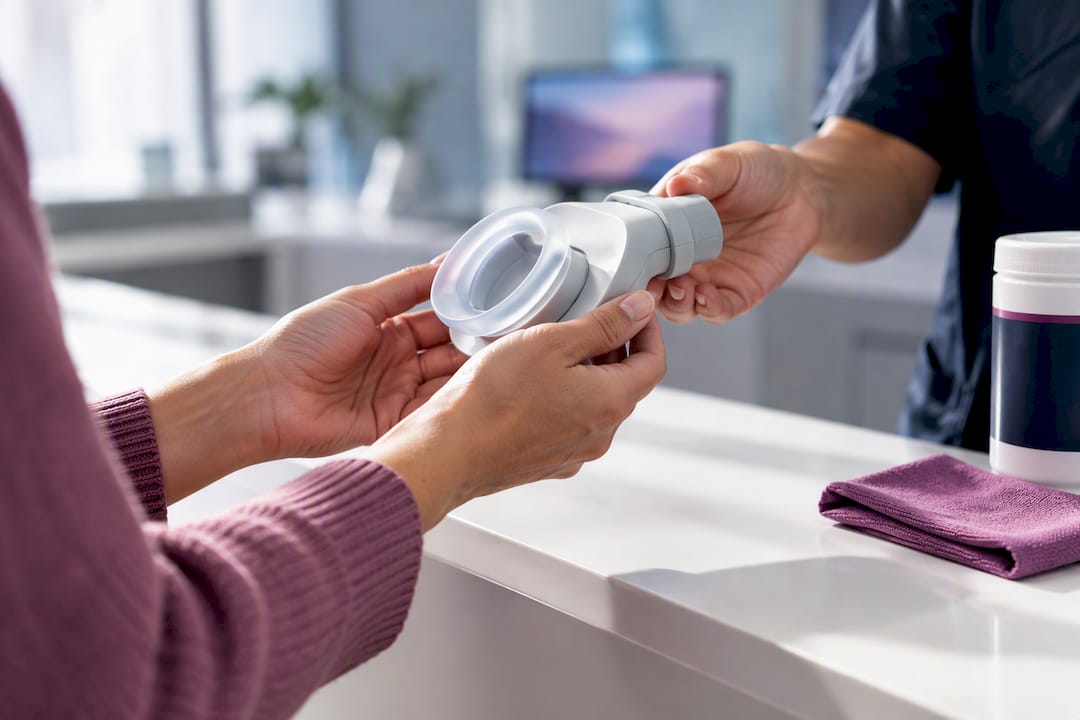

A rental damage waiver is an optional contractual term that limits or waives your financial responsibility for repairing or replacing rented mobility equipment — a wheelchair, mobility scooter, or hospital bed — if it is damaged during your rental period. It is not insurance. For most families, caregivers, and short-term visitors renting in Greater Vancouver, buying the waiver is worth it: replacement costs for powered scooters and hospital beds can run into thousands of dollars, and the waiver fee is typically a small fraction of that exposure.
Key takeaways
A rental damage waiver limits your out-of-pocket repair or replacement costs for rented mobility equipment — it is not insurance, and understanding the difference before you sign protects you from unexpected charges.
| Point | Details |
|---|---|
| Waiver is not insurance | A waiver caps what the provider can charge you; it does not involve a third-party insurer paying on your behalf. |
| Inspect and document at delivery | Timestamped photos and a signed condition report are your primary protection against disputed damage charges. |
| Typical waiver cost | Fees commonly run 6–15% of rental charges; one Canadian example is 9.9%, covering a fraction of a $2,500–$3,500 replacement cost. |
| Check your existing coverage first | Home insurance or travel insurance may cover rented medical equipment — call your insurer before accepting the waiver. |
| Seventhchakra in Greater Vancouver | Same-day delivery, no deposit, full sanitisation, and optional damage protection explained clearly at booking. |
Table of Contents
- What do rental damage waivers cover for wheelchairs, scooters, and hospital beds?
- How does renter liability work in Canadian medical-equipment rentals?
- How are damage waivers priced, and is the cost worth it?
- What happens at pick-up, return, and during a damage claim?
- Questions to ask before accepting a waiver, and red flags to watch for
- Alternatives to buying a waiver
- How Seventhchakra handles damage, inspections, and optional protection
- What the contract should say: sample clauses and a short glossary
- A provider’s perspective on why optional protection matters
- Seventhchakra same-day rentals in Greater Vancouver: no deposit, no hassle
- Sources
- FAQ
What do rental damage waivers cover for wheelchairs, scooters, and hospital beds?
Coverage varies by provider, but most waivers for mobility and medical equipment address:
- Minor accidental repairs (bent footrests, cracked armrests, damaged upholstery)
- Partial replacement of removable parts (footplates, joystick covers, IV poles on hospital beds)
- Vandalism, in some programmes
- A percentage of repair or replacement costs — one example homecare Loss Damage Waiver covers 90% of repair or replacement, leaving the renter responsible for the remaining 10%
Common exclusions catch renters off guard. Per the Herc Rentals RPP plan guide, standard waiver programmes exclude:
- Misuse or negligence — for example, driving a mobility scooter up a staircase or overloading a hospital bed beyond its rated capacity
- Failure to secure equipment — leaving a scooter unlocked in a public space and having it stolen or damaged
- Water or biological damage — a wheelchair left outside in heavy rain, or contamination from a medical spill
- Theft without a police report — mysterious disappearance is almost universally excluded
- Damage outside manufacturer specifications — modifications made without authorisation
- Acts of God — flood, earthquake, or fire
Pro Tip: At delivery, photograph every existing scratch, dent, or worn part before signing anything. Ask the provider to define “normal wear and tear” in writing on the rental agreement. A timestamped photo set is your strongest protection if a dispute arises later.
How does renter liability work in Canadian medical-equipment rentals?
Most Canadian rental agreements place risk of loss on the renter the moment equipment is delivered. Practically, that means if a hospital bed is damaged in your home or a scooter is stolen from your vehicle, you are responsible for the fair market replacement value, repair costs, and often an administrative fee on top.
A waiver limits that exposure. Without one, a powered mobility scooter that retails for $3,000–$5,000 becomes your liability in full. Provincial rules on consumer contracts can vary across Canada, so the specific remedies available to you may differ depending on whether you are renting in British Columbia, Alberta, or Ontario. That variability is one more reason to read the contract before signing, not after.
Keep these documents from the moment of delivery:
- Signed rental agreement (with any handwritten notes about pre-existing damage)
- Timestamped photos taken at delivery and return
- Delivery receipt or technician sign-off sheet
- Police report number (for theft or vandalism)
- Your insurer’s contact details and any claim reference numbers
How are damage waivers priced, and is the cost worth it?
Industry practice commonly places waiver fees at a low to moderate percentage of gross rental charges for minor-damage programmes, though flat per-item fees and per-incident deductibles are also common. Some Canadian providers publish a specific rate: one example shows 9.9% of the rental charge as the damage-protection fee.
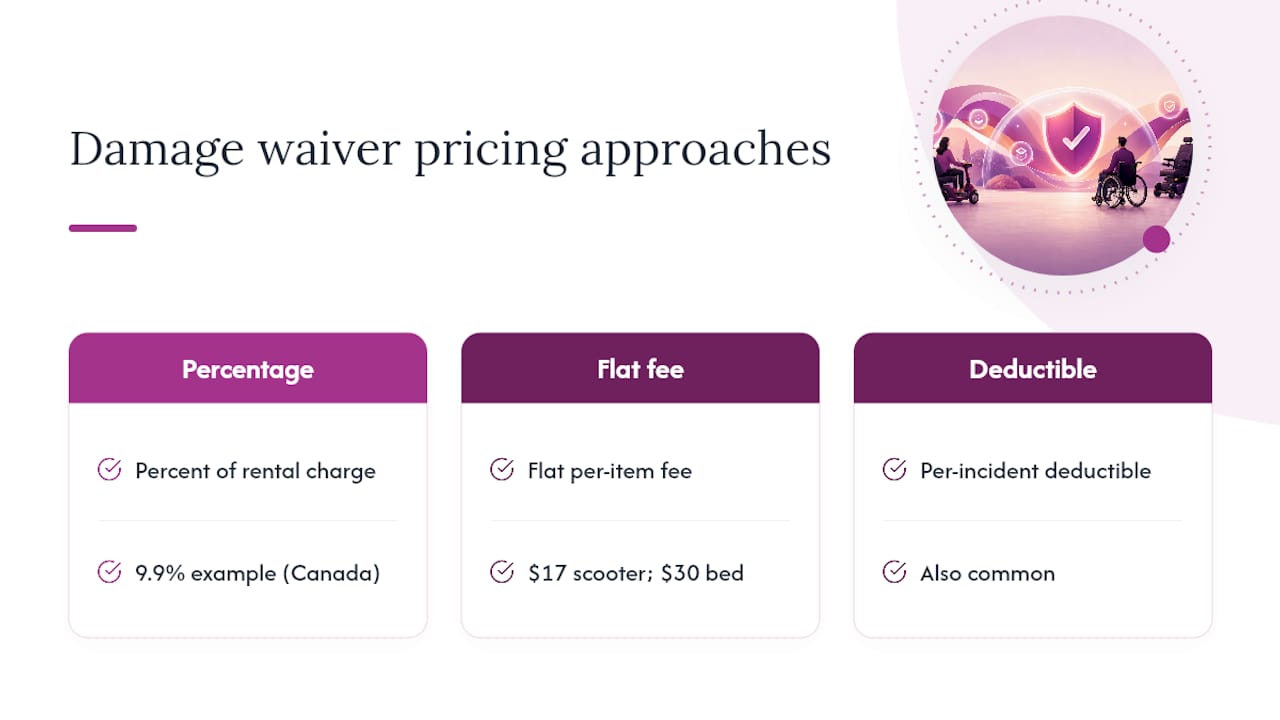
The maths is straightforward. On a 7-day scooter rental, paying roughly $17 to cap your exposure on a $3,500 piece of equipment is a strong value proposition for most renters. On a 30-day hospital bed rental, $30 against $2,500 of replacement risk is similarly compelling. The calculation shifts only if you have confirmed coverage through home insurance or a travel policy that explicitly includes rented medical equipment.
What happens at pick-up, return, and during a damage claim?
- Pre-delivery inspection. The provider documents the equipment’s condition before it leaves the warehouse. Ask for a copy of this report.
- Delivery and sign-off. When equipment arrives, inspect it with the technician. Note any pre-existing damage on the delivery receipt before signing.
- During the rental. If damage occurs, photograph it immediately and notify the provider the same day.
- Return inspection. The provider inspects the equipment on return and compares its condition to the pre-delivery report.
- Post-return assessment. If billable damage is identified, providers typically follow up within two business days with a damage assessment and cost breakdown.
- Dispute process. If you disagree with a charge, request the technician’s written notes, photographs of the alleged damage, and the replaced parts. Contract specialists recommend that providers supply this evidence before billing.
Keep for any dispute: timestamped delivery and return photos, the signed delivery report, technician notes, and a police report if theft is involved.
Questions to ask before accepting a waiver, and red flags to watch for
Before signing, ask the provider:
- What specific events are excluded from the waiver?
- What is the deductible, and is there a per-incident cap?
- Does the waiver cover theft and vandalism, or only accidental damage?
- Is the waiver fee refundable if you return equipment early?
- Will you receive photos, technician notes, and replaced parts before any charge is processed?
- Can the waiver be added after delivery if you change your mind?
Red flags that suggest you should negotiate or decline:
- Vague contract language with no written definition of “damage” versus normal wear and tear
- No inspection at delivery, or refusal to document pre-existing condition
- Provider will not return replaced parts or share technician reports before billing
- Waiver percentage is unusually high (above 15% of rental charges) with no corresponding increase in coverage
- Automatic billing without prior notification
A simple decision rule: if the equipment’s replacement value multiplied by your realistic risk of damage exceeds the waiver cost plus any deductible, buy the waiver. For most short-term renters of powered scooters or hospital beds, that threshold is crossed quickly.
Alternatives to buying a waiver
Not every renter needs to buy the provider’s waiver. Three realistic alternatives:
- Home or tenant insurance. Some Canadian home and tenant policies extend to rented personal property. Call your insurer before the rental and ask specifically whether rented medical equipment is covered. Get any denial in writing — it is useful evidence if a dispute arises.
- Credit-card purchase protection. A handful of premium Canadian credit cards offer purchase or rental protection, but most explicitly exclude medical equipment or motorised mobility devices. Read the certificate of insurance, not just the card’s marketing summary.
- Self-insuring. If you are renting a basic manual wheelchair rental for a short period and the replacement cost is modest, absorbing the risk yourself may be rational — particularly if your home policy already covers accidental damage.
For tourists and short-term visitors, the picture is different. Travel insurance policies frequently exclude pre-existing conditions and medical equipment damage. If you are visiting Greater Vancouver and renting a mobility scooter for a week, the provider’s waiver is often the simplest and most reliable option — call your travel insurer first, but do not assume coverage exists. Seventhchakra’s tourist equipment rental guide covers this scenario in more detail.
How Seventhchakra handles damage, inspections, and optional protection
Seventhchakra inspects every piece of equipment before delivery and again on return. There is no deposit required, and all equipment is fully sanitised before it reaches you. Optional damage protection is available at booking and can be discussed directly with the team before you sign.
If damage or theft occurs during your rental, Seventhchakra’s support line connects you with a technician for an immediate assessment. The team assists with repair coordination and, for tourists, can help with police report paperwork and insurer communication. For a lightweight wheelchair rental or a powered scooter, the process is the same: document the incident, call the team, and they handle the logistics.
What the contract should say: sample clauses and a short glossary
Three clauses worth requesting before you sign:
- Pre-delivery inspection clause: “Provider will document the condition of all equipment prior to delivery and supply the renter with a written condition report at the time of delivery.”
- Evidence requirement clause: “No charge for damage will be processed without prior provision to the renter of timestamped photographs, a written technician assessment, and, where applicable, the replaced parts.” (Contractable recommends this language for all medical equipment rentals.)
- Waiver acceptance/decline line: “The renter [accepts / declines] the optional damage waiver at a fee of __% of the rental charge. This waiver is not insurance and does not cover losses arising from negligence, misuse, or failure to secure equipment.”
Glossary:
- Risk of loss: The contractual obligation to pay for repair or replacement if equipment is damaged, stolen, or destroyed — typically placed on the renter from the moment of delivery.
- Normal wear and tear: Minor deterioration from ordinary, intended use (slight scuffing on wheelchair footrests, for example). Providers should define this in writing.
- Deductible: The amount you pay out of pocket before the waiver applies to a claim.
- Waiver vs. insurance: A waiver is a contractual limit on what the provider can charge you. Insurance is a separate financial product that pays a third party on your behalf. They are legally and practically different.
- Per-item cap: A ceiling on the maximum charge for any single damaged component.
Pro Tip: Before signing, ask the provider to walk you through the condition report line by line. If they refuse or say there is no report, that is a red flag — note any visible damage yourself and photograph it with your phone before the technician leaves.
A provider’s perspective on why optional protection matters
Optional damage protection exists because accidents happen to careful people. A hospital bed rail gets caught on a doorframe during a move. A scooter tips on an uneven curb. These are not negligence — they are the ordinary friction of using mobility equipment in real homes and real streets. Offering a waiver lets Seventhchakra keep rental prices accessible while covering the cost of repairs that would otherwise fall entirely on a family already managing a health challenge.
The waiver also protects the equipment’s next renter. When a damaged scooter is repaired promptly and properly, it is safe and reliable for the next person who needs it. That is the operational logic behind the fee.
Pro Tip: If damage occurs, take photos immediately and call the provider before attempting any repair yourself. Self-repair, even well-intentioned, can void the waiver and complicate the insurance picture.
Seventhchakra same-day rentals in Greater Vancouver: no deposit, no hassle
Seventhchakra delivers sanitised wheelchairs, mobility scooters, and hospital beds across Greater Vancouver the same day you book — with no upfront deposit and flexible rental terms that fit a recovery timeline, a tourist visit, or a long-term care plan. Optional damage protection is explained clearly at booking, so you know exactly what you are and are not covered for before the equipment arrives at your door.
Ready to book? Browse wheelchair rentals in Vancouver or scooter rentals online, or call the team directly to discuss your situation and get same-day availability confirmed.
Sources
- Simplex — FAQ: damage protection
- PRO Monthly — Damage waivers preserve revenue and improve equipment longevity
- Gammie HomeCare — Rental Equipment Loss Damage Policy
- Medical Supplies And Services — Equipment rental agreement & terms and conditions
- Contractable — Medical device rental agreement: equipment and maintenance terms
- Contractable — Renting medical equipment: contract terms and conditions
Laws, provincial regulations, and individual policy terms vary across Canada. Contact your provincial consumer protection office or a qualified insurance adviser for advice specific to your situation.
This article is general information, not a substitute for advice from a qualified lawyer. Consult a qualified legal professional about your own circumstances before acting on anything here.
FAQ
What is a rental damage waiver for medical equipment?
A rental damage waiver is an optional contract term that limits how much a renter owes if rented equipment — such as a wheelchair, scooter, or hospital bed — is damaged or lost. It is not insurance; it is a contractual cap on the provider’s right to charge you.
Does a damage waiver cover theft of a mobility scooter?
Most waivers exclude theft unless you file a police report; mysterious disappearance is almost universally excluded. Check the specific terms before accepting, and always secure equipment when unattended.
Is a damage waiver worth it for a short rental in Greater Vancouver?
For most short-term renters of powered scooters or hospital beds, yes — the waiver fee (often under $30 on a monthly rental) is small relative to a $2,500–$3,500 replacement cost. Confirm first whether your home or travel insurance already covers rented medical equipment.
Can tourists renting mobility equipment in Vancouver get damage protection?
Yes. Seventhchakra offers optional damage protection to tourists and short-term visitors renting wheelchairs, scooters, and hospital beds in Greater Vancouver. Travel insurance policies often exclude medical equipment damage, making the provider’s waiver the most straightforward option for visitors.
What documents should I keep in case of a damage dispute?
Keep your signed rental agreement, timestamped delivery and return photos, the condition report signed at delivery, any technician notes, and a police report if theft or vandalism is involved. Request written evidence from the provider before any charge is processed.