
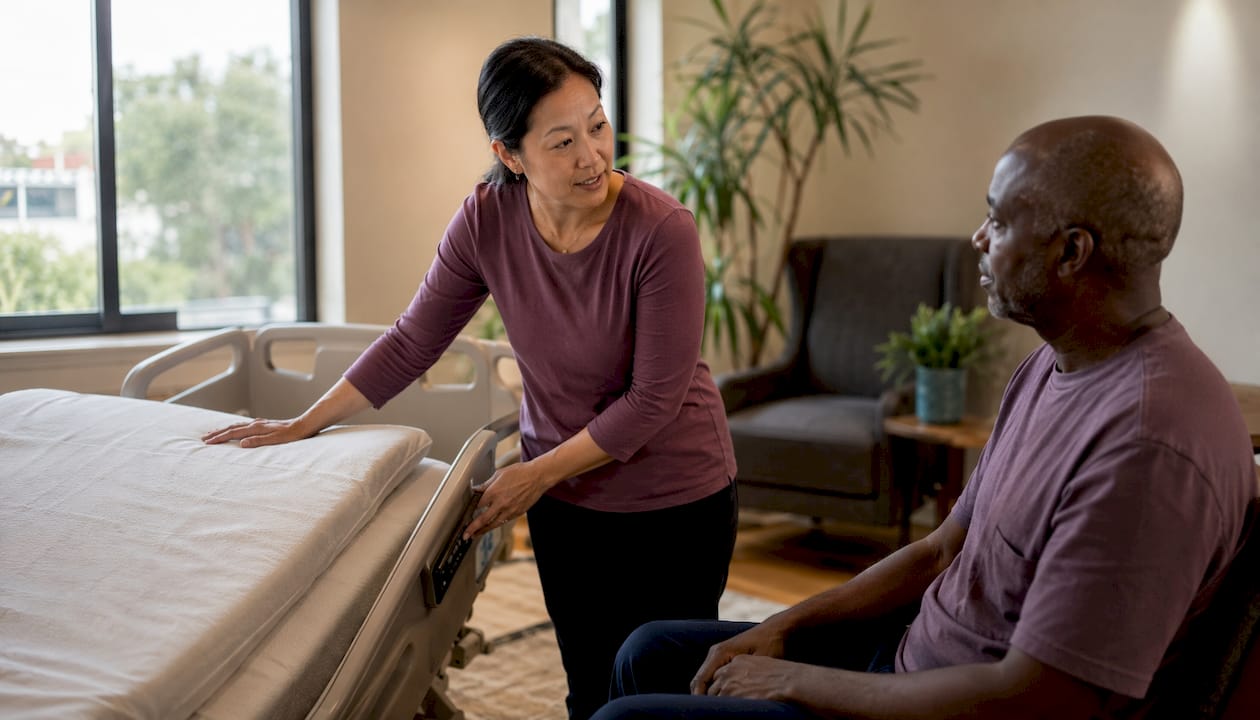
Renting medical equipment is one of the most practical ways to support rehabilitation in Canada, and it costs far less than buying. For someone recovering from surgery, a stroke, or an injury, the need for a wheelchair, hospital bed, or mobility scooter is often temporary. Buying outright rarely makes sense. Rental programmes give you the right equipment at the right time, with maintenance, sanitisation, and delivery already handled. Two major Canadian resources anchor this system: Ontario’s Assistive Devices Program (ADP), which covers up to 75% of approved device costs for eligible residents, and the Canadian Red Cross Health Equipment Loan Program (HELP), which offers short-term loans to support recovery from illness or injury, generally lasting a limited number of months. Here is what rental support actually looks like in practice:
- Reduced upfront cost: Pay monthly instead of thousands upfront for a hospital bed or power wheelchair.
- Flexible duration: Return the equipment when recovery is complete, with no penalty.
- Maintenance included: Repairs, safety checks, and sanitisation are the provider’s responsibility.
- Insurance compatibility: Canadian insurers and benefit plans more readily cover rental costs than outright purchases, especially with a physician’s prescription.
- Expert guidance: Providers assess your specific needs and match you to the right device.
- Same-day or next-day delivery: Critical when discharge from hospital happens quickly.
Table of Contents
- Who qualifies for equipment rental programmes in Canada?
- What types of equipment can you rent for rehabilitation?
- How do you access rental services and programmes in Canada?
- Renting vs. buying rehab equipment: what Canadian providers say
- Seventhchakra: same-day rental with no deposit in Greater Vancouver
- FAQ
- Key takeaways
Who qualifies for equipment rental programmes in Canada?
Eligibility varies by province and by whether the need is short-term or ongoing. Ontario’s ADP targets residents with physical disabilities expected to last for a significant duration, covering mobility devices, communication aids, and positioning equipment. The Canadian Red Cross HELP programme is broader: it serves people recovering from any injury or illness, regardless of age, and some regional branches extend loans for chronic conditions beyond the standard three-month window.
Most provincial programmes require a referral or prescription from a regulated healthcare provider, such as a physiotherapist, occupational therapist, or physician. Private rental providers generally do not require a referral, though having one strengthens an insurance claim. Here is a practical overview of what to gather before applying:
- A written prescription or referral from your healthcare provider stating the equipment type and duration of need.
- Proof of provincial health coverage or private insurance details.
- A completed programme application form (available through ADP, Red Cross, or your local health authority).
- Documentation of your diagnosis or functional limitation where required.
- Contact information for your care team, since some programmes verify eligibility directly with clinicians.
Geographic restrictions apply. ADP is Ontario-specific. British Columbia, Alberta, and other provinces run their own assistive technology programmes with different income thresholds and device lists. For residents outside covered programmes, private rental remains the fastest route.
What types of equipment can you rent for rehabilitation?
The range is wider than most people expect. Rental catalogues cover everything from basic mobility aids to adjustable hospital-grade beds, and delivery and setup are typically included. The most commonly rented items for rehab include:
- Manual wheelchairs: Lightweight, folding frames suited to post-surgical recovery and short-term mobility loss.
- Power wheelchairs: For patients with upper-body weakness or fatigue who cannot self-propel.
- Mobility scooters: Three-wheel and four-wheel models for indoor and outdoor use, particularly useful during cardiac or orthopaedic rehab.
- Adjustable hospital beds: Electric, height-adjustable beds with side rails that reduce fall risk and ease caregiver transfers at home.
- Commodes and shower chairs: Essential for safe toileting and bathing during limited mobility phases.
- Patient lifts: Ceiling or portable lifts for transfers when a patient cannot bear weight.
- Pressure-relief mattresses: Rented alongside hospital beds to prevent pressure injuries during extended bed rest.
All reputable rental providers sanitise equipment between uses and conduct safety checks before delivery, meeting health standards that protect patients during recovery.
How do you access rental services and programmes in Canada?
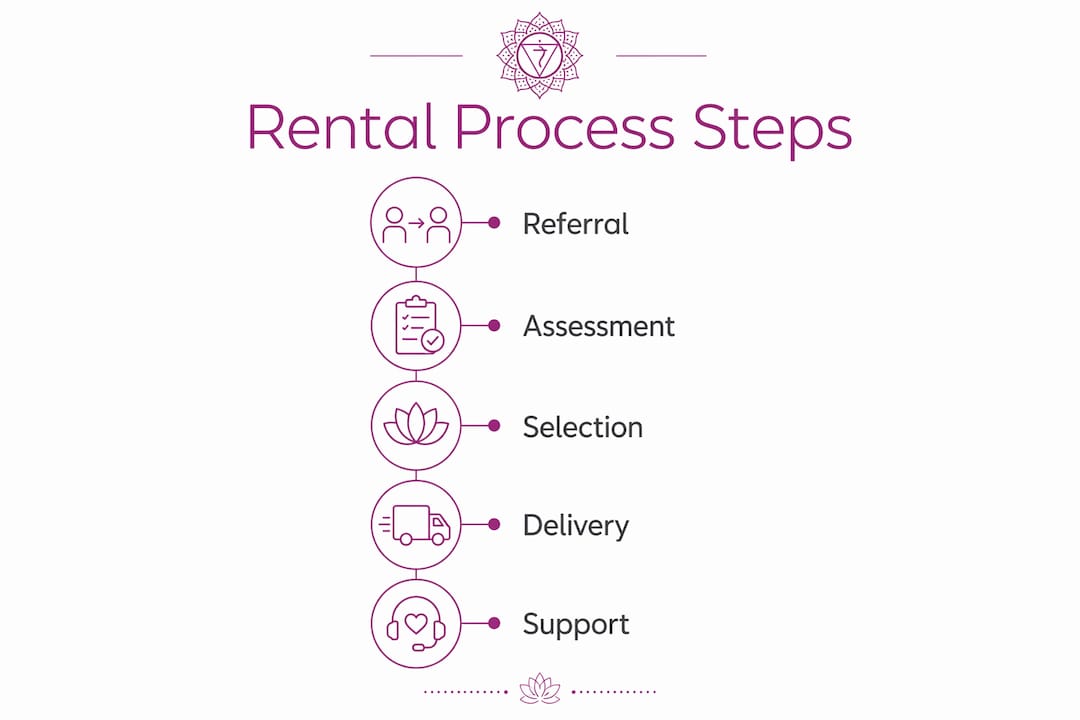
The path depends on whether you are going through a public programme or a private provider. Public programmes like ADP involve an application, a wait period, and approval before equipment ships. Private rental is faster: most providers can deliver within 24 hours of an order, and some offer same-day service.
Pro Tip: If you are being discharged from hospital and need equipment at home immediately, contact a private rental provider the day before discharge. Public programme approvals can take days to weeks, and a gap in equipment access slows recovery.
Practical steps to get started:
- Ask your occupational therapist or physiotherapist which equipment type suits your current functional level.
- Contact your provincial assistive technology programme to check eligibility and start an application if you qualify.
- For immediate needs, call a local private rental provider and confirm delivery timelines, deposit requirements (or lack thereof), and what is included in the monthly fee.
- Submit your insurance claim with the physician’s prescription attached; most Canadian group benefit plans process rental claims faster than purchase claims.
- Confirm that the provider offers pickup and return at the end of the rental period so you are not left managing a large piece of equipment.
For Vancouver-area residents, Seventhchakra offers same-day rental delivery with no upfront deposit, covering wheelchairs, hospital beds, and mobility scooters across the Greater Vancouver area.
Renting vs. buying rehab equipment: what Canadian providers say
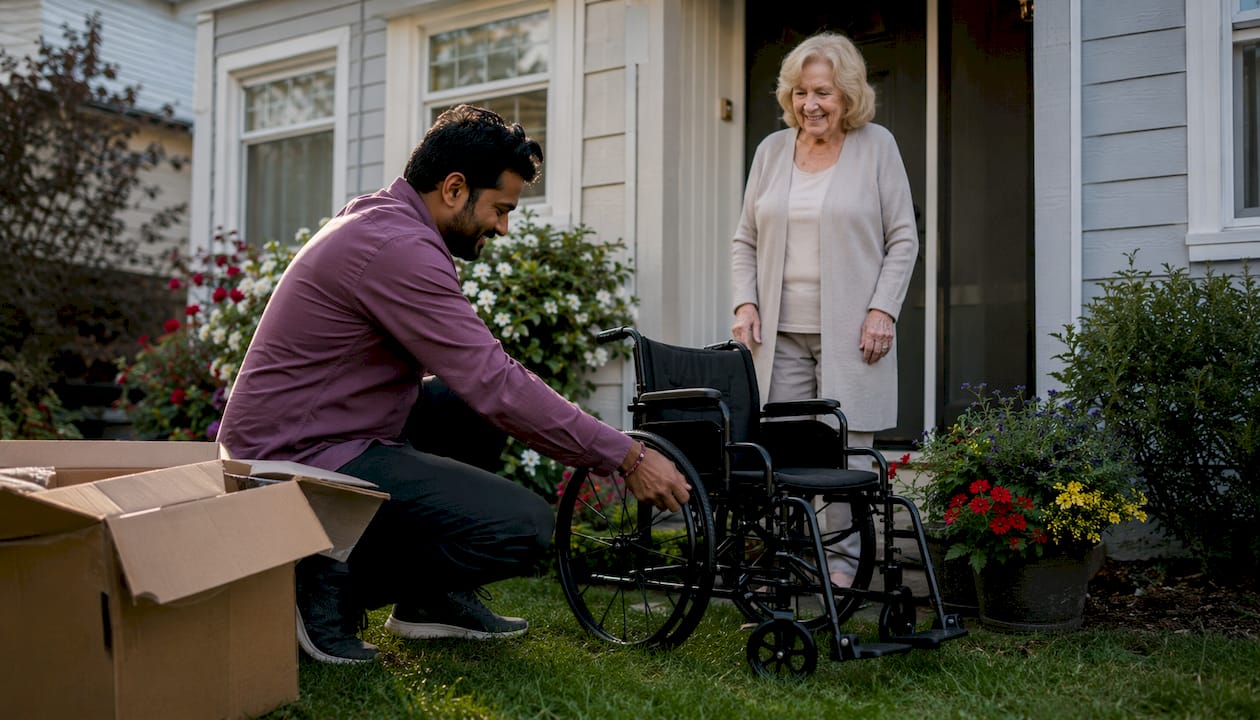
Renting wins for short-term rehab. The financial case is straightforward: buying a quality electric hospital bed costs thousands of dollars, while renting one costs a fraction of that per month. For a recovery lasting weeks to a few months, renting is almost always the better financial decision. Rental agreements allow you to return equipment the moment it is no longer needed, so you never pay for a device sitting unused in a hallway.
The practical advantages go beyond cost. Rental providers handle all maintenance and repairs, meaning a broken footrest or a malfunctioning motor is their problem, not yours. Caregivers consistently underestimate the burden of storing and eventually disposing of owned rehab equipment. A hospital bed takes up a full room; a rented one gets picked up when recovery is done. Rental also lets needs evolve: if a patient starts with a manual wheelchair and later needs a power model, the swap is straightforward under most rental agreements.
Insurance coverage note: Canadian insurers are more likely to cover rental than purchase for short-term needs, particularly when a physician prescribes the equipment. Always confirm coverage before committing to a purchase.
Pro Tip: Use the rental period as a trial. Renting a hospital bed or a specific scooter model before buying lets you test whether the configuration actually works in your home, with your body, before spending thousands. This “try before you buy” approach prevents costly mismatches.
Expert assessment from a qualified provider also matters more than people realise. The right seat width, armrest height, and mattress firmness directly affect recovery speed. A provider who assesses your needs before delivery reduces the risk of equipment that causes pressure injuries or limits mobility rather than supporting it.
Seventhchakra: same-day rental with no deposit in Greater Vancouver
When recovery cannot wait, Seventhchakra delivers. For families and caregivers in the Greater Vancouver area who need a wheelchair, hospital bed, or mobility scooter today, not next week, Seventhchakra offers same-day delivery with no upfront deposit required. Every piece of equipment is sanitised before it leaves the warehouse, and rental terms flex to match your actual recovery timeline rather than a fixed contract.
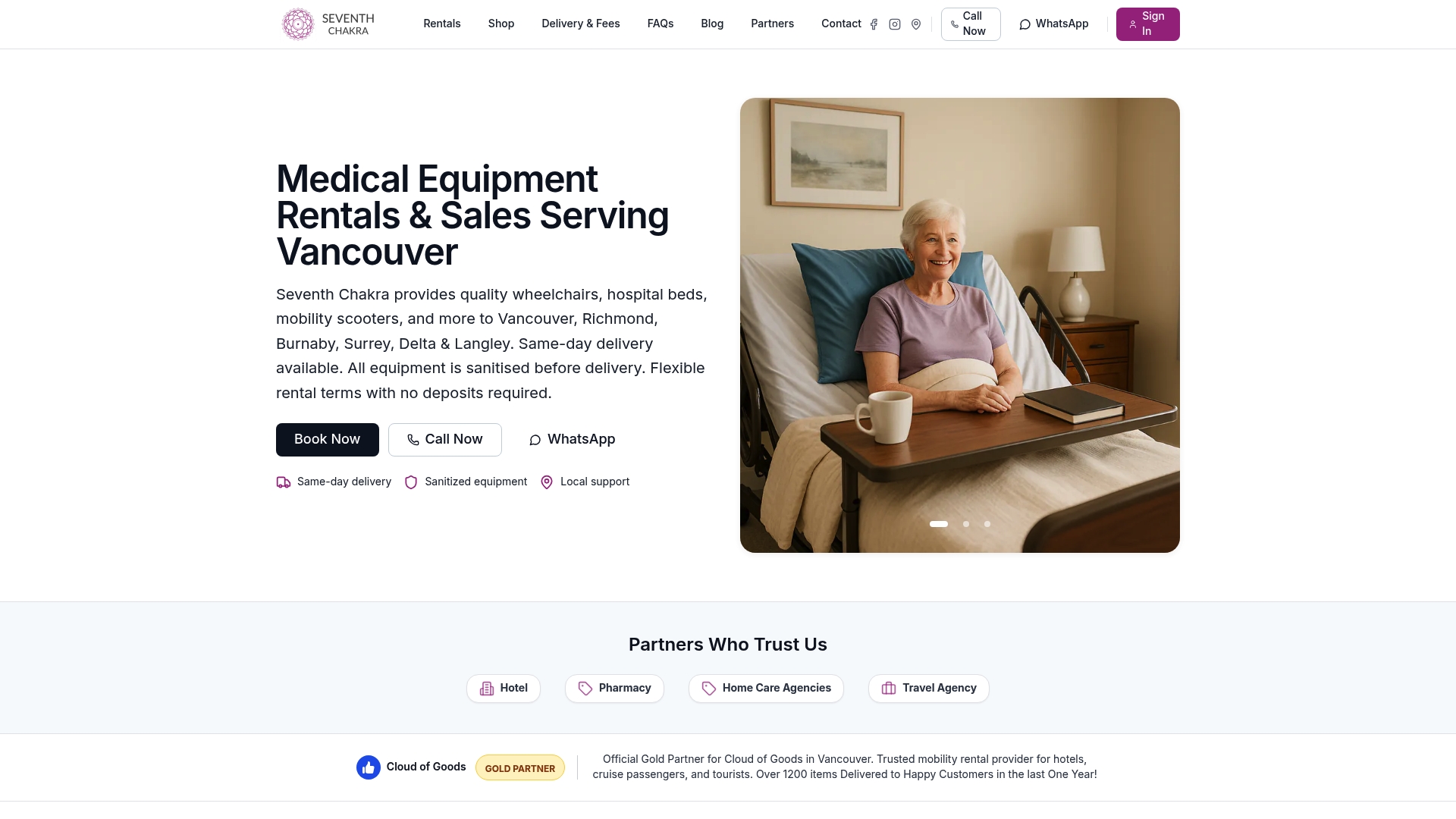
The difference from a standard rental company is the absence of friction. No large deposit. No guessing about sanitisation. No scrambling to arrange your own pickup when recovery is complete. Seventhchakra handles delivery, setup, and collection, so caregivers can focus on the person recovering rather than the logistics. Whether you need a standard wheelchair rental, an electric hospital bed with adjustable positioning, or a mobility scooter for indoor and outdoor independence, the rental catalogue covers the full range of common rehab needs. Check availability and book directly at seventhchakra.ca.
FAQ
Does rental equipment get sanitised between patients?
Yes. Reputable rental providers sanitise and safety-check all equipment before each delivery, meeting health standards designed to protect patients during rehabilitation.
Do you have to pay for rehab equipment out of pocket in BC?
Not necessarily. Private insurance and group benefit plans often cover rental costs with a physician’s prescription, and BC’s provincial assistive technology programme may fund approved devices for eligible residents with longer-term needs.
Is renting or buying better for short-term rehabilitation?
Renting is almost always the better choice for recoveries lasting weeks to a few months. It avoids large upfront costs, includes maintenance, and lets you return the equipment once it is no longer needed.
What equipment do people typically need during rehabilitation at home?
The most common items are wheelchairs (manual or electric), adjustable hospital beds, mobility scooters, commodes, shower chairs, and pressure-relief mattresses, depending on the condition and recovery stage.
Can a caregiver arrange a rental on behalf of a patient?
Yes. Most rental providers, including Seventhchakra, work directly with caregivers and family members to arrange delivery, setup, and ongoing support without requiring the patient to be present.
Key takeaways
Equipment rental is the most cost-effective and flexible way to access rehabilitation devices in Canada, particularly for recoveries lasting weeks to a few months, with maintenance and sanitisation included as standard.
| Point | Details |
|---|---|
| ADP coverage | Ontario’s Assistive Devices Program helps eligible residents with disabilities lasting six months or longer by covering up to 75% of approved device costs. |
| Rental duration flexibility | Agreements can be extended or ended as recovery progresses, so you never pay for equipment you no longer need. |
| Insurance advantage | Canadian insurers more readily cover rental costs than purchases, especially with a physician’s prescription attached to the claim. |
| Try before you buy | Renting lets patients test equipment configurations at home before committing to a purchase, preventing costly mismatches. |
| Seventhchakra in Vancouver | Seventhchakra offers same-day delivery of wheelchairs, hospital beds, and mobility scooters in Greater Vancouver with no upfront deposit and sanitisation included. |


