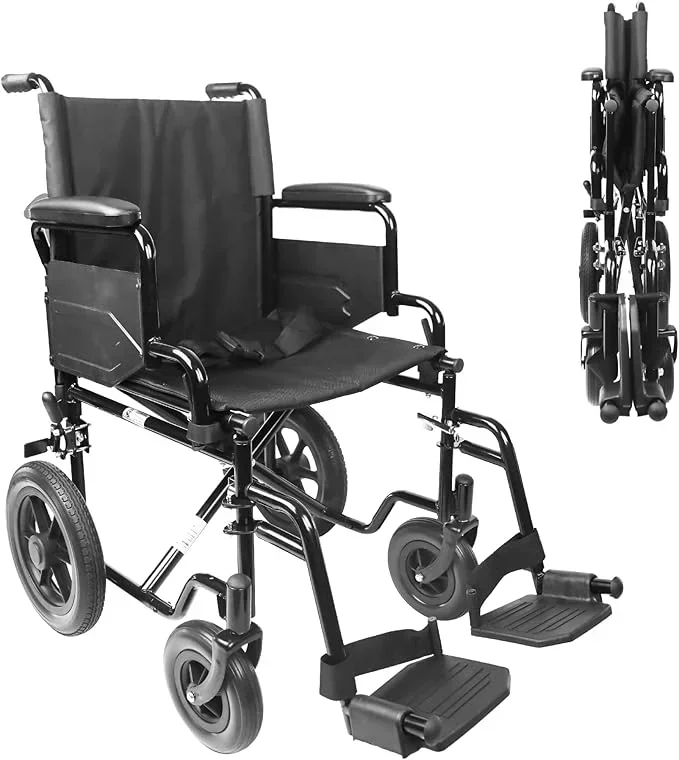

There are four realistic ways to move a mobility scooter: take it apart and load it in a car, drive it up a ramp or onto a lift, ride it onto an accessible bus, or send it ahead as priority baggage on a flight. Which one suits you depends on the scooter’s size and weight, the vehicle you have and how often you travel. This guide covers each method, with the size limits and rules that apply in British Columbia and across Canada.
TL;DR
- Car: A travel scooter that comes apart can go in many trunks, but the heaviest pieces can weigh 10 to 50 lbs. If you can’t lift that safely, use a ramp or lift, or ask someone to help.
- Frequent trips: A professionally fitted vehicle lift is usually the safest long-term option, but it needs an assessment to confirm it suits your vehicle and scooter.
- Transit: TransLink buses accept devices up to 122 cm (48 in) long and 61 cm (24 in) wide, so measure your scooter before you plan the trip.
- Flying: Tell the airline at least 48 hours ahead. Your scooter travels as priority baggage at no charge, with limited exceptions.
- Visiting Vancouver: If you would rather not travel with a scooter at all, renting one locally avoids the whole problem.
Table of Contents
- Start with the scooter: weight, size and how it comes apart
- Transporting a mobility scooter in a car
- Taking a mobility scooter on a bus
- Rides, taxis and airport transfers
- Flying with a mobility scooter
- What to do if you don’t want to travel with a scooter
- Where you can legally ride after you’ve arrived
- Our perspective: plan the transport before you pick the scooter
- Renting a scooter, wheelchair or hospital bed in Greater Vancouver
- Securing the scooter against theft while you travel
- FAQ
- Sources
Start with the scooter: weight, size and how it comes apart
Every transport decision starts with three numbers: the scooter’s length and width, its total weight, and the weight of its heaviest single piece.
Most travel scooters split into a seat, a battery pack, a rear section with the motor and a front section with the tiller. According to the Mobility Scooter User Handbook from Misericordia Health Centre, folding and lifting a scooter into a car can be tiring for some people, so endurance matters when you choose a model. The same guidance notes that battery packs can weigh up to about 10 lbs, while other modular parts can weigh between 10 and 50 lbs.
A simple test: lift each piece off the floor to waist height, twice, in a shop or at a friend’s place. If you can’t do it comfortably, the pieces are too heavy for you alone. Bend at the knees, not the waist, and have someone else do the lifting if you can’t manage about 35 lbs safely.
If you are a caregiver doing the lifting, the same rule applies to you. A sore back after three trips means the method is wrong, not that you need to try harder.

Transporting a mobility scooter in a car
There are four ways to carry a scooter in a private vehicle. They run from cheapest to most convenient.
| Method | Best for | Main drawback |
|---|---|---|
| Disassemble into the trunk or back seat | Light travel scooters, occasional trips | Heavy lifting, repeated assembly |
| Portable ramp into a van or SUV | Heavier scooters and vehicles with a high, wide cargo opening | Needs a suitable vehicle and space for the ramp |
| Hitch carrier or rack | Vehicles with a tow hitch | Exposed to weather and theft, adds length |
| Vehicle lift (inside or outside) | Daily or frequent use | Cost, and a professional fitting is required |
Disassembling and loading, step by step
This is how most people load a travel scooter. Your scooter’s manual overrides anything below, so check it first.
- Park on level ground with the vehicle’s parking brake on and plenty of room around the cargo opening.
- Turn the scooter off and remove the key. Switch off the power before you touch any part.
- Remove the battery first. It is usually the easiest piece to carry, and removing it takes weight out of the rest.
- Take off the seat, then fold the tiller if your model allows.
- Separate the rear and front sections using the release lever or latch. Lift with your legs and keep each piece close to your body.
- Load the heaviest piece first, low and against the back of the seats, and the lighter pieces around it.
- Secure everything. A piece sliding in a sudden stop can hurt you, and it can also damage the vehicle or the scooter. Use cargo straps or a cargo net and keep pieces out of the way of the driver.
Practise at home before you need to do it at a ferry terminal or in the rain. The first time takes ten minutes, and by the fifth you will have a routine.
Ramps: when you want to drive the scooter in
A ramp lets you load the scooter whole, which suits heavier models and anyone who can’t lift components. Portable ramps of the folding, two-channel type are common for vans and SUVs. A ramp only works if the scooter can then be secured in the cargo area, so confirm that the scooter fits through the opening and under the roof, and that the cargo floor can take its weight.
A few practical checks:
- Check the ramp’s rated capacity against the scooter plus its battery. Do not include the rider unless you are being driven up the ramp, which most ramps are not meant for.
- A longer ramp means a gentler slope. A steep slope can cause a scooter to scrape or tip, so go slowly and keep the tiller steady.
- Have a second person spot you the first few times.
- Use the scooter’s lowest speed setting and don’t turn on the ramp.
Secure the scooter once it’s inside. Anchor the frame with ratchet straps or tie-downs to solid points on the vehicle, and set the brake. Don’t tie down by the handlebars or plastic panels.
Racks, carriers and lifts
Hitch-mounted carriers let you load the scooter by driving up onto a platform and closing a gate. They are fast, but the scooter is exposed to rain and road spray, and the carrier extends the length of your vehicle. Remove the battery and anything loose before you drive, and lock the scooter to the carrier when you park.

For frequent travel, a lift is worth a serious look. According to Bruno’s guidance on scooter lifts, a professional-grade lift removes the strain of lifting heavy components and reduces the risk of injury for both user and caregiver, though it needs a professional assessment to confirm it is compatible with your vehicle and device. Treat that assessment as a requirement rather than a formality. A lift that is wrong for your vehicle is a safety problem, not just an inconvenience.
If you are choosing between taking the scooter apart and fitting a lift, think about how the trip looks in a year. Weekly trips by a caregiver with a bad shoulder point to a lift. A single trip to a family wedding does not.
Taking a mobility scooter on a bus
In Metro Vancouver, TransLink’s accessible transit guide says your mobility aid should not exceed 122 cm (48 in) in length, 61 cm (24 in) in width and a combined weight of 273 kg (600 lbs). BC Transit outside Metro Vancouver uses a similar limit of 2 feet by 4 feet (about 61 by 122 cm).
Measure your scooter, with its basket and any bags on it, before you plan a trip. Most full-size four-wheel scooters will be close to the limit, and a heavy-duty model can exceed it.
The rules put much of the responsibility on you. TransLink asks that the device be in good working order with effective brakes, that you board and manoeuvre into the securement area on your own, and that nothing sticks out. Drivers deploy the ramp, but they can refuse boarding if a device is unsafe, overloaded with bags or too large to secure. Transit operators also commonly ask riders to turn off the power and apply the brake once secured.
Two suggestions that save stress:
- Practise first. Do a short off-peak trip with someone, and ask the transit authority for an assessment if you aren’t sure your scooter will fit.
- Keep the load light. A basket full of groceries plus a bag on the tiller can tip a scooter in a turn.
For trips where the bus is not an option, HandyDART is the door-to-door service for eligible riders in Metro Vancouver. If your device is larger than standard, coordinate with the service in advance.
Rides, taxis and airport transfers
A folding scooter may fit in a regular taxi trunk. A rigid, motorized scooter will not, and many drivers cannot lift it. For a non-folding scooter, ask for a wheelchair-accessible vehicle. According to Uber’s Canadian offerings page, the WAV option exists for riders using non-folding motorized wheelchairs or scooters, with drivers certified in securement. Availability varies by city, so check the app before you rely on it, and don’t leave the booking to the last minute on a trip with a flight or ferry.
If you are planning travel beyond Canada, this accessible airport taxi guide covering Ireland, the UK and Spain explains what to ask for when booking a vehicle for a powered mobility device. Local rules and vehicle types differ by country, so the same questions are worth asking wherever you go: can the vehicle take the scooter’s dimensions, and will the driver help with securement?
Flying with a mobility scooter
Under the Canadian Transportation Agency’s guide to travelling with mobility aids, you should tell your air carrier at least 48 hours before the flight if you will travel with a scooter. Carriers must accept it as priority baggage, at no charge, in addition to your normal baggage allowance. The regulation behind this is section 148 of the Air Transport Regulations.
There are limits. A carrier can refuse if the device exceeds the size of the baggage compartment or the capacity of the lift or ramp, or if carrying it would jeopardize safety. On aircraft with fewer than 60 seats, an airline may be unable to carry the aid, and it must then tell you about other options. The CTA also publishes tips for transporting large wheelchairs and mobility aids, which is worth reading if your scooter is heavy duty.
Before you fly:
- Give the airline your scooter’s make, model, dimensions, weight and battery type.
- Ask what the airline needs for the battery. Rules for lithium batteries differ, so get the answer in writing.
- Photograph the scooter before check-in, and take the instructions for operating the freewheel or release lever with you.
What to do if you don’t want to travel with a scooter
For many visitors, the easiest transport plan is none. If you are flying into Vancouver, sailing from the cruise terminal or staying a week with family, renting a scooter locally means no airline paperwork, no lifting and no damage risk on the way. See our guides on renting a scooter for a cruise and who delivers mobility scooters to hotels in Vancouver.
Where you can legally ride after you’ve arrived
The RCMP in BC says mobility scooters are treated as pedestrians. That means sidewalks where available and crossing at designated crosswalks. The RCMP also warns that enclosed scooters that look like small vehicles and reach higher speeds may not be allowed on sidewalks or roads, and may fall under insurance or traffic rules, so check your device’s classification before riding.
Our perspective: plan the transport before you pick the scooter
Most people choose a scooter first and worry about the car later. We see the cost of that order of events. A family picks a comfortable full-size scooter, then finds the pieces are too heavy for the person who has to load it, or that it exceeds the bus limit. We would turn it around.
Start with how you will move it. If it will mostly ride in the car, choose for the heaviest piece you can lift. If it will go on buses, choose for the 122 by 61 cm limit. If the user is heavy or needs a wide seat, a heavy-duty model may mean a van, a ramp or a lift, and it is better to know that before you commit.
This is also why short-term rental suits so many situations. You can try a model for a week, find out if it fits your vehicle, and then decide whether to buy. We also deliver and set up, so for many customers the first transport problem disappears. And for a short stay, the cheapest scooter is often the one you never have to carry.
— Chandan
Renting a scooter, wheelchair or hospital bed in Greater Vancouver
If you are comparing transporting your own equipment with renting here, these are the current weekly rates from our site:
- Mobility scooter rental: from $200 per week
- Standard wheelchair rental: from $75 per week
- Hospital bed rental: from $175 per week
We deliver same day in the Greater Vancouver area, with no deposit, and sanitize the equipment before delivery. A large install delivery is $250 one-off, and small item delivery and pickup is $30 to $60 each way. Details are on our delivery fees page. Browse the rest of our range on the rentals page, or read about no-deposit scooter rental in Vancouver.
Securing the scooter against theft while you travel
Transport is when scooters are most exposed: loaded on a rack, parked outside a restaurant or left in a vehicle. A few habits help. Take the key and the battery with you, lock the frame to something fixed when you can, and park in a well-lit, visible spot. Don’t leave a scooter on an open carrier overnight. If one is stolen, report it to police with the serial number and photos, so write the serial number down and keep it separate from the scooter.
FAQ
Can I take a mobility scooter on a bus?
Yes, if it fits the operator’s limits. TransLink allows up to 122 cm (48 in) long, 61 cm (24 in) wide and 273 kg (600 lbs) combined weight. Drivers can refuse boarding if the device is unsafe or too large to secure, so practise a trip first.
How can I load a mobility scooter into my car most easily?
If your scooter splits into pieces, remove the battery and seat first, then lift each section with your legs. If it is too heavy, a portable ramp or a vehicle lift avoids lifting altogether. A lift needs a professional assessment before it is fitted.
Can Uber transport a mobility scooter?
Only in some cases. Uber’s WAV option is meant for riders with non-folding motorized wheelchairs or scooters, but it is not available everywhere. A folding device can usually go in a standard vehicle if the driver agrees. Check the app in your city before you rely on it.
Do airlines charge to carry a mobility scooter?
In Canada, carriers must accept a mobility aid as priority baggage at no charge, if you give 48 hours’ notice. They can refuse only in limited cases, such as when the scooter is too large for the compartment or the lift. Confirm the details, including battery rules, with your airline.
Sources
- Travelling with mobility aids and other assistive devices: a guide, Canadian Transportation Agency
- Helpful tips: accessible transportation of large wheelchairs and mobility aids, Canadian Transportation Agency
- Air Transport Regulations, section 148
- How to use accessible transit, TransLink
- Mobility aids, BC Transit
- Uber apps, products and offerings
- Mobility scooter safety, RCMP in BC
- Scooter lifts, Bruno