Car Transfer for Wheelchair Users: Methods, Aids and Safe Steps

The safest way to move from a wheelchair into a car depends on how much weight you can bear, how high the car sits and whether someone is helping. For most people the answer is one of three things: a standing or stand-pivot transfer, a transfer board bridging the gap between chair and seat, or a lift when lifting by hand is no longer safe. This guide walks through each, in the order you would try them, with the setup that makes any of them easier.
TL;DR
- Park the car on level ground with the door fully open, bring the wheelchair as close as possible, and lock the brakes before anything else.
- A transfer board is the most common aid. For car transfers it should be longer than the board used for bed or toilet transfers, because it has to bridge a bigger gap.
- Transfers can take one or two helpers depending on car height and your skill. Practise with an occupational therapist before trying it alone.
- If you cannot transfer at all, a wheelchair-accessible vehicle that lets you stay seated is a better answer than a harder transfer.
- Short-term need, such as a recovery after surgery or a visit to Vancouver? Renting the chair, scooter or bed is often more sensible than buying.
Table of Contents
- Which car transfer fits your situation
- Setting up before you move
- The transfer board method, step by step
- Moving back out of the car
- Aids that make car transfers easier
- When transferring is the wrong plan
- If you drive yourself
- Our perspective on car transfers
- Renting the equipment for the trip
- A short checklist for the first trip
- FAQ
- Sources
Which car transfer fits your situation
Before you pick a technique, answer three questions honestly.
- Can you bear any weight through your legs? If yes, a stand-pivot transfer may work. If not, you will probably need a board or a lift.
- Can you move your upper body independently? Board transfers rely on arm strength and balance. Without them, a helper or a mechanical aid takes over.
- How high is the car seat? A low sedan means a downhill move that is easier to slide. A tall SUV or truck means an uphill move, which is much harder and a common cause of strain.
The table below pairs the usual situations with the usual choices. It is a starting point for the conversation with your therapist, not a prescription.
| Situation | Common approach | Helpers |
|---|---|---|
| Can stand and pivot, needs steadying | Stand-pivot transfer, with a gait belt | One |
| Can bear little or no weight, good arm strength | Transfer board | None to one, with practice |
| Cannot bear weight, limited arm strength | Transfer board with assisted lift, or a lift | One or two |
| Cannot transfer safely at all | Stay seated: ramp or lift-equipped vehicle | Driver trained in securing chairs |
Setting up before you move
Most transfer accidents are setup mistakes, not technique mistakes. Spend the extra minute.
- Choose the spot. Level ground, away from traffic, with room to open the door fully. A wide accessible parking stall helps. Gravel, slopes and kerbs all make the chair move when you do not want it to.
- Position the chair. Toronto Rehab’s guidance is to place the wheelchair close to the car and move the car seat back as far as it will go. Angle the chair slightly toward the seat so the gap is small.
- Lock the brakes. Always. Then move the footrests out of the way, and remove or swing away the armrest on the car side if your chair allows.
- Recline or lower the car seat back a little if that gives more room for your head. Many people forget that the door frame is the part that catches a head on the way in.
- Tell the helper what will happen. Agree on a signal before you start. The Toronto Rehab material suggests a simple count such as “1, 2, 3, lift” so that you and your assistant move at the same moment.
The transfer board method, step by step
A transfer board is a smooth, rigid plank that creates a bridge from the wheelchair seat to the car seat. You slide across it in small movements instead of lifting your whole body at once. We cover the basics of boards in more detail in our guide to how to use a transfer board.
The steps below follow the pattern in the Toronto Rehab car transfer sheet, which is written for people with spinal cord injuries but applies to many wheelchair users.
- Park and brake. Set the chair beside the open door, lock both brakes and clear the footrest on the car side.
- Place the board. Tuck one end under your thigh, on the chair side, and rest the other end firmly on the car seat. The board should not wobble. If it does, the gap is too big or the seat is too soft.
- Lean away from the direction of travel. Lean forward with your head turned away from the seat you are moving to. This shifts weight off your hips so they can slide.
- Move in small stages. Push through your hands or let the helper move your hips across the board in coordinated stages, not one big lift. Each movement should be a few centimetres.
- Check your position on the seat. Once you are fully on the car seat, remove the board by sliding it out from under you, not by pulling it from behind.
- Bring your legs in. Lift one leg at a time, or have the helper do it, then turn your body to face forward.
- Stow the chair. Fold the chair, remove the wheels if it has quick-release axles, and load it into the trunk or back seat before you set off.
Two cautions apply here, and both are specific. If you feel pain in your shoulders, skin tearing or pinching on the board, or any dizziness on moving, stop and tell your occupational therapist or physiotherapist. Do not push on. And if the helper is lifting more than guiding, the plan needs to change: ask for an assessment rather than relying on strength.
Moving back out of the car
Getting out is the same sequence reversed, but the direction changes the physics. Getting out of a low car is a climb, because the seat is lower than your chair. Bring the chair as close as you did going in, lock the brakes again, and have the board placed before you shift. A lower-to-higher transfer usually needs more help than the way in, so expect to plan for it. Many people find that taking a short rest in the seat before the move reduces fatigue-related mistakes.

Aids that make car transfers easier
There is a range of equipment between “nothing” and a full vehicle conversion.
- Transfer boards. Inexpensive and portable. The right length matters, and a longer board is the standard recommendation for cars.
- Gait belt. A belt with grip handles around the waist helps a helper steady someone who can stand. Our comparison of a gait belt versus a transfer board explains which suits which person.
- Portable seat cushions and swivel cushions. Make it easier to rotate your hips to face forward once seated.
- Vehicle-mounted handles and support bars. These give you something solid to grip when you stand up or settle.
- Sling lifts. Devices that lift a person directly from the wheelchair to the car seat. They are typically mounted to the roof or to the vehicle frame, and they suit people who cannot bear weight.
- Power transfer seats and swivel seats. Permanent vehicle modifications installed by specialist shops. These are the most effective for people who need to reduce lifting, but they are a bigger investment and are tied to the specific vehicle.
A note on patient lifts and safety
Portable patient lifts are mostly used in the home, to move a person between bed, chair and commode. In Canada, all patient lifts are Class 1 medical devices, the lowest risk class, but Health Canada is clear that misuse can still injure. The most common mistakes are using the wrong sling size and forgetting to lock the wheels. Before any lift transfer, open the lift base to its widest position and lock every brake on the wheelchair. Training from a therapist or the supplier is not optional with a lift. If you are weighing a manual hoist against a sit-to-stand device for home, read our sit-to-stand versus Hoyer lift comparison.
When transferring is the wrong plan
Sometimes the honest answer is to stop transferring. If every trip leaves the helper with a sore back, or the person being moved is frightened or in pain, a wheelchair-accessible vehicle changes the problem. With a ramp or lift, you stay in your own chair for the whole ride. No lifting, no sliding.
In British Columbia, accessible taxis exist, but they are not all equal. The Passenger Transportation Board’s report on accessible transportation in BC notes that some services can carry only passengers who can transfer independently, while others are trained to secure an occupied wheelchair. Ask when you book: does the driver have training in securing a chair, and does the vehicle have the equipment? The Board also publishes information on accessible taxis and its aim of increasing their number.

If you drive yourself
Transferring as a driver adds a second layer: you must also operate the vehicle. In BC, the Driver Rehabilitation Program at G.F. Strong Rehab Centre assesses people whose physical impairments affect driving. ICBC announced in 2024 funding, through the VGH and UBC Hospital Foundation, for an adaptive all-electric SUV for that program. The takeaway for you is practical: have an evaluation before buying any vehicle adaptation, so the technology matches your abilities and the car you will actually drive.
Our perspective on car transfers
We deliver wheelchairs, scooters and hospital beds across Greater Vancouver, and the same pattern shows up in the calls we get. A family has a parent coming home from hospital, the discharge is tomorrow, and nobody has practised getting into the car. The transfer is the part that nobody planned.
Here is what we tell them. First, the chair you use matters as much as the board. A chair with removable or swing-away armrests and footrests makes every transfer easier, and a lightweight folding chair is far easier to lift into a trunk than a heavy one. Our lightweight wheelchair guide for caregivers goes through the trade-offs. Second, test it before the day it counts. Park in your own driveway, with your own car, and try a transfer with a helper in a calm setting. Third, do not let pride or cost push you into doing a lift by hand that your back cannot take. A rental is a low-commitment way to try equipment for a week and learn whether it fits your car.
And a caution from experience: car height and door opening vary a great deal between models, so something that works in a friend’s sedan may not in your SUV. Ask your therapist to look at the actual vehicle, or bring photos.
— Chandan
Renting the equipment for the trip
For short-term needs, such as a few weeks after surgery, a visit from a relative or a tourist who needs mobility help in Vancouver, renting is practical. We offer no-deposit rentals with delivery and set-up, and sanitized equipment, across Greater Vancouver including Surrey, Burnaby and Richmond.
| Item | Rental price |
|---|---|
| Standard wheelchair | from $75 per week |
| Mobility scooter | from $200 per week |
| Hospital bed | from $175 per week |
Delivery is charged separately: $30 to $60 one-off per way for small items, and $250 one-off for large installs such as a bed. See the delivery fees page for details. The full rental range also includes transport chairs, wheelchairs with elevating leg rests and an electric patient lift. If you need a chair quickly, our guide to same-day wheelchair delivery explains how it works.
A few practical notes on picking among them for car use:
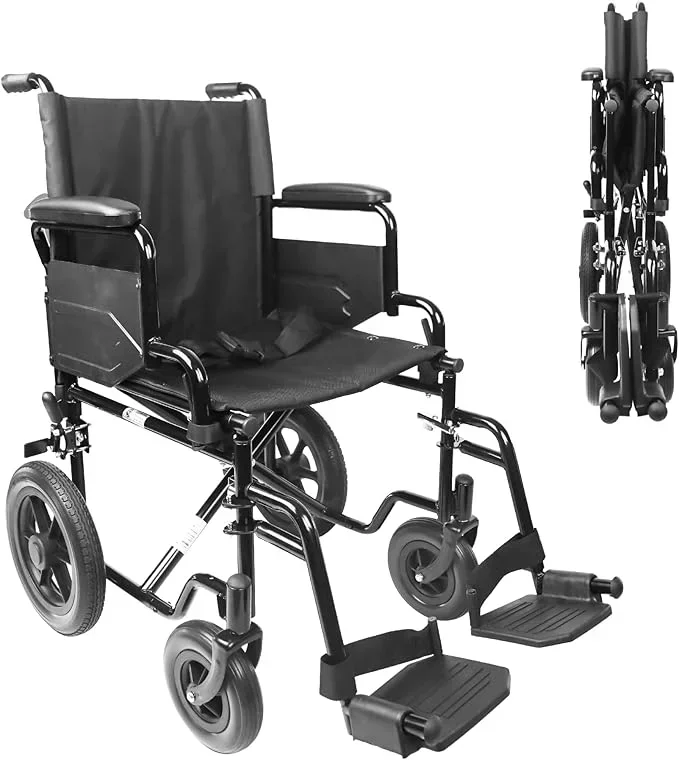
- Wheelchair. A standard wheelchair is the natural fit for most car transfers. If you only travel in the car occasionally, a transport chair is lighter, but it is designed to be pushed by someone else. See our comparison of transport chairs and wheelchairs.
- Mobility scooter. Scooters can be hard to move into a car. People who need one for outings often transfer to the car seat and have the scooter transported separately, so think about how it will travel before you rent.
- Hospital bed. Not a car item, but it is often the other half of the discharge plan. If the person will spend most of the day in bed, check which accessories fit the bed.
If you are unsure what combination fits, our caregiver’s guide to choosing mobility equipment is a good place to start.
A short checklist for the first trip
- Talk to an occupational therapist or physiotherapist about the specific car and the specific person.
- Confirm the board length, and try it in the car at home.
- Agree on who does what, and on the count.
- Check that the wheelchair folds and that the trunk takes it.
- Plan the destination: accessible parking, a kerb cut and a flat drop-off spot.
- Have a plan B, such as an accessible taxi, for days when the transfer is not safe.
FAQ
What is the best way to transfer someone from a wheelchair to a car?
For a person who cannot stand, a transfer board used with a helper is the standard method. Lock the brakes, place the chair close to the car, bridge the gap with a long board and move the hips across in small stages. Have an occupational therapist show you the technique first, because the right method depends on the person and the car.
Can I do a car transfer by myself?
Some people can, with practice and enough upper-body strength. Many start with one or two helpers and only later learn to transfer alone. Do not try solo until a therapist has watched you do it safely.
What is the best car for transferring from a wheelchair?
There is no single best model, but a seat close to the height of your wheelchair seat is easiest, with a wide door opening and a seat that moves back. Very low sedans and tall trucks are the hardest. Test your own chair against the car before buying.
What if the person cannot transfer at all?
Then a lift or a wheelchair-accessible vehicle is a safer choice than a hand lift. A ramp or lift-equipped vehicle lets the person stay in the chair. When booking, ask whether the driver is trained to secure an occupied wheelchair.
Can I rent a wheelchair for a few days?
Yes. We rent wheelchairs from $75 per week with no deposit, and we deliver across Greater Vancouver. See the wheelchair rental page to book.
Sources
- Car transfer with assistance, Toronto Rehab (UHN)
- Patient lifts and risk of fall, Health Canada
- Wheelchair Accessible Transportation by Taxi and Inter-city Bus in British Columbia: Update 2017, Passenger Transportation Board
- Accessible taxis, Passenger Transportation Board
- Adaptive all-electric vehicle for G.F. Strong’s Driver Rehabilitation Program, ICBC