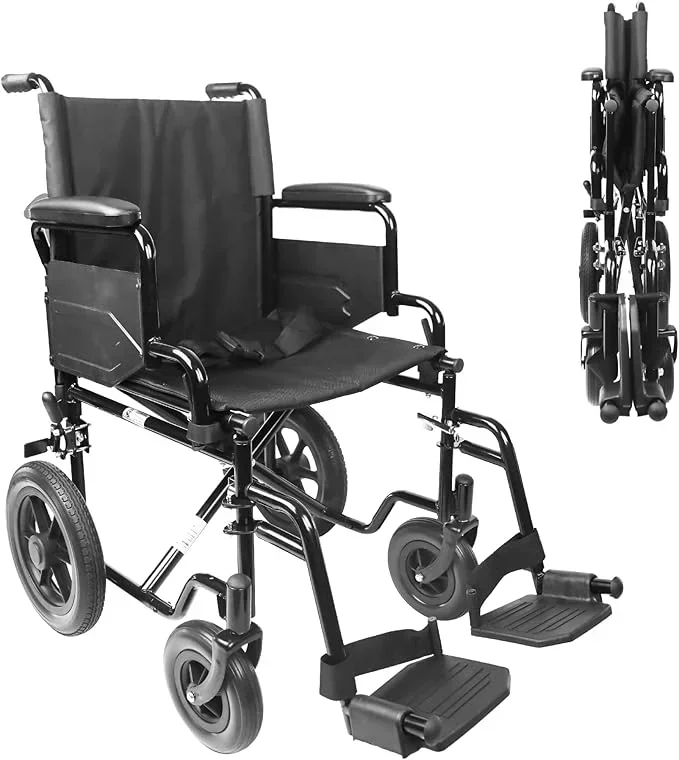

Most wheelchair tires fall into three groups: pneumatic (air-filled), solid, and pneumatic with a foam or airless insert. Air tires roll easiest and ride softest but need upkeep. Solid tires never go flat but are heavier and harsher. Foam-filled and insert tires sit between the two. The right choice depends on where you roll, who pushes, and how much maintenance you can realistically do.
This guide explains each type, how to read the size printed on the sidewall, what changes when you swap tires, and a few notes on power chair battery charging. It is written for families, caregivers and people recovering at home in Metro Vancouver, where wet pavement, curb cuts and short trips are part of the picture.
TL;DR
- Pneumatic (air) tires give the easiest push and the smoothest ride, but they need regular pressure checks and can puncture.
- Solid tires are close to maintenance-free, but they are heavier, firmer and take more effort to push.
- Foam-filled or insert tires remove the flat risk while keeping some cushioning, with a trade-off in weight and feel.
- Ignore the “24-inch” label when buying. Match the ISO number on the sidewall (for example 25-540).
- Renting? Ask what tires the chair has before it arrives, and match them to your routes.
Table of Contents
- The three wheelchair tire types
- Front casters and rear wheels are different problems
- Tread: smooth, ribbed or knobby
- How to read a wheelchair tire size
- What changes when you swap tire types
- Keeping air tires in good shape
- Power chairs and scooters: tires and battery charging
- Our perspective: match the tire to the week, not the brochure
- Renting a wheelchair, scooter or hospital bed in Metro Vancouver
- FAQ
- Sources
The three wheelchair tire types
The tire terms get muddled because stores use different words for the same thing. In practice there are three groups: air-filled, solid, and foam-filled or flat-free inserts. The tire affects how easily the chair rolls over every kind of terrain, and generally the harder the tire, the more effort it takes to push.
| Type | Ride | Upkeep | Best for | Watch out for |
|---|---|---|---|---|
| Pneumatic (air-filled) | Softest, lowest rolling effort | Regular pressure checks, possible punctures | Active users, uneven pavement, longer outings | Flats and under-inflation |
| Solid (urethane or rubber) | Firm, more vibration | Very little | Indoor use, short trips, caregivers who want no fuss | Heavier chair, harder push |
| Foam-filled or airless insert | Between the two | Little | People who got tired of punctures but still want some cushion | Extra weight, a firmer feel than air |
Pneumatic tires
Air tires work like small bicycle tires, with an inner tube or a tubeless setup. Clinical guidance for manual chairs notes that pneumatic tires are lighter and roll with less resistance than solid or foam-filled ones. The catch is that they have to stay properly inflated, and a tire that is too soft makes the chair feel sluggish.
If the person using the chair pushes it themselves, this is usually the tire to start with. A spinal cord injury information resource and rider surveys point the same way: both manual and power wheelchair riders report a notable difference in ride comfort with air tires is a claim you will see repeated, but the simplest test is your own: roll over a rough sidewalk and notice how much reaches your hands and back.
Solid tires
Solid tires are made of urethane or rubber with no air inside. They suit people who do not want to think about pressure at all, which is why they are common on chairs used mostly indoors or for short supported outings.
The cost is effort. A 2004 ergonomics study found that solid tires performed worse than pneumatic tires even when the air tires were under-inflated to a quarter of recommended pressure. That is a study of manual propulsion, so it matters most when the rider is the one pushing. If a caregiver does the pushing for short trips, the extra effort is often an acceptable price for no flats.
Foam-filled and airless insert tires
These are pneumatic-style tires fitted with a foam or airless insert, sometimes sold as “flat-free”. The insert means a thorn or a piece of glass cannot leave you stranded. You get more cushioning than a fully solid tire, though generally less than good air.

Foam-filled options are the answer to a question many readers type: whether they are worth it. They are worth considering if you have had repeated punctures, if the chair is used by several people, or if nobody in the household will check pressure weekly. They are not the best choice for an athlete or a long-distance daily pusher.
Front casters and rear wheels are different problems
A wheelchair has two sets of tires, and they do different jobs. The large rear wheels drive and carry most of the weight. The small front casters swivel and take the bumps. Casters are usually solid or semi-solid because they are small and hard to inflate, and size matters more than type: small casters sink into cracks and gravel, larger ones roll over them.
If your route includes older Vancouver sidewalks, cracked pavement or wet leaves in the fall, bigger casters help. Our own turning radius guide also explains why caster and wheel choices change how a chair handles in tight hallways.
Tread: smooth, ribbed or knobby
Construction is only half the decision. Tread decides grip.
- Smooth or finely ribbed: lowest rolling resistance on hard, dry surfaces. Best for malls, clinics and tidy sidewalks.
- Mixed or semi-knobby: a sensible all-rounder for Metro Vancouver’s mix of pavement, gravel paths and wet seawall surfaces.
- Knobby: grip on dirt, grass and loose surfaces. One long-time rider explains that knobby tires help when spending a lot of time off the pavement, though they stand out and add rolling effort on smooth floors.
For a short-term rental, a mixed tread on air or insert tires covers most households.
How to read a wheelchair tire size
This is where most wrong purchases happen. The label “24-inch” is a nickname, not a measurement. A 24-inch tire will not actually measure 24 inches across, and only the ISO size is exact.
Look at the sidewall for two numbers, such as 25-540:
- First number: the tire width in millimetres. It affects rolling resistance, height and clearance.
- Second number: the bead seat diameter in millimetres, the inner diameter of the tire. This decides whether it fits your rim.
Researchers measuring rolling resistance say the same thing: rely on the ISO/ETRTO two-number system on the sidewall rather than the traditional label. Common rear sizes include ISO 540 (nominal 24 inches), ISO 559 (nominal 26 inches) and ISO 501 (nominal 22 inches). Front casters commonly come in 3, 4, 5 and 8-inch nominal sizes.
A simple rule: the second number must match your rim exactly. The first number can vary within what the frame and brakes allow.
What changes when you swap tire types
People often change tires to fix one problem and create another. A wider, bulkier tire can be taller than a narrow, high-pressure one on the same rim, and that can change seat-to-floor height, caster angle and stability, and sometimes force brake or wheel-spacing adjustments.
Before you swap:
- Note the current size from the sidewall.
- Check that the new tire has the same bead diameter.
- Compare overall height. A taller tire raises the seat and can make transfers harder.
- Check brake clearance after fitting.
- Roll the chair a short distance and look for rubbing.
If something feels off, stop and have a mobility technician look at it. A chair that pulls to one side, rubs or sits at a different angle after a tire change is a fall risk for the person in it, so do not just push through.
Our wheelchair maintenance checklist covers the daily and weekly checks that keep tires, brakes and casters in good shape.
Keeping air tires in good shape
A few habits go a long way:
- Check pressure weekly. The recommended range is printed on the tire sidewall.
- Press the tire with your thumb: it should barely give.
- Look for embedded glass, cracks and worn tread.
- Wipe tires and casters, and clear hair or thread wound around caster axles.
- Do not store the chair on a wet, dirty floor for long periods.
If you or someone in your family is struggling to stand and walk and you are working out why, a clinician is the right person to ask. This overview of walking issues, their causes and treatment is a starting point for understanding when mobility problems need medical assessment rather than just equipment.
Power chairs and scooters: tires and battery charging
Power wheelchairs and mobility scooters add a battery to the list. Tire choices follow the same logic: air tires ride better outdoors, solid or flat-free tires remove the puncture risk and suit mostly indoor or smooth-surface use.
On charging, the rule is to follow the manufacturer’s manual for your specific model, because chargers, battery types and charge times differ. In general terms:
- Use only the charger supplied for that chair or scooter.
- Charge in a dry, ventilated spot away from heat sources and clutter.
- Plug in after the day’s use rather than waiting for the battery to run flat, unless the manual says otherwise.
- Never use a damaged cable or charger, and ask a technician if the charger or battery looks swollen or worn.
If you rent a scooter or electric chair from us, we will go through the charging setup at handover, and you can call if anything looks unusual. For a model-specific question, the manual or the manufacturer is the final word.
Our perspective: match the tire to the week, not the brochure
We rent and sell mobility equipment around Greater Vancouver, and the same pattern repeats. A family needs a chair tonight for a parent coming home after surgery. Nobody is choosing a tire; they are choosing a chair that works for the next few weeks.

Our view is practical. If a caregiver is pushing short distances on smooth floors and ramps, tire type is a minor concern and reliability is the priority. If the person will be rolling themselves, or going out over uneven ground, ask about the tires before anything else, because that is where fatigue and sore shoulders come from. The research on rolling resistance exists because rolling resistance raises the force a rider must apply and the risk of upper-limb pain, and that is worth taking seriously even for a two-week rental.
We would rather you tell us your routes, your stairs and your curbs than guess. We can then point you to the right chair. Our guide for caregivers choosing mobility equipment walks through that thinking in more detail, and our transport chair versus wheelchair comparison helps if you are undecided.
— Chandan
Renting a wheelchair, scooter or hospital bed in Metro Vancouver
If you need equipment now rather than a new set of tires, we offer rentals with no deposit, delivery, setup and sanitization before delivery. Current starting prices:
| Item | From |
|---|---|
| Standard wheelchair rental | $75 per week |
| Mobility scooter rental | $200 per week |
| Hospital bed rental | $175 per week |
Delivery is charged separately: see our delivery fees for the large install fee ($250 one-off) and small item delivery and pickup ($30 to $60 one-off per way). You can also browse all rental equipment, including bariatric and elevating leg rest wheelchairs. Tell us about your terrain when you book and we will help you pick the right chair.
Visiting from out of town? Our tourist rental guide explains how it works.
FAQ
What are the different types of wheelchair tires?
There are three main groups: pneumatic (air-filled), solid, and foam-filled or flat-free insert tires. Air tires roll easiest, solid tires need the least upkeep, and insert tires fall between the two. Tread (smooth, ribbed or knobby) is a separate choice that affects grip.
Are pneumatic tires better than solid tires?
For people who push their own manual chair, usually yes. A clinical study found solid tires cost more effort than air tires, even when the air tires were under-inflated. If a caregiver pushes occasionally and you never want to deal with flats, solid or insert tires can still be the better fit.
What is the correct wheelchair tire size for my chair?
Check the sidewall for the ISO number, such as 25-540. The second number is the bead diameter and must match your rim. Do not rely on the “24-inch” or “26-inch” label alone.
Are foam-filled wheelchair tires worth it?
They are worth it if punctures keep stopping you or nobody will check air pressure. You give up some of the ride quality and low weight of air tires. Ask a mobility technician to fit them, since the insert changes how the tire sits on the rim.
How should I charge a power wheelchair battery?
Use the supplied charger and follow the manual for your model. Charge somewhere dry and ventilated, and stop using any damaged cable or charger. If you rent from us, we show you the setup at delivery.
Sources
- Mobility Basics: Manual Wheelchair Wheels
- PN Online: The Basics of Manual Wheelchair Maintenance
- New Mobility: Selecting the Right Wheelchair Tires
- The ergonomics of different tyres and tyre pressure during wheelchair propulsion
- Velogear: Wheelchair tyre size information
- Evaluation of rolling resistance in manual wheelchair wheels and casters (PMC)