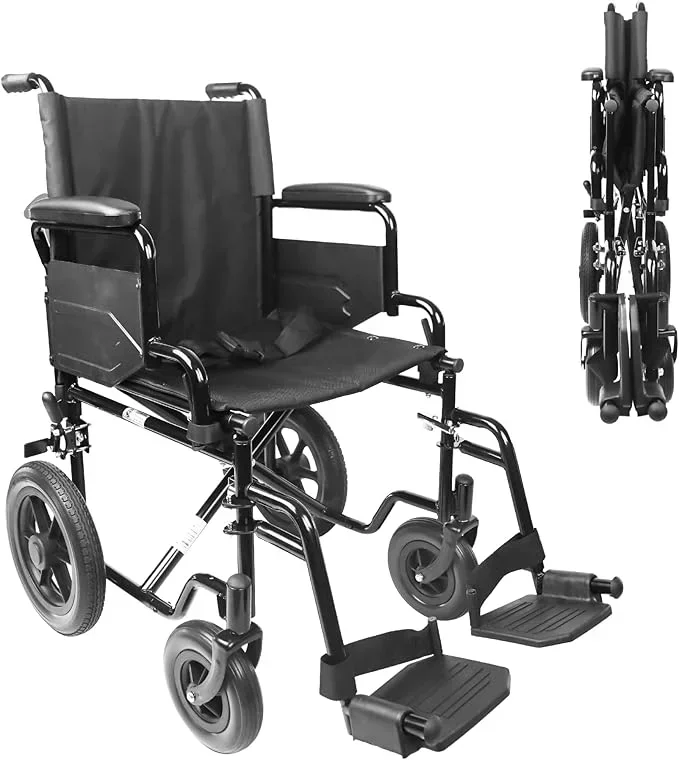
Wheelchair Turning Radius: Measure Beyond the 2,500 mm Minimum

Plan for a turning diameter of at least 2,500 mm, the figure Accessibility Standards Canada sets as its minimum. Some clauses list a minimum turning diameter of 1,800 mm, while power-assisted wheelchairs may have a minimum of 2,100 mm and scooters can need up to 3,150 mm. Measure with the device and its occupant in place, because a spec sheet never captures how a real turn goes.
TL;DR:
- Accessibility Standards Canada sets 2,500 mm for a full turn, while some clauses allow 1,800 mm or 2,100 mm for power assisted chairs.
- Manual wheelchairs generally need tighter circles than power chairs, while scooters may require up to 3,150 mm because their longer frames swing wider.
- Find the published turning radius, double it, then add clearance for tail swing and the occupant’s reach; measure with the chair occupied and accessories attached.
- Place turning areas at hallway ends, bathrooms, and bedsides; check door swings and fixtures, or plan a T turn where full circles will not fit.
Table of Contents
- What turning radius and turning circle actually mean
- Minimum turning spaces in accessibility standards
- How manual chairs, power chairs and scooters compare
- How to measure your chair and your space
- Doors, corridors, bathrooms and dead ends
- Why planning for more than the minimum pays off
- Renting a wheelchair or scooter to test your space
- FAQ
- Sources
What turning radius and turning circle actually mean
The wheelchair turning radius is the distance from the point a chair pivots around to the farthest part of the chair or its occupant as it sweeps through a turn. The turning circle is the diameter of that sweep, so it is simply the radius doubled. Spec sheets often list one and not the other, so check which you are reading.
A device’s footprint is the floor it occupies when parked, such as a device’s overall width and length. The space needed to turn is much larger. It includes the swing of foot rests, the tail of a scooter and an occupant’s elbows or a bag hanging off the back.
Here is a quick example. a chair’s turning circle is twice the distance from its pivot to its farthest point. You would want a clear, level floor at least that wide, with a little extra on top. If you only know the published radius, double it. If you only know the circle, halve it to compare against a room’s width.
Minimum turning spaces in accessibility standards
Accessibility Standards Canada gives several dimensions, and each applies to a different manoeuvre:
- Turning: a minimum diameter of 2,500 mm, listed in clause 4.3.1 of the Model Standard.
- Forward approach: a clear floor space of 1,500 mm by 900 mm.
- Parallel approach: a clear floor space of 2,200 mm by 900 mm.
- Shorter turns: some clauses list 1,800 mm, with 2,100 mm noted for power-assisted wheelchairs.
- 180° turn around an obstruction: 2,000 mm by 2,100 mm as one example.
A T-turn is a three-point turn in a T-shaped space, such as where a hallway meets a side passage. It lets someone reverse direction when a full circle won’t fit, which is why dead-end routes are planned around it. Use the 2,100 mm figures for tighter, shorter contexts and the 2,500 mm figure wherever a full turn is expected.
Keep in mind that these are floors, not targets. Standards set minimum thresholds, and many power devices need more room than the minimum allows.
How manual chairs, power chairs and scooters compare
Manual wheelchairs usually turn in the tightest circles, because the occupant can pivot one wheel against the other and the chair has no rear overhang from a motor or battery. Many power wheelchairs need more room, and mobility scooters need the most, since their longer frames and front steering swing wide.
The numbers in the standards show the spread. Accessibility Standards Canada notes that power-assisted wheelchairs may have minimum turning diameters of 2,100 mm, while scooters may reach 3,150 mm. In other words, a space that suits a manual chair may not accommodate a scooter.

Before relying on a standards minimum, find your device’s published turning radius and double it. Then add a buffer for tail swing and for the occupant’s reach, knees and elbows. Bariatric chairs are wider, so they deserve the same care, as do transport chairs with long foot rests. Whatever the model, the published figure is where you start measuring, not where you stop.
How to measure your chair and your space
Work through this checklist before you buy, rent or renovate:
- Gather the specifications (overall width, wheelbase and any published turning radius), plus a tape measure, masking tape and a helper.
- Mark the centre of rotation, or use the centre of the seat as an approximation, then measure to the farthest point of the chair or occupant. Double that number to get the turning diameter.
- Mark the full circle on the floor with tape or paper, then check it against doorways, furniture, thresholds and the foot of any bed or table.
- Measure door openings, hall widths and any dead ends. Where a full circle won’t fit, plan a T-turn, and for power chairs allow extra clearance for tail swing.
Pro Tip: Measure with the device occupied, with any bags or oxygen kit attached, and if you can, test a rented unit in the actual space before committing.
For help with door and room clearances around larger equipment, see our guide to hospital bed doorway clearance.
Doors, corridors, bathrooms and dead ends
Turn the numbers into a floor plan by reserving space where people change direction, not along every metre of corridor. A good layout puts the 2,100–2,500 mm turning area at the places where a chair must reverse course: at the end of a hallway, inside a bathroom and in front of a bed.
- Doors: put the manoeuvring clearance on the side you approach from. A door that swings into the turning area can take up much of the available space, so check the swing path against the floor mark from the checklist.
- Thresholds: a raised sill makes a chair lurch mid-turn. Low threshold ramps fix this quickly.
- Dead ends: end a corridor with a turning space, or add a side recess for a T-turn, so nobody has to reverse the whole way out.
- Bathrooms: the clear space must be measured after fixtures are in, since toilets and vanities shrink the circle.
For the standard’s fixed values, the most useful anchor is the 2,500 mm turning diameter the fundamental design components require.
Quick fixes: move furniture to one side, reverse the door swing, fit a removable kick plate, or add a threshold ramp. To protect flooring while you test, see our notes on wheelchair floor protection.
Why planning for more than the minimum pays off
Standards describe what must be possible, not what feels comfortable. Real chairs, real occupants and real routines all push past those figures: transfers need elbow room, accessories add width, and a tired user turns less precisely at the end of the day. I would budget extra clearance wherever the budget allows, and I would never sign off on a layout until I had watched the actual device make the turn with its occupant aboard. Roomier layouts also serve visitors, ageing relatives and future owners or tenants, which protects resale and rental value.
— Chandan
Renting a wheelchair or scooter to test your space
Numbers on paper only go so far. We rent wheelchairs and mobility scooters, so you can try every manoeuvre in your own hallway, bathroom and bedroom before you buy or renovate. Delivery is same-day, every unit is sanitized before it arrives, and our terms are flexible. A standard wheelchair rental starts from $75 per week, and a mobility scooter rental starts from $200 per week. Rent a device, run the tape-circle test from the checklist, and confirm your plan before you commit.

FAQ
How high should the back of a wheelchair be?
It depends on the user’s trunk support needs. A lower back suits active users who need freedom of movement, while a higher back gives more support. A clinician or equipment supplier can fit the height to the person.
What is a type 3 wheelchair?
Classification schemes for wheelchair types differ between regions and standards, so the label alone does not tell you the dimensions. Check the manufacturer’s specification sheet for overall width, length and turning radius, then use those figures for your measurements.
What is the 1/12 rule for ramps?
It is a common ramp guideline of one unit of rise for every 12 units of run, which gives a gentle, usable slope. Confirm the requirement that applies to your building before you build.
What is the turning diameter in the Accessibility Standards Canada model standard?
The Model Standard requires a 2,500 mm minimum turning diameter. Some clauses accept smaller figures for specific contexts, but a full turn is planned around the larger value.
Sources
- Accessible
- 12. Clearances and areas - Accessibility Standards Canada
- 6. Common accessibility measures - Accessibility Standards Canada