
Five Mobility Scooter Types and When to Rent or Buy in Vancouver
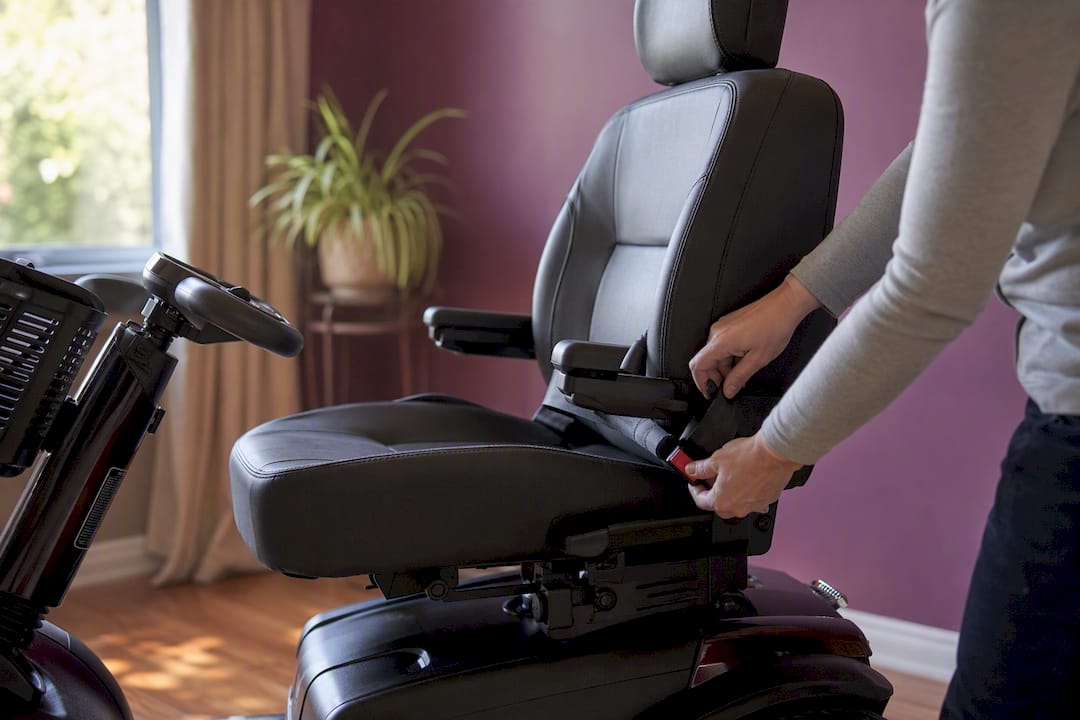
Five categories cover almost every rider: travel/portable scooters for light, foldable transport; three-wheel models for tight turns indoors; four-wheel scooters for outdoor stability; mid-size scooters for a balance of range and comfort; and heavy-duty all-terrain models for rough ground and higher weight capacities. This guide breaks down what separates them, how to test one properly, and when renting one for a few days beats buying outright.
TL;DR:
- Travel scooters balance portability with short-range capabilities, but their limited battery size makes them less suitable for steep hills or long outings.
- Four-wheel models offer greater stability and higher weight capacities, making them better suited for uneven terrain and outdoor use, especially on gravel or slopes.
- Trial rides should test tight turn radius, brake responsiveness, and seat comfort to ensure the scooter matches your indoor and outdoor needs before purchase.
- Renting is ideal for short-term use, recovery, or testing different models without the commitment or high upfront costs of buying.
- Proper measurements of doorways, turning space, and transport options are critical for choosing a scooter that fits your environment and travel plans.
Table of Contents
- Mobility scooter types explained: features that actually matter
- Three-wheel vs four-wheel: what to actually test on a trial ride
- Travel and folding scooters: what portability actually costs you
- Mid-size and heavy-duty scooters: when you need more capacity
- How to choose a mobility scooter: measurements and questions that matter
- When renting beats buying a mobility scooter
- Rent a mobility scooter, wheelchair, or hospital bed today
- Sources
- FAQ
Mobility scooter types explained: features that actually matter
Every mobility scooter type trades off portability against stability, range, and comfort. Knowing which trade-off you’re making is the whole game.
- Travel/portable scooters fold or split into pieces, usually weighing 50 to 80 pounds total once broken down. They’re built for car trunks and airport check-ins, not long days outdoors.
- Three-wheel scooters use a single front wheel for a tighter turning radius, making them easier to navigate around furniture, narrow hallways, and store aisles.
- Four-wheel scooters trade some turning tightness for a wider stance that handles curbs, gravel, and uneven pavement without tipping.
- Mid-size scooters sit between travel and heavy-duty models: bigger seats, longer battery range, and enough weight capacity for daily outdoor use without the bulk of a full all-terrain build.
- Heavy-duty/all-terrain scooters carry the highest weight capacities, often supporting riders over 300 pounds, with larger batteries and genuine suspension for rough ground.
Drive layout matters too. Front-wheel drive tends to climb better; rear-wheel drive often feels steadier at speed. Wikipedia’s overview of scooter categories lines up closely with what you’ll find on most retailer spec sheets: weight capacity, battery range, and folding capability are the three numbers worth writing down before you shop.
If you only need a scooter for a week, a recovery period, or a trip, buying one of these outright rarely makes financial sense. Renting lets you match the type to the actual task instead of guessing.
Three-wheel vs four-wheel: what to actually test on a trial ride
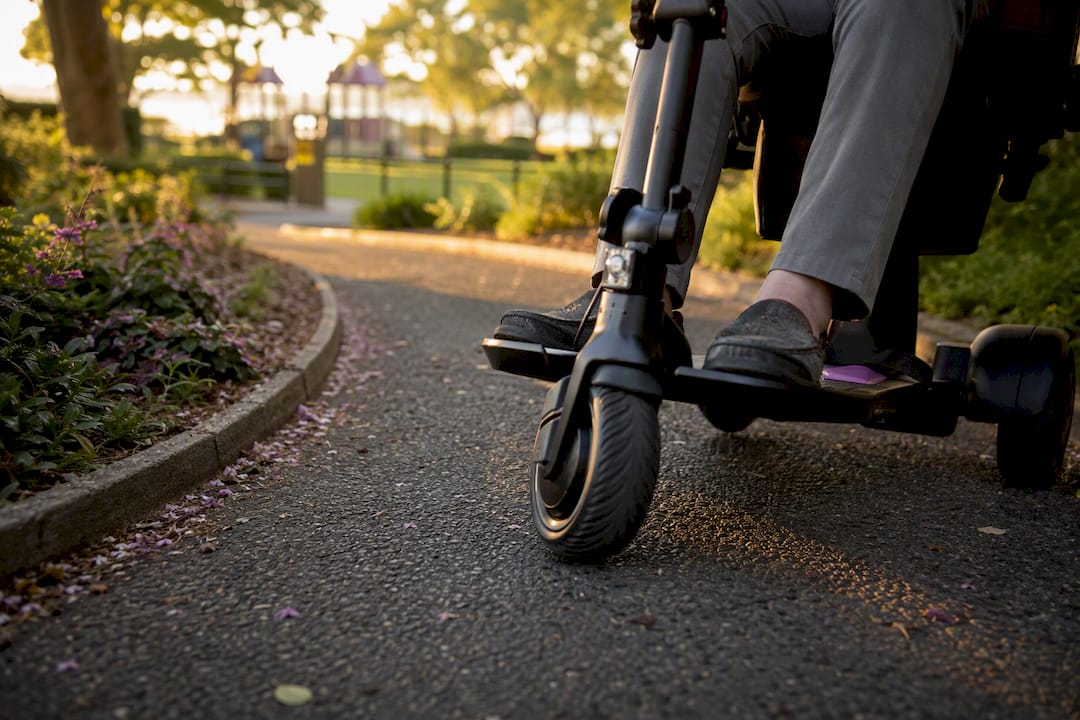
Three-wheel scooters win on tight turns. Their single front wheel lets them pivot in a smaller radius, which matters in a condo hallway or a crowded pharmacy aisle. Four-wheel scooters win on stability, particularly on gravel, grass, or a sloped driveway, because the wider base resists tipping.
Weight capacity tends to run higher on four-wheel models, and top speeds can be slightly faster too, both of which affect how confident you’ll feel on an incline. That said, modern four-wheel steering systems have closed much of the old manoeuvrability gap, so wheel count alone isn’t the deciding factor anymore. Chassis design and steering tuning matter just as much.
Before committing to either, run these three checks on a trial ride:
- Tight turn test. Try a U-turn in the narrowest hallway or aisle you’ll actually use at home.
- Brake feel. Squeeze or release the control at a normal pace and notice how abruptly the scooter stops.
- Seat comfort over time. Sit for at least ten minutes, not thirty seconds, since padding that feels fine initially can dig in later.
Pro Tip: Steering sensitivity and braking distance vary a surprising amount between models built for the same purpose, which is exactly why clinical reviews recommend a real trial ride before you decide, not just a spec sheet comparison.
Travel and folding scooters: what portability actually costs you
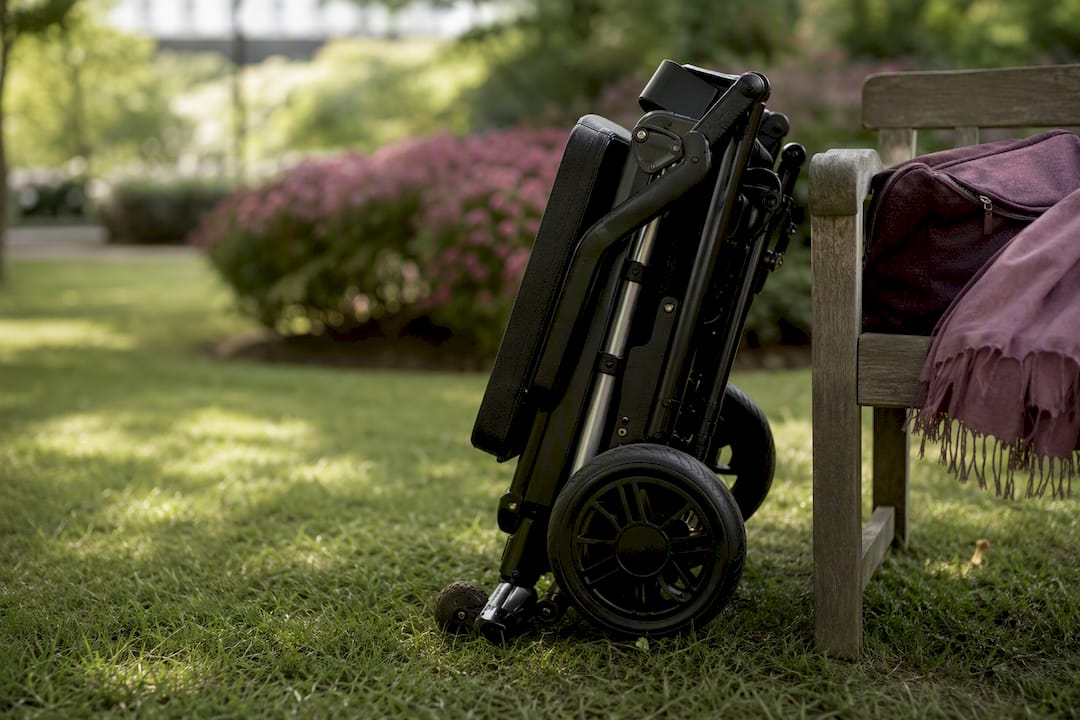
Travel scooters fold or disassemble into two to four pieces, with individual pieces often light enough for one person to lift, though total weight still runs 50 to 80 pounds. That portability comes at a price: smaller batteries mean shorter range, and travel scooters often struggle on steep hills or extended outings where a bigger model wouldn’t blink.
Before a trip, work through this checklist for aging travelers:
- Confirm your battery’s realistic range for a full day, not just the manufacturer’s best case.
- Check whether your destination (hotel, cruise ship, rental car) has room to store a folded unit.
- Decide whether flying with your own scooter makes sense versus renting one at your destination.
- If terrain includes hills or long distances, consider a mid-size rental for those specific days instead of relying on a light travel unit.
For cruise trips specifically, planning ahead on scooter type and delivery timing avoids a lot of hassle. A Vancouver-focused cruise rental guide walks through timing considerations most people miss until the week before departure.
Mid-size and heavy-duty scooters: when you need more capacity
Mid-size and heavy-duty scooters exist for one reason: some riders need more than a folding scooter can give them, whether that’s weight capacity, battery range, or the ability to handle rough ground.
- Rider weight capacity on heavy-duty models frequently exceeds 300 pounds (about 140 kg), with reinforced frames and wider seats to match.
- Suspension and larger tires on all-terrain models absorb bumps on gravel paths, grass, and uneven sidewalks that would jolt a lighter scooter.
- Battery range climbs with size, but so does overall weight, so a heavy-duty scooter that goes farther will also be harder to lift into a vehicle without a ramp or lift.
- Storage and transport become real considerations at this size. Many mid-size and heavy-duty units won’t fit in a standard trunk, and some public transit or venue spaces restrict scooter dimensions.
If your day-to-day need is outdoor errands and moderate distances, a mid-size model usually covers it without the bulk. A longer guide on renting versus buying heavy-duty scooters breaks down that specific decision if capacity is your main concern.
How to choose a mobility scooter: measurements and questions that matter
Start with how you’ll actually use it. Indoor navigation calls for a tight turning radius; outdoor errands call for stability and range; travel calls for weight and folding size above everything else.
Before you call a shop or rental provider, take these measurements at home:
- Doorway width. Measure the narrowest interior doorway you’ll need to pass through, not the average one.
- Turning space. Check the tightest hallway or room corner where you’ll need to pivot the scooter.
- Vehicle trunk dimensions. If you plan to transport it yourself, measure your trunk or back seat space before assuming a folded scooter will fit.
Pro Tip: Measure the actual narrowest doorway, not the nominal width listed for your home, and leave at least two inches of clearance for safe turning. Testing turning radius in a real hallway beats trusting a spec sheet every time.
When you contact a seller or rental provider, ask:
- What’s your trial or return policy if the scooter doesn’t fit my needs?
- Do you offer same-day delivery, and is there an upfront deposit?
- Is the equipment sanitized between rentals?
- Is a spare battery available, and what’s the realistic range on one charge?
- What insurance or damage coverage applies during a rental period?
When trade-offs are unavoidable, prioritize safety and daily usability (turning space, weight capacity) over convenience features like extra cup holders or basket size. A class 2 versus class 3 speed distinction also matters if you plan to use a scooter on roads rather than sidewalks, since rules vary by jurisdiction and it’s worth confirming local regulations before you commit to a faster model.
When renting beats buying a mobility scooter
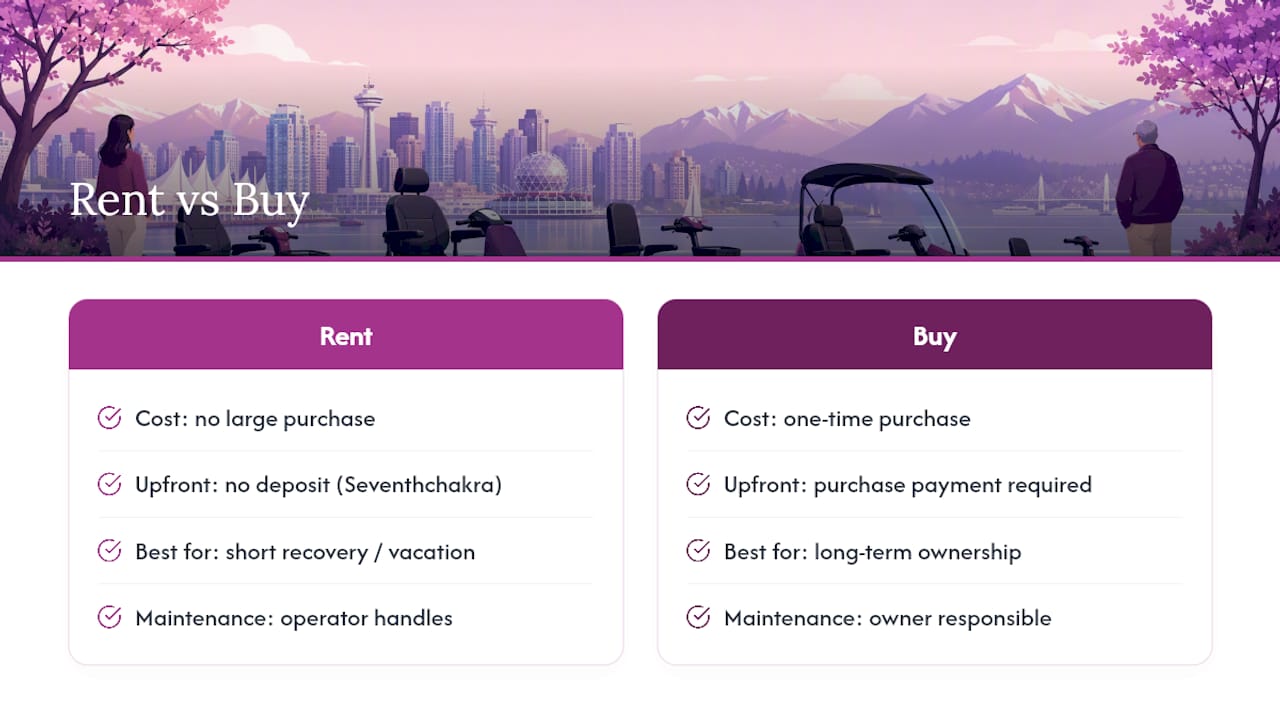
Renting makes the most sense for short recovery periods, a single vacation, or trying a scooter type before spending money on one. Good rental operators match models to actual needs and brief riders on controls before handoff, which solves the trial-ride problem without a purchase commitment.
Seventhchakra’s rental approach removes the two biggest friction points: no upfront deposit, and same-day delivery across the Greater Vancouver area. Every unit is sanitized before it reaches you. Before booking, confirm the rental period, ask about battery range for your planned use, and check that the model fits your doorways and transport plan.
— Chandan
Rent a mobility scooter, wheelchair, or hospital bed today
Buying a scooter outright means guessing right the first time, or eating the cost of a wrong fit. Seventhchakra skips that risk entirely: no upfront deposit, same-day delivery across Greater Vancouver, and every unit fully sanitized before it arrives at your door.
Travel, three-wheel, four-wheel, mid-size, and heavy-duty scooters are all commonly available to rent, so you can match the type to the trip, the recovery period, or the terrain instead of committing to one model long-term. The same flexible, no-deposit terms extend to wheelchair rentals and hospital bed rentals for families managing a broader care need at home.
Ready to book? Visit the mobility scooter rental page to check availability and arrange same-day delivery.
Sources
- Gov
- PMCID review on mobility and assistive devices - PMC
- 7 Steps to Finding the Right Mobility Scooter - MobilityWorks
- Renting a Mobility Scooter Abroad: Tips for Tourists - MobilityFrontiers
- Mobility scooter - Wikipedia
FAQ
What is the best mobility scooter type overall?
There isn’t one best type for everyone. The right choice depends on whether you need tight-space manoeuvrability (three-wheel), outdoor stability (four-wheel), portability (travel), or higher capacity and range (mid-size or heavy-duty).
What is the most reliable mobility scooter brand?
Reliability depends more on maintenance history and battery condition than brand alone, which is one reason trial rides matter before committing to any specific model.
What is the best mobility scooter for the money?
For most day-to-day needs, a mid-size scooter offers the best balance of range, comfort, and capacity without the price and bulk of a heavy-duty all-terrain unit. For short-term needs, renting one avoids that price question altogether.
Which is the best mobility scooter for travel?
A folding or disassembling travel scooter weighing under 80 pounds total is generally the best fit, provided your trip doesn’t involve steep hills or long daily distances, in which case a rented mid-size model may serve you better.
Should I rent or buy a mobility scooter?
Renting makes sense for short-term needs like recovery, vacations, or trying a model before purchase, while buying suits long-term daily use where you already know which type fits your routine.


