
Same day sanitized overbed tables for caregivers, uses and safety

An overbed table is a height-adjustable surface that slides over a bed or chair, used mainly for meals, medication, personal items and light tasks like reading or working on a tablet. Its real value is reach: it brings everyday essentials close enough that a patient can manage more alone, which cuts down on the number of times a caregiver has to get up to fetch something.
TL;DR:
- A height-adjustable overbed table is ideal for managing meals, medication, and personal items with raised edges to prevent spills and rolling objects.
- Key features to consider include height range, base type, tilt capabilities, raised edges, material, and lockable castors to ensure compatibility and safety.
- Proper positioning involves measuring bed clearance, locking castors during use, and avoiding disassembling the internal spring mechanism, which can cause injury.
- For short-term recovery, rental options are more convenient and cost-effective, especially when the need for the table lasts only a few weeks.
- Cleaning should involve wiping with mild soapy water after meals and sanitizing spills, with regular checks on knobs, levers, and castors for safe operation.
Table of Contents
- Practical uses: meals, medication and more
- Where and when to use an overbed table
- What features matter when choosing an overbed table
- Safe positioning and operation
- Cleaning and maintenance for rented or owned tables
- How Seventh Chakra can help right now
- A practical view on choosing between features
- How to order or rent an overbed table from us
- FAQ
- Sources
Practical uses: meals, medication and more
Most overbed tables earn their keep in five or six everyday moments rather than one big function. Meals are the obvious one: a tabletop with raised edges keeps hot liquids and plates from sliding off when a bed is tilted or a patient shifts position, and a tray-style top makes it easier to carry a full plate without spilling. Manufacturer notes on raised-edge designs point out that this lip does more than contain spills. It stops small items like pill bottles or a phone charger from rolling off the side during normal movement, according to Drive Medical’s product notes.

Medication management is the second major use. Keeping pills, a dosing chart and a water glass on the same surface, within arm’s reach, reduces the number of trips a caregiver makes during the day and helps a patient stick to a schedule without waiting for help. The same logic applies to personal items: glasses, a phone, a remote control and a call bell placed on the table instead of a nightstand reduce the awkward reaching and twisting that often leads to falls or strained shoulders.
An overbed table also works as a short-term desk. Tilting models let a patient angle a tablet or laptop screen for a better viewing angle, which matters for anyone spending long stretches in bed and trying to avoid neck strain from looking down at a flat surface. Some families use the same tabletop to stage light medical tasks: laying out supplies for a dressing change, organizing items before a home care visit, or supporting simple range-of-motion exercises where a flat surface helps with hand or arm therapy.
- Use raised-edge tops for meals and medication to contain spills and stop small items from rolling off.
- Keep a phone, glasses and call bell on the table instead of a nightstand to cut unnecessary reaching.
- Tilt the tabletop for reading or screen use, then flatten it again before placing food or drinks.
- Stage dressing-change supplies or therapy items on a clean, wiped-down surface before starting.
Portability matters here too. A lightweight overbed table with wheels can move from the bed to a recliner or couch, which is useful for anyone who spends part of the day out of bed but still needs the same tray of items close by.
Pro Tip: Keep one dedicated section of the tabletop for medication only, so a caregiver can scan it at a glance and confirm nothing has been missed.
Where and when to use an overbed table
The setting changes what the table is mainly used for, even though the equipment itself stays the same. In a hospital or rehab room, staff tend to use it for meal trays, as a staging area for equipment during a procedure, and as a flat surface for quick charting or paperwork at the bedside. At home after surgery, the table usually becomes a nutrition station for small, frequent meals, a clean surface for dressing changes, and a place to work through prescribed therapy repetitions without leaving the bed.
In longer-term home care, the table tends to settle into a daily routine: medication at set times, a tablet or book for entertainment, and personal devices kept close enough that a person with limited mobility doesn’t need to call for help every few minutes. For general home-care routines around this kind of daily setup, a home care safety checklist can help families cover the basics they might otherwise overlook.
- Hospital and rehab settings: meal trays, equipment staging, quick charting.
- Post-surgery home recovery: small meals, dressing-change surface, therapy reps.
- Long-term home care: daily medication routine, devices and reading material within reach.
Deciding whether to rent or buy usually comes down to how long the table will be needed. A short recovery window, typically measured in weeks, tends to favour a rental. A permanent mobility change points toward buying, since the equipment will see years of daily use rather than a single recovery period.
What features matter when choosing an overbed table
Not every overbed table suits every bed or every task, so a few features are worth checking before committing to one.
- Height range. Measure your bed from floor to mattress top, then confirm the table adjusts comfortably above and below that height for sitting and reclining positions.
- Base type. A C-base slides under most bed frames and recliners, while a four-leg base offers more stability but less clearance; a low-profile C-base matters most for beds that sit close to the floor.
- Tilt versus fixed top. Tilt helps with reading or screen angling, but a fixed, level top is safer for meals and medication, where a sloped surface risks spills.
- Raised edges and material. A lipped edge and a wipeable laminate surface make spill control and cleaning easier, especially around food and medication.
- Castors, locks and weight limits. Locking castors keep the table steady during meals or transfers, and checking the stated weight capacity matters if the table will carry a laptop, a lift tray, or heavier dishes.
Pro Tip: If the table needs to clear a hospital bed’s side rails, check the base’s lowest clearance height before ordering. It’s the detail most people overlook until the table won’t slide into place.
Safe positioning and operation
A few checks before first use prevent most of the common problems with overbed tables. Start by measuring the bed frame’s height and the clearance underneath it, since a base that’s too tall will catch on the frame or mattress edge. Slide the base in slowly and check that all legs or castors sit flat and stable before adjusting the height, and always lock the castors before meals or medication handling so the table doesn’t roll away mid-task.
Keep the tabletop level for meals and medication, and only use the tilt function for reading or screen work. The Canadian Red Cross overbed table instruction sheet warns specifically against disassembling the internal spring mechanism found in some tilt and height-adjustment systems, since it’s under strong tension and can cause injury if opened or forced. This is a detail many caregivers don’t expect, since the table looks like simple furniture rather than a mechanical device with a loaded spring inside.
- Measure bed height and under-bed clearance before choosing a base type.
- Lock castors before placing food, drinks or medication on the tabletop.
- Keep the surface level for meals and tilted only for reading or screens.
- Never attempt to open or adjust the internal spring mechanism yourself.
- Avoid placing heavy appliances or uncontained hot liquids on the tabletop.
The Red Cross instruction sheet on overbed tables warns that the tilt and height-adjustment mechanism contains a powerful internal spring that should never be disassembled, a detail that explains why a jammed table should go to a technician rather than be forced open at home, according to the Red Cross overbed table instructions.
Cleaning and maintenance for rented or owned tables
Keeping the table clean is simple but matters more than it looks, since it sits inches from food and medication every day. Wipe the surface with mild soapy water after each meal, and sanitize it fully after any spill involving bodily fluids or when the table changes hands between users. Avoid harsh solvents or abrasive cleaners, which can dull the laminate surface or loosen raised edge trim over time.
- Wipe the tabletop with mild soapy water after meals and sanitize after spills.
- Check knobs, levers and castors periodically, and report any sticking or looseness.
- Store the table flat and away from direct heat to prevent warping during transport.
- Avoid harsh chemical cleaners that can damage the laminate or edge trim.
How Seventh Chakra can help right now
We offer height-adjustable overbed tables with same-day delivery and full sanitization to ensure prompt availability. Our overbed table rental comes with no deposit required, which matters most when a recovery timeline is short and unpredictable.
To book quickly, have your bed’s measured height, a preferred delivery window and your expected rental length ready when you contact us. For most short-term recoveries, renting works out simpler and more affordable than buying, since the table only needs to do its job for a few weeks before it can be picked back up.

A practical view on choosing between features
The real trade-off with overbed tables isn’t portability against stability, it’s how fast the table needs to be ready at mealtime or medication rounds. A wide, fixed top wins for steady daily routines; a tilting, lighter model wins when the same table needs to double as a reading or screen stand later in the day. Most households end up favouring whichever setup lets a caregiver place a tray and walk away without double-checking it.
— Chandan
How to order or rent an overbed table from us
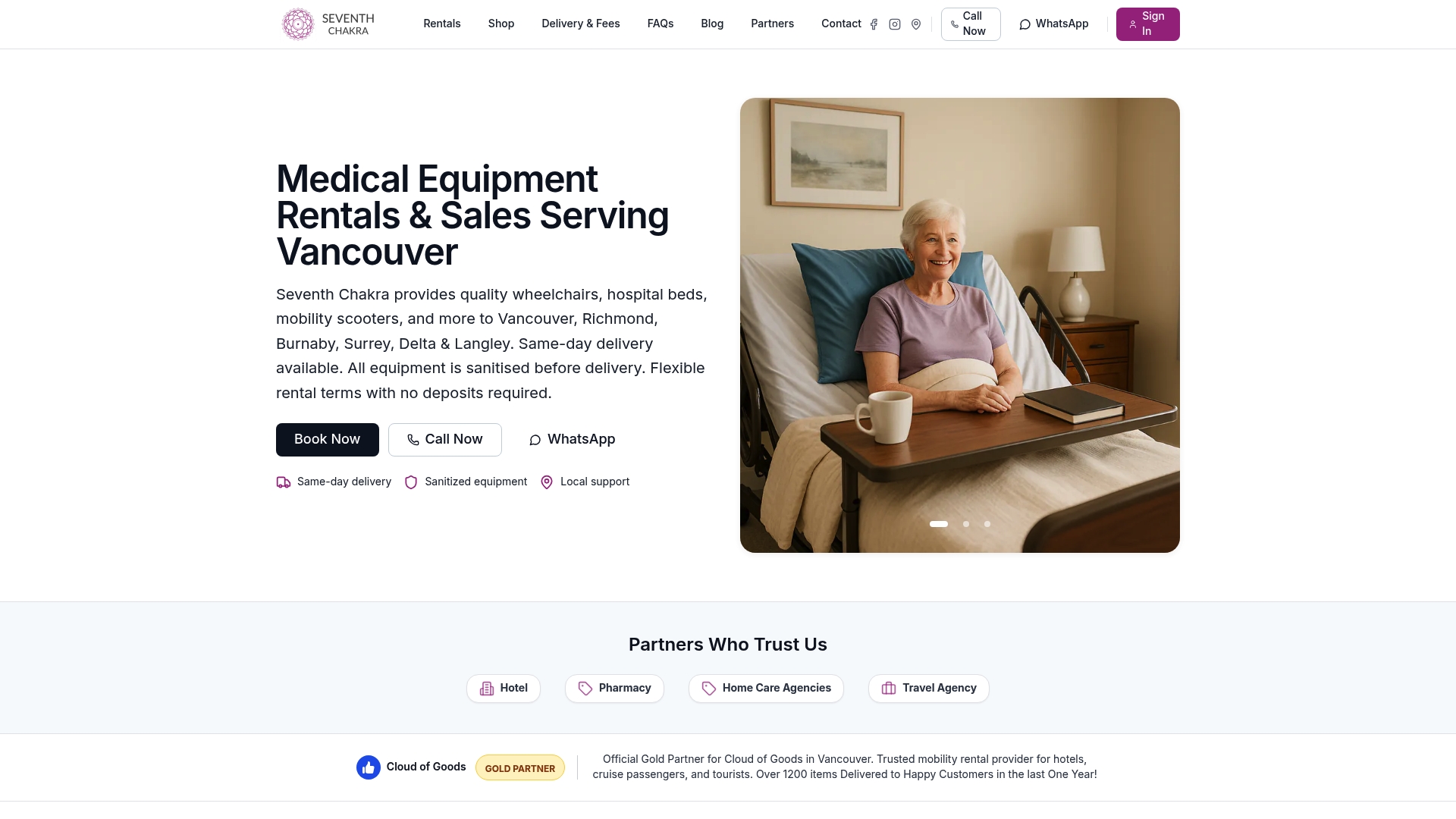
Our overbed table rental ships with same-day delivery, full sanitization and no deposit, so getting set up takes one call rather than a week of waiting. We’ll ask for your bed height, any access instructions for delivery, and how long you expect to need the table.
- Confirm your bed height and base clearance before booking.
- Choose a delivery window that works with your schedule.
- Pair it with a hospital bed rental if you’re setting up a full home recovery space.
FAQ
What can an overbed table be used for?
An overbed table is mainly used for meals, medication management, personal items like a phone or glasses, and light tasks such as reading or using a tablet. It also supports light medical tasks, such as staging dressing-change supplies or doing simple therapy exercises.
What can be placed on an overbed table?
Plates, drinks in stable containers, medication, books, phones, remotes and tablets are all common items placed on an overbed table. A tilting top is also useful for propping up a laptop or tablet screen for easier viewing.
What items should never be placed on an overbed table?
Heavy appliances and uncontained hot liquids should never go on an overbed table, since the surface and base aren’t built for that kind of weight or spill risk. Items should also stay within the table’s stated weight capacity to avoid tipping.
What do people use bedside tables for?
Bedside tables typically hold smaller personal items like a lamp, glasses, tissues or a water glass, kept within easy reach from a seated or lying position. An overbed table often takes over the larger tasks, like meals and medication, that a bedside table’s smaller surface can’t handle as easily.


