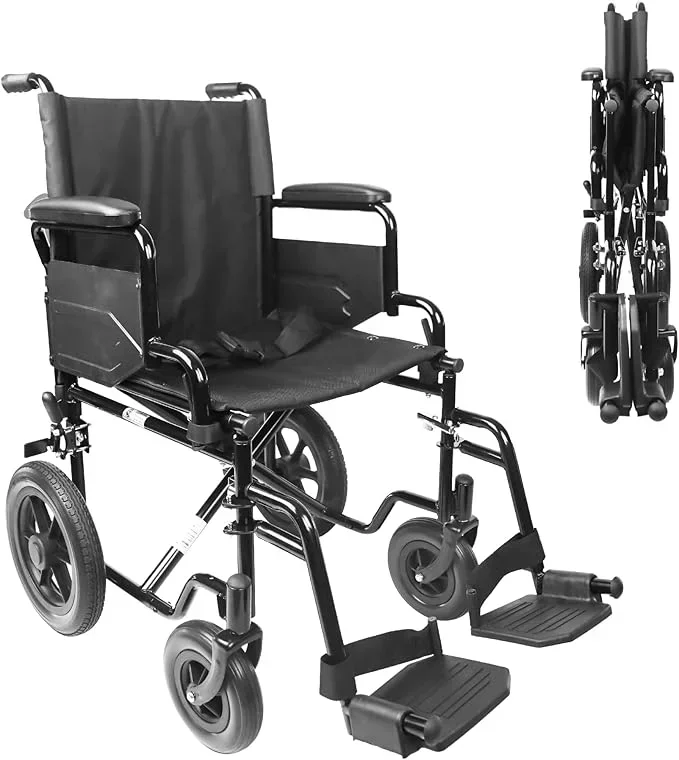
Vancouver Caregivers: Demand the Reprocessing Log for Medical Rentals
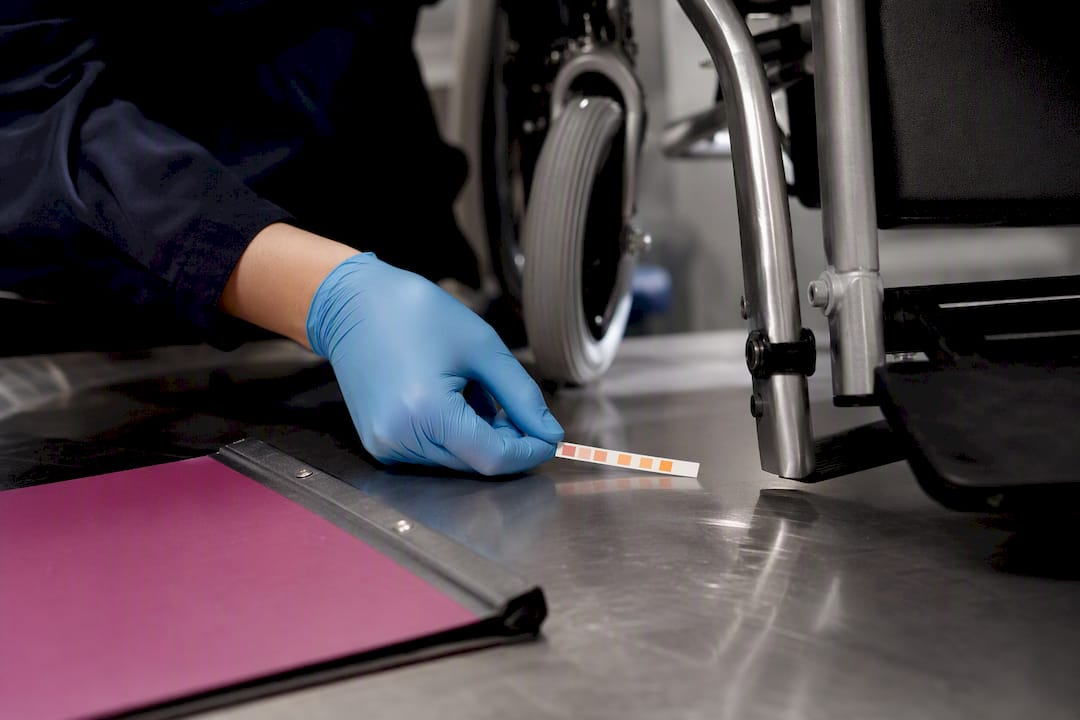
Professionally sanitized medical rentals are the safest short-term option for caregivers who need a wheelchair, mobility scooter, or hospital bed on short notice. The provider sanitizes every piece before delivery, offers prompt service in the Greater Vancouver area, and sets up equipment in-home. Before you book anywhere, ask for proof of reprocessing and confirm the delivery window in writing.
TL;DR:
- Confirm that the provider can produce a documented reprocessing log indicating cleaning date, device serial number, and disinfectant used before delivery.
- Ensure the provider follows manufacturer instructions and health authority standards for disinfecting non-critical equipment, using approved disinfectants with a Health Canada DIN.
- Ask whether staff are trained in reprocessing procedures and in-home setup to verify competence and safety practices.
- Inquire about equipment-specific details such as joint cleaning for wheelchairs, battery safety for scooters, and electrical checks for hospital beds before use.
- Obtain clear information on delivery times, in-home setup, and rental terms, including policies on deposits, fees, and replacement timelines.
Table of Contents
- What professional sanitization for rental equipment actually involves
- How do you verify a rental provider before booking?
- Equipment-specific notes: wheelchairs, scooters and hospital beds
- Delivery, setup, returns and what a rental actually costs
- Why trust this guidance on rental equipment sanitation?
- Practical perspective from a local rental specialist
- Get a sanitized wheelchair, scooter or hospital bed delivered today
- Sources
- FAQ
What professional sanitization for rental equipment actually involves
Wiping down a wheelchair with a disinfectant wipe is not the same as reprocessing it. Real sanitization follows a sequence, and skipping a step leaves risk behind even if the equipment looks clean.
The standard workflow starts with disassembly where the device allows it, followed by pre-cleaning to strip away visible soil, then mechanical or manual cleaning with an appropriate detergent, a full rinse, thorough drying, and finally disinfection or sterilization matched to the device’s risk classification. That classification, known as the Spaulding system, sorts equipment into three tiers:
- Non-critical items (wheelchair armrests, scooter tillers, bed rails) touch intact skin only and need low-level disinfection between users.
- Semi-critical items contact mucous membranes and require high-level disinfection, though this is rare in home mobility rentals.
- Critical items enter sterile tissue or the bloodstream and demand sterilization, which almost never applies to the equipment covered here.
Providers are expected to follow the manufacturer’s instructions for use, commonly called MIFU, and to disinfect with a product carrying a Health Canada Drug Identification Number. IPAC Canada’s practice recommendations state plainly that non-critical multi-use equipment must be cleaned and disinfected after each use and before it reaches another client, with the process documented rather than assumed.
Documentation is what separates a real reprocessing program from a marketing claim. CSA Z314 standards call for logged reprocessing steps and, where sterilization applies, chemical or biological indicator checks that confirm the cycle actually worked. A provider who can show you a log with a date, a device ID, and an operator initial is operating differently from one who tells you “we clean everything” and stops there.
How do you verify a rental provider before booking?
You don’t need a background in infection control to ask the right questions. You need five minutes on the phone and a willingness to push past a vague answer.
Run through this before you commit to a provider:
- Ask for the reprocessing log or a sample of one. A legitimate provider tracks device ID, cleaning date, and the disinfectant used per unit.
- Confirm they follow MIFU for that specific model. Ask which cleaning steps differ between a manual wheelchair and a powered scooter, since a real provider will know the answer immediately.
- Ask which disinfectant they use and whether it carries a Health Canada DIN. IPAC Canada treats this as a baseline requirement, not an extra.
- Ask whether staff receive training on reprocessing and in-home setup. Delivery staff who can walk you through brake adjustment or bed rail operation are trained staff.
- Ask about device tracking. Reputable reprocessors can point to a traceable identifier and a processing date for the exact unit heading to your door, according to IPAC Canada’s position on reprocessing.
Watch for red flags. A provider who cannot produce any documentation, gives you a vague “we sanitize everything” without specifics, or admits to reusing single-use accessories like slings or catheter components between clients is not one to trust with a family member’s care.
Pro Tip: Ask the provider to text you a photo of the cleaning log entry for your specific unit before delivery. If they hesitate or can’t produce one, that tells you more than anything they say on the phone.
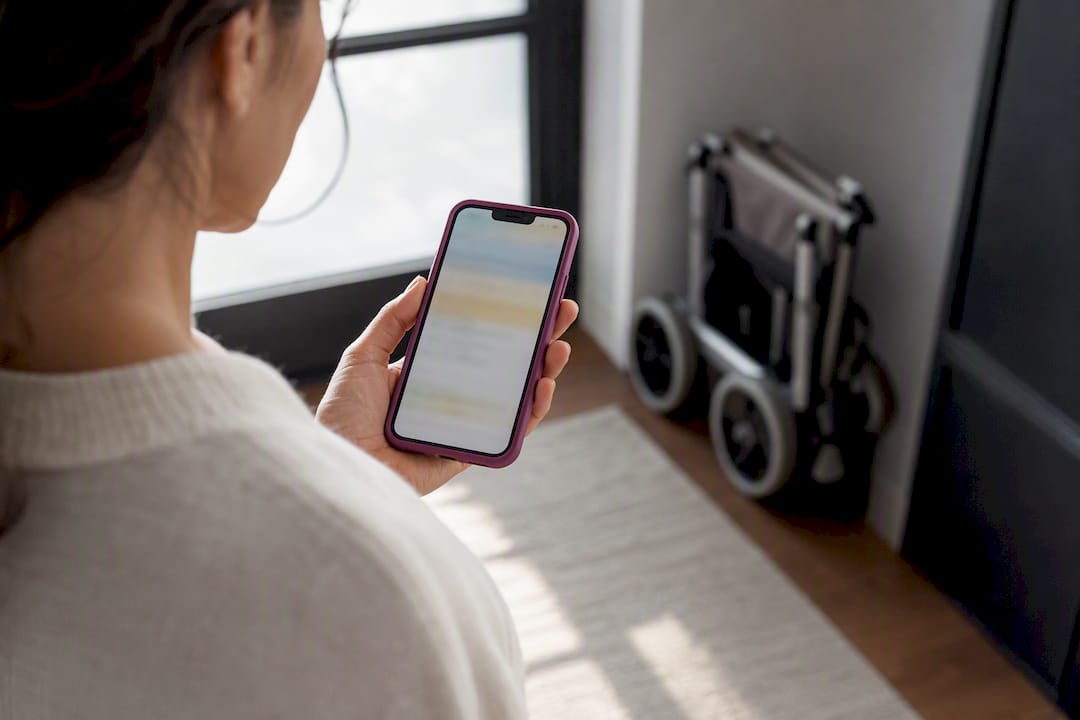
Equipment-specific notes: wheelchairs, scooters and hospital beds
Each device type has its own trouble spots, and a provider who treats a scooter the same way as a folding wheelchair is cutting corners somewhere.
Wheelchairs need attention at the joints, not just the seat cushion. Armrests, push handles, and brake levers collect grime and skin oils that a surface wipe misses. A proper reprocessing pass includes the frame joints, the wheel locks, and a fit check to confirm the seat width and footrest height suit the user before delivery, not after.
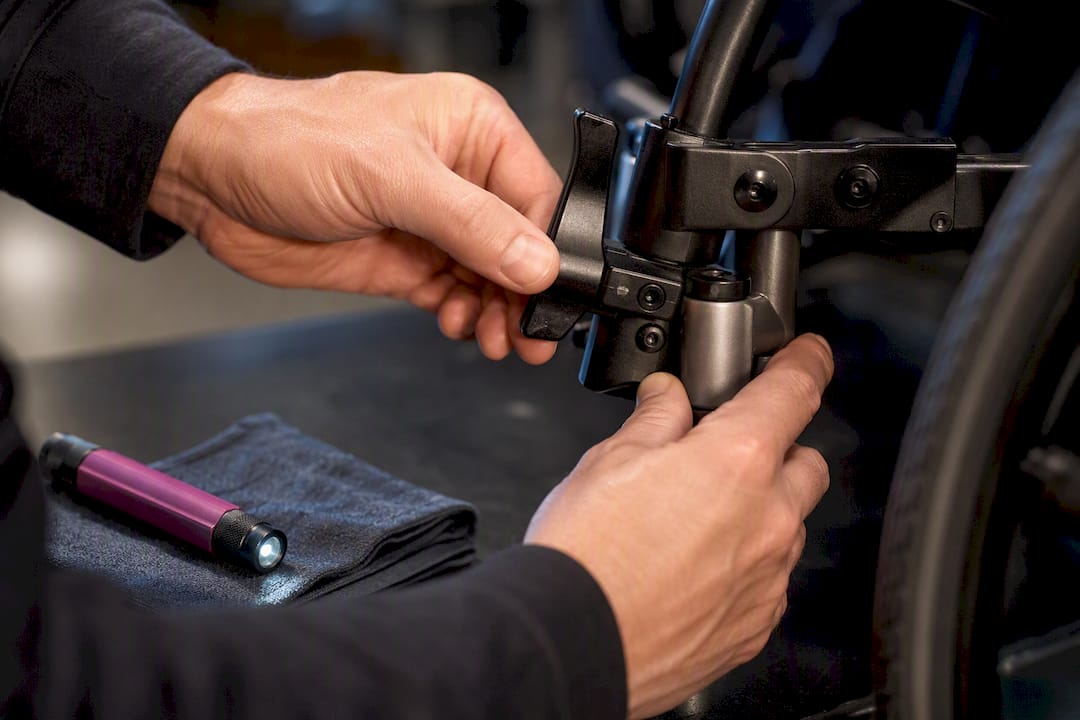
Mobility scooters carry more hidden risk because of the electronics. Battery compartments and the tiller need cleaning without moisture reaching connectors, and any provider offering scooter rentals should confirm the unit is weatherproofed for its intended use and that the tiller controls and speed settings work correctly before it leaves the warehouse. Public Health Ontario’s guidance specifically flags high-touch controls like tillers and levers as areas that need deeper attention than a surface wipe delivers.
Hospital beds bring electrical safety into the picture alongside sanitization. The mattress cover needs laundering or full disinfection between users, side rails and the motor housing need reprocessing per MIFU, and the electrical components need a functional check, not just a wipe-down.
| Equipment type | Key sanitization focus | What to ask for at delivery |
|---|---|---|
| Wheelchair | Joints, armrests, brake levers, cushion | Serial number, cleaning date, fit check |
| Mobility scooter | Tiller, battery compartment, waterproofing | Serial number, control test, charge level |
| Hospital bed | Mattress cover, rails, motor housing | Serial number, cleaning date, electrical test |
Ask for the serial number and cleaning date on delivery. It takes the provider seconds to hand over and gives you a paper trail if anything about the equipment ever needs to be traced back.
Delivery, setup, returns and what a rental actually costs
Prompt delivery is realistic for standard equipment when a provider has local stock, though anything customized (a wider wheelchair frame, a bariatric bed) typically needs more lead time to source and reprocess properly. A provider should honour a minimum reprocessing window between the previous rental’s return and your delivery, not just rush a unit out the door.
What should happen at your door:
- Delivery staff assemble and position the equipment in your home, not just drop it at the curb.
- You get a brief walkthrough: brakes, adjustments, and any powered controls explained on the spot.
- You receive or can request documentation showing the unit’s cleaning date and serial number.
- If something breaks or you need a different size, ask what the swap-out or repair timeline looks like before you sign anything.
Before booking, confirm the terms in writing:
- Rental cadence: daily, weekly, or monthly pricing, and how switching between them works if your recovery timeline changes.
- Deposit policy: some providers require a hold on a credit card; Seventh Chakra does not require one.
- Delivery and pickup fees: ask whether these are bundled into the rate or charged separately.
- Damage policy: what happens if the equipment is scuffed, wet, or needs minor repair during your rental.
PICNet’s home and community care guidelines note that loaned devices should be reprocessed before use and tracked, with enough lead time built into scheduling to do it properly. That lead time is the reason a provider might tell you tomorrow morning instead of tonight for a less common item.
Why trust this guidance on rental equipment sanitation?
The checklist in this article isn’t opinion. It comes from how Canadian infection-control bodies define safe reprocessing for shared medical equipment.
- CSA Z314 standards set the national benchmark for reprocessing workflow, validation, and quality assurance.
- IPAC Canada specifies cleaning and low-level disinfection between users for non-critical equipment, using Health Canada–approved disinfectants.
- Public Health Ontario recommends cleaning before disinfection and dedicated equipment in the home wherever practical.
This standard is applied by sanitizing every wheelchair and scooter before delivery, offering prompt service, and setting up equipment in-home, with a walkthrough included. Documented logs and MIFU adherence, in practice, mean a real date and a real name behind every unit that reaches your door.
Practical perspective from a local rental specialist
Caregivers rarely have the luxury of comparing five providers when a discharge date lands in two days. When you’re short on time, prioritize three things: ask for the cleaning date on the specific unit, confirm same-day or next-day delivery in writing, and get a straight answer about deposits before you commit. A provider who answers all three without hesitation is one worth trusting with the rest.
— Chandan
Get a sanitized wheelchair, scooter or hospital bed delivered today
This provider removes the guesswork from renting medical equipment on short notice. Every wheelchair and scooter is sanitized before it leaves the warehouse, delivery is available promptly across the Greater Vancouver area.
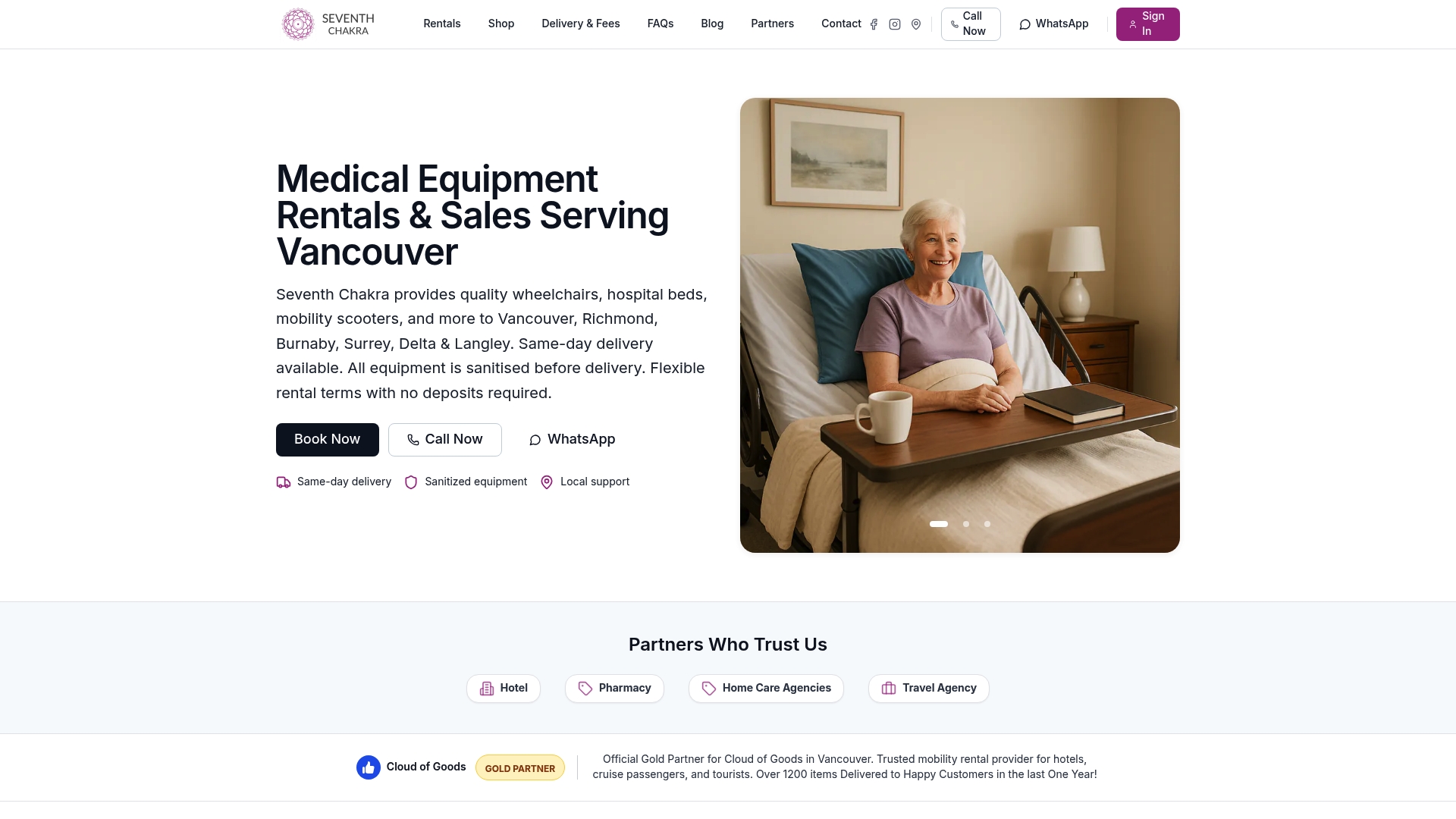
Have your address, the equipment size or weight capacity you need, and your preferred rental length ready when you call or book online. If you need a powered option, the electric wheelchair for rent page covers specs and availability. Families arranging care for someone returning home from hospital often start with the hospital bed rental page, which includes in-home setup details. Whatever the equipment, book now and Seventh Chakra will confirm your delivery window the same day.
Sources
- Canadian medical device reprocessing in all health care settings | Standards Council of Canada
- IPAC Canada — Practice recommendations for non-critical multi-use equipment
- Public Health Ontario — IPAC for home and community care
- PICNet — Home and community care guidelines (cleaning, disinfection, sterilization)
FAQ
What does sanitized medical equipment rental actually mean?
It means the equipment goes through a documented cleaning and disinfection process, following manufacturer instructions and using a Health Canada–approved disinfectant, before it reaches a new user.
Can I ask a rental provider for proof of cleaning?
Yes, and you should. Ask for the reprocessing log or cleaning date tied to the specific unit’s serial number before it arrives.
How fast can I get a sanitized wheelchair or hospital bed delivered?
Prompt delivery for standard equipment is available across the Greater Vancouver area, with in-home setup included.
Do I need to pay a deposit to rent medical equipment?
Deposits are common industry-wide, but some providers rent wheelchairs and scooters without requiring one.
What’s the difference between cleaning and disinfecting equipment?
Cleaning removes visible soil and organic matter; disinfecting kills remaining pathogens using a product with the correct contact time, and cleaning must happen first for disinfection to work.