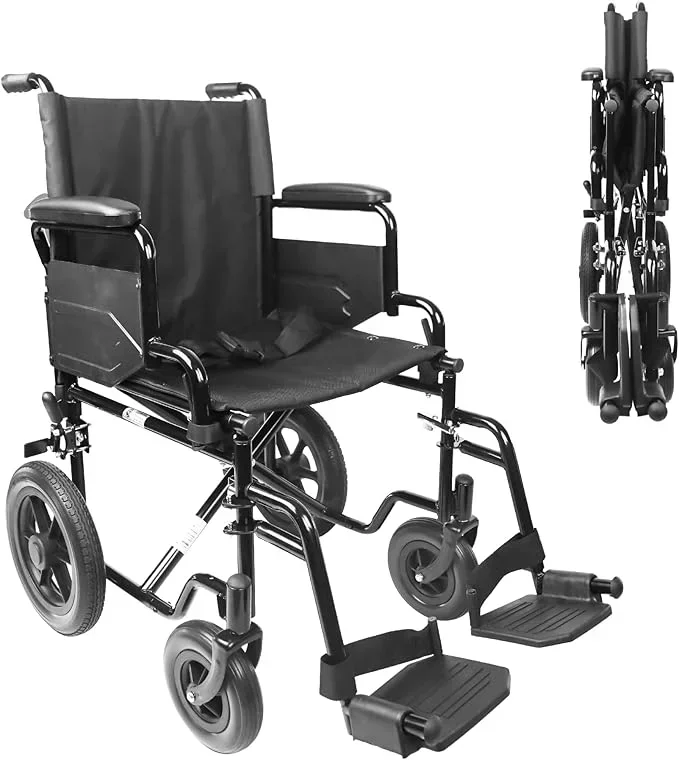

Short-term recovery equipment refers to rented medical devices used temporarily to support patients during recovery from surgery or injury. The category covers everything from manual wheelchairs and hospital beds to mobility scooters and highly specialised tools like face down recovery chairs. Renting rather than buying is the standard approach for most Canadians, because recovery timelines are finite and ownership costs rarely make sense for a few weeks or months of use.
The core types of short-term recovery equipment include:
- Wheelchairs (manual, transport, and electric models) for patients with limited walking ability
- Hospital beds (manual, semi-electric, and full-electric) for safe, adjustable rest at home
- Mobility scooters for patients who can sit upright but cannot walk distances
- Rollators and walkers for those who need balance support during rehabilitation
- Face down recovery chairs and sleeping cushions for specific post-operative positioning
- Knee scooters as a hands-free alternative to crutches after foot or ankle surgery
- Overbed tables and cold therapy systems for comfort and swelling management
How short-term equipment rentals support your recovery at home
Renting recovery equipment does more than fill a gap between hospital and full independence. It actively shapes how safely and comfortably a patient heals. A rented hospital bed, for instance, lets a caregiver adjust head and foot elevation without physically lifting the patient, which reduces strain on both sides.
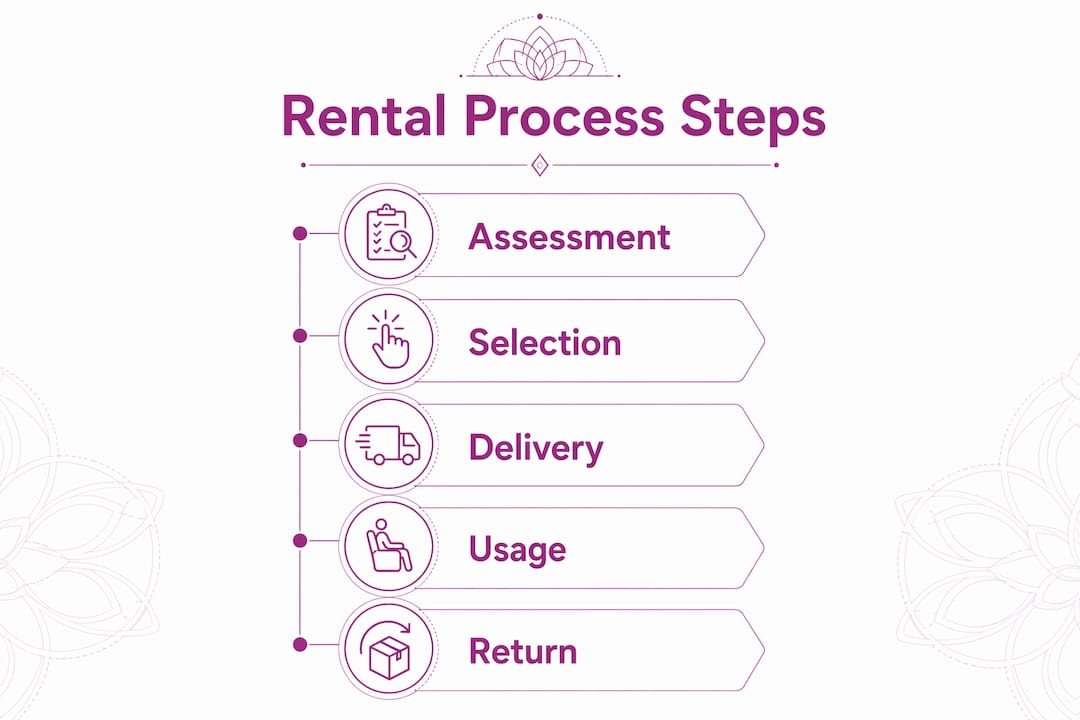
Rental services typically include delivery, professional setup, sanitisation, and ongoing maintenance, so the caregiver is not responsible for cleaning or repairing the device. That matters enormously when you are already managing medications, appointments, and daily care. Flexible rental terms also mean the equipment can be swapped or returned as the patient’s strength improves, without penalty.
Key functions short-term rentals serve:
- Enabling safe movement and transfers in the home
- Reducing the risk of falls during the most vulnerable recovery phase
- Allowing earlier hospital discharge by making the home environment medically adequate
- Removing storage and disposal concerns once recovery is complete
What types of recovery equipment are available in Canada?
Canadian rental providers carry a broad catalogue of short-term rehabilitation tools, and the right combination depends entirely on the surgery or injury involved.
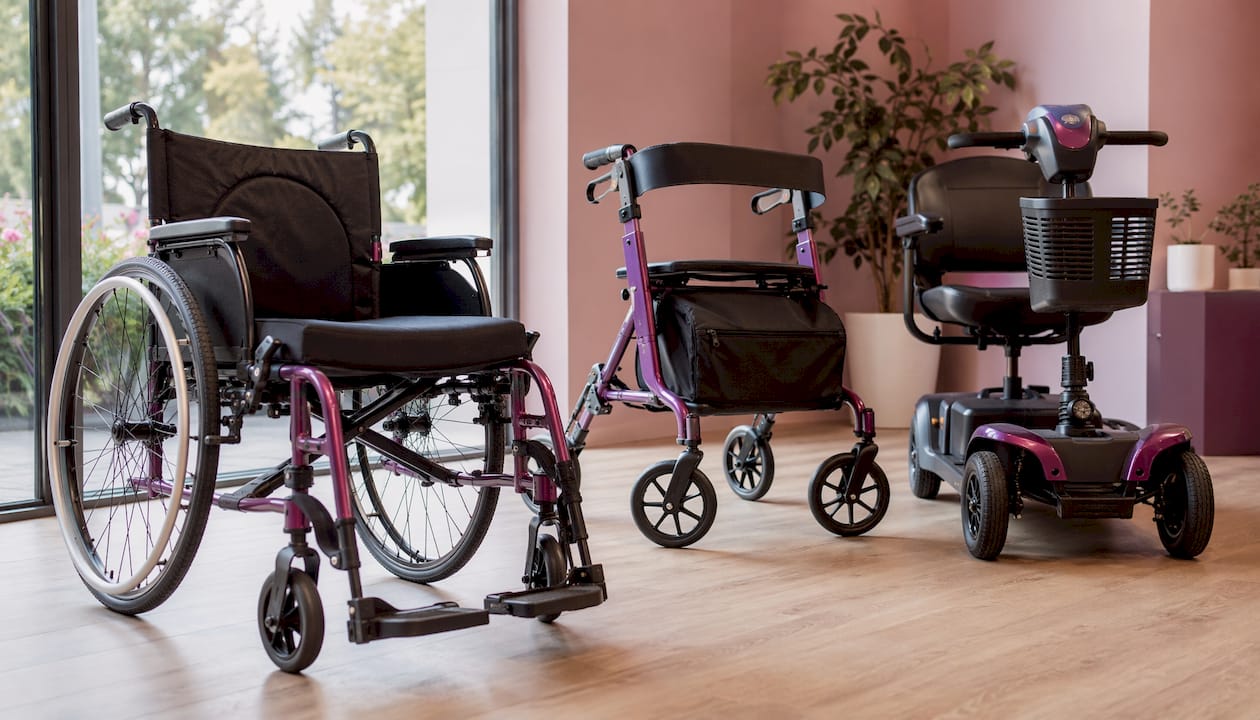
Mobility aids are the most commonly rented category. Common options include manual wheelchairs, transport chairs, rollators, knee scooters, and mobility scooters. Each serves a different level of mobility: a rollator suits someone who can bear weight but needs balance support, while a mobility scooter suits someone who cannot walk distances at all.
Hospital beds come in three main configurations. Manual beds require hand cranks to adjust position. Semi-electric beds use a motor for head and foot adjustment but a crank for height. Full-electric beds adjust every axis with a remote, which is the preferred option for patients recovering from spinal or abdominal surgery.
Specialised recovery tools round out the catalogue:
- Face down recovery chairs and sleeping cushions for vitrectomy and certain spinal procedures
- Cold therapy knee systems to reduce post-operative swelling
- Air mattresses with alternating pressure to prevent pressure sores during extended bed rest
- Overbed tables for eating, reading, and device use without leaving bed
- Commode wheelchairs for patients who cannot safely reach a bathroom
Seventhchakra serves Vancouver, Richmond, and Surrey with same-day delivery on wheelchairs, hospital beds, and mobility scooters, with all equipment sanitised before it arrives at your door.
Why renting beats buying for short-term recovery needs
The financial case for renting is straightforward. Renting is far more economical than purchasing when equipment is needed for only weeks or months post-surgery. A full-electric hospital bed, for example, carries a purchase price that most families would never recoup from a single recovery period.
Beyond cost, renting removes the storage problem. Hospital beds and power wheelchairs are large. Once recovery ends, owners are left with bulky equipment they cannot easily sell or store. Rental providers simply collect the item. Renting also avoids long-term storage concerns entirely, which is a practical relief for families in smaller Vancouver-area homes and condos.
Benefits of renting short-term recovery equipment at a glance:
- Lower upfront cost with no large capital outlay
- Flexibility to upgrade, downgrade, or exchange as recovery progresses
- No storage burden after the rental period ends
- Professional sanitisation included with every rental
- No deposit required with providers like Seventhchakra, keeping cash flow manageable
Pro Tip: Ask your rental provider about weekly versus monthly rates before you commit. If your surgeon estimates a six-week recovery, a monthly rate often works out cheaper than six individual weekly charges.
What professional support comes with a rental?
Good rental providers do not just drop equipment at the door. Healthcare professionals recommend coordinating delivery before hospital discharge so the home is ready the moment the patient arrives. Seventhchakra offers same-day delivery across Vancouver, Richmond, and Surrey, which makes that coordination practical rather than aspirational.

Professional setup is particularly important for complex devices. Full-electric hospital beds and patient lifts require technician installation to function safely in a home setting. A bed assembled incorrectly can fail mid-adjustment, which is a serious risk for a post-surgical patient. Reputable providers include setup in the rental fee rather than charging separately.
Service features to look for:
- Delivery timed to hospital discharge
- Technician setup for beds, lifts, and power devices
- Equipment sanitised to a professional standard before delivery
- A direct contact for adjustments or replacements during the rental period
- Flexible return scheduling once recovery is complete
Specialised face down recovery equipment: what it is and who needs it
Face down recovery equipment is a niche but critical category. After vitrectomy (a common retinal surgery) and certain spinal procedures, surgeons require patients to maintain a face-down position for days or weeks. Standard furniture makes this impossible to sustain comfortably.
Face down chairs provide seated support with a forehead rest and chest pad, allowing the patient to sit upright while keeping the face angled downward. Sleeping cushions serve the same positioning purpose during rest, with cutouts that cradle the face without pressure on the eyes. Together, these two pieces of equipment make the difference between a patient who can comply with post-operative instructions and one who cannot.
Renting this equipment rather than buying is almost always the right call, since the face-down positioning phase typically lasts one to four weeks. Key options available through rental programmes:
- Seated face down support chairs with adjustable armrests
- Face down sleeping cushions with contoured facial cutouts
- Mirror attachments so patients can watch television or interact with family while positioned correctly
Planning your rental: expert advice on timing and flexibility
The single most common mistake caregivers make is waiting until discharge day to arrange equipment. Coordinated discharge planning between healthcare teams and rental providers is what makes a smooth transition home possible. Arrange the rental at least 48 hours before the expected discharge date.
Rental flexibility is the other underappreciated advantage. Recovery rarely follows a straight line. A patient who needs a power wheelchair in week one may be ready for a rollator by week four. Rental terms that allow equipment swaps without penalty let you match the device to the patient’s actual condition rather than their predicted condition.
Expert recommendations for caregivers:
- Confirm the rental start date with your surgical team, not just the estimated discharge date
- Choose a provider that offers post-operative mobility aids across a range of categories so you can upgrade or downgrade in one call
- Ask about same-day swap policies if the initial equipment turns out to be wrong for the home layout
- Keep the rental period open-ended initially, then close it once the physiotherapist confirms independence
Pro Tip: If you are arranging equipment for a parent or partner, measure doorway widths before ordering. Standard wheelchairs are 24–26 inches wide; narrow doorways in older Vancouver homes sometimes require a slimline model.
Safe use and maintenance of recovery equipment
Every piece of rental equipment comes with manufacturer guidelines, and following them protects both the patient and the caregiver. For wheelchairs and mobility scooters, check tyre pressure and brake function before each use. For hospital beds, confirm that side rails are fully locked before leaving the patient unattended.
Weight limits are non-negotiable. Exceeding the rated capacity of a hospital bed or wheelchair frame risks sudden failure. If a patient’s weight is close to the listed limit, ask the provider for a bariatric-rated model. Clean contact surfaces daily with a mild disinfectant, and report any mechanical issue to the rental provider immediately rather than attempting a repair yourself.
For active recovery support alongside equipment use, a physiotherapist can design a programme that works with the rental device rather than around it.
Canadian funding and healthcare policy for equipment rentals
The Canadian Red Cross Health Equipment Loan Program (HELP) operates in British Columbia, Alberta, New Brunswick, PEI, Nova Scotia, Newfoundland and Labrador, and the Yukon. The Basic Short Term Loan programme lends equipment generally for three months or less to people recovering from illness or injury, with healthcare professional referrals required. The Advanced Short Term Loans programme in British Columbia adds delivery and technician installation for complex equipment like beds and lifts.
Provincial health authorities vary in what they subsidise. Ontario Health at Home coordinates medical equipment delivery through contracted vendors, with same-day and next-day delivery categories built into the programme. In Nova Scotia, patients can borrow equipment through HELP or purchase through local suppliers. Private insurance plans, including many employer group benefits, often cover a portion of rental costs when a physician prescribes the equipment. Always request a written prescription or letter of medical necessity before renting, as this is typically required for reimbursement claims.
Risks of using recovery equipment incorrectly
Improper use of short-term recovery equipment causes preventable injuries. The most common risk with wheelchairs is tipping, which occurs when the patient leans forward past the front wheels without anti-tip guards engaged. Mobility scooters driven at full speed on uneven surfaces can also tip, particularly three-wheel models on slopes.
Hospital beds present a different set of risks. Patients who attempt to adjust the bed position while sitting on the edge, rather than lying flat, can slide off unexpectedly. Side rails used as a primary transfer support can collapse if not properly latched. For patients with cognitive impairment, side rails also carry an entrapment risk and should only be used on medical advice.
For paediatric patients or children in the home, additional precautions apply. Keep all equipment controls out of reach of young children, and never leave a child unattended near a powered hospital bed or mobility scooter. When in doubt, ask the rental provider for a safety briefing at the time of delivery.
Key takeaways
Short-term recovery equipment, rented rather than purchased, gives patients the right device for each phase of healing without the cost or storage burden of ownership.
| Point | Details |
|---|---|
| Renting suits short recoveries | Renting is more economical than buying when equipment is needed for weeks or months post-surgery. |
| Core equipment categories | Wheelchairs, hospital beds, mobility scooters, and specialised tools like face down chairs cover most recovery needs. |
| Plan before discharge | Arrange equipment at least 48 hours before hospital discharge to ensure the home is ready on arrival. |
| Canadian funding exists | The Canadian Red Cross HELP programme lends equipment generally for three months or less in multiple provinces. |
| Safety requires active attention | Check brakes, tyre pressure, and weight limits before each use, and report mechanical issues to the provider immediately. |
FAQ
What is short-term recovery equipment?
Short-term recovery equipment refers to rented medical devices, such as wheelchairs, hospital beds, and mobility scooters, used temporarily to support mobility and comfort during recovery from surgery or injury.
How long can you rent recovery equipment in Canada?
Rental terms vary by provider and programme. The Canadian Red Cross HELP programme lends equipment generally for three months or less, while private rental providers like Seventhchakra offer flexible weekly and monthly terms with no fixed end date.
What is the best mobility aid for post-surgical recovery?
The right aid depends on the surgery. Patients who cannot bear weight typically need a wheelchair or mobility scooter, while those who can walk short distances often do well with a rollator or walker.
What does rehabilitation equipment mean?
Rehabilitation equipment refers to devices that help patients regain function, independence, and mobility after illness, surgery, or injury. Short-term rental versions are designed for temporary use aligned with the recovery timeline.
Does Canadian insurance cover rental equipment costs?
Many employer group benefit plans cover a portion of rental costs when a physician prescribes the equipment. Provincial programmes like Ontario Health at Home and the Canadian Red Cross HELP also provide subsidised or free loans in eligible cases.
Recommended
- Types of short-term medical equipment rentals explained | Seventh Chakra Medical Blog
- How post-acute care equipment works: a caregiver’s guide | Seventh Chakra
- Patient comfort equipment rental options for home care | Seventh Chakra Medical Blog
- Hospital Equipment for Home Use in Vancouver: Complete Buying & Rental Guide (2026) | Seventh Chakra Medical Blog